TRENDING

Monday, 19 October 2026
----------------------
8 Jumada Al-Awwal 1448 AH
A satirical movement led by India's Gen Z has sparked a nationwide protest, challenging Prime Minister Narendra Modi's government and demanding education reform.
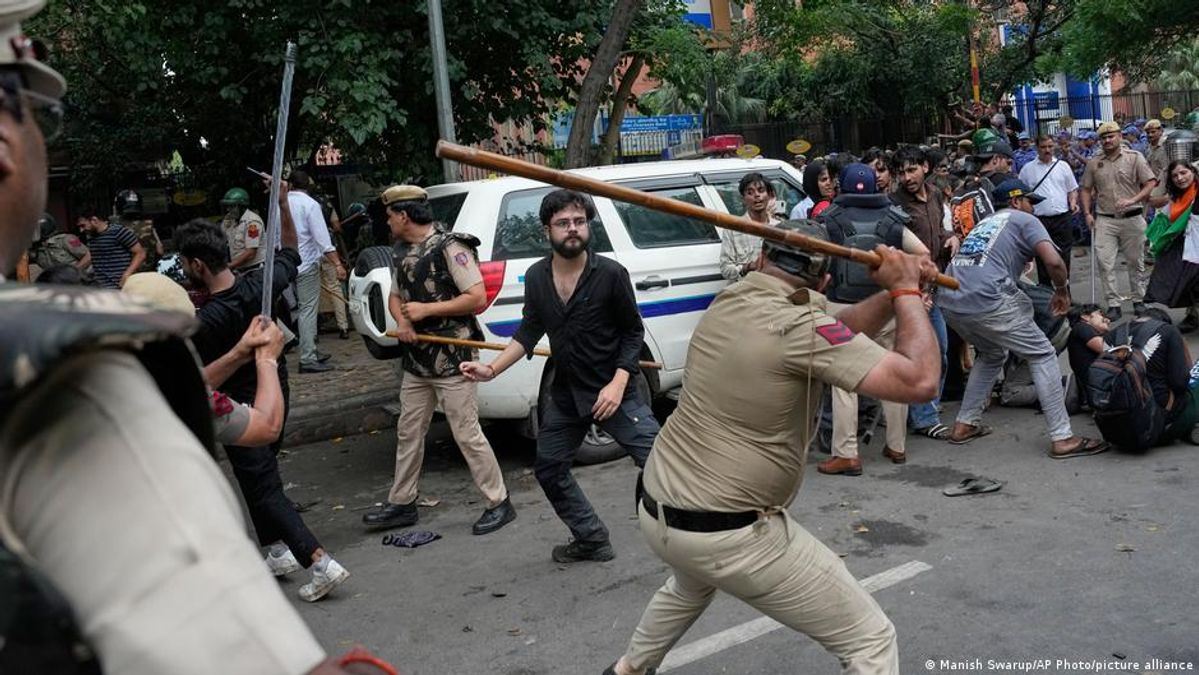
The recent surge in protests across India, led by the satirical 'Cockroach Janta Party' (CJP), has caught the attention of the international community. The movement, which began as an online campaign in May, has rapidly evolved into a Gen Z-led street movement, giving voice to a generation frustrated by unemployment, shrinking opportunities, and a failing education system.
The CJP is a youth-led movement, with most of its support coming from students and India's urban middle class. The movement's leaders have tapped into a broader public mood, expressing frustration with a country whose long-atrophied education system has left young people with little hope of a better future.
The protesters are demanding the resignation of Education Minister Dharmendra Pradhan, following the cancellation of the high-stakes NEET medical entrance exam due to a leaked question paper. The protesters are also calling for education reform, citing the failure of the education system to provide young people with opportunities for a better future.
The CJP movement is significant because it reflects a broader cross-section of Indian society, with young people from different backgrounds and regions coming together to demand change. The movement has also tapped into a broader public mood, with many Indians expressing frustration with the government's handling of the education system.
The CJP movement has the potential to reshape politics in India, particularly if it spreads to rural youth. The movement's ability to widen its appeal and mobilize supporters beyond urban centers will be crucial in determining its success.
The government has already responded to the movement, with senior ministers opening talks with CJP leaders. However, the government's ability to address the protesters' demands and implement education reform will be crucial in determining the movement's outcome.
India has experienced several major protest movements in recent years, including the farmers' protests and the anti-citizenship protests. These movements have shown that young people are willing to take to the streets to demand change, and that the government's response to these movements can have significant implications for the country's politics.
The CJP has yet to prove that its message resonates with young voters in rural India. However, some experts believe that the movement will do just fine beyond India's urban centers, as the aspirations of young people in small towns and villages are no different.
The CJP movement is a significant challenge to PM Modi's government, and its outcome will have significant implications for India's politics. The movement's ability to widen its appeal and mobilize supporters beyond urban centers will be crucial in determining its success. The government's response to the movement will also be crucial, as it will determine the outcome of the protests and the fate of the education system in India.
Editor's Note: The movement's ability to widen its appeal and mobilize supporters beyond urban centers will be crucial in determining its success.
Source referenced: DW
This brief was synthesized by our Editorial Engine and reviewed by The Ground Narrative team.