TRENDING

Monday, 5 October 2026
----------------------
24 Rabi' Al-Thani 1448 AH
Thousands of protesters in Jharkhand are demanding a federal inquiry into alleged irregularities in recruitment exams for government jobs. The movement, sparked by a viral image of a candidate who passed an exam despite completing very little of it, has led to clashes with police and calls for greater transparency in the hiring process.
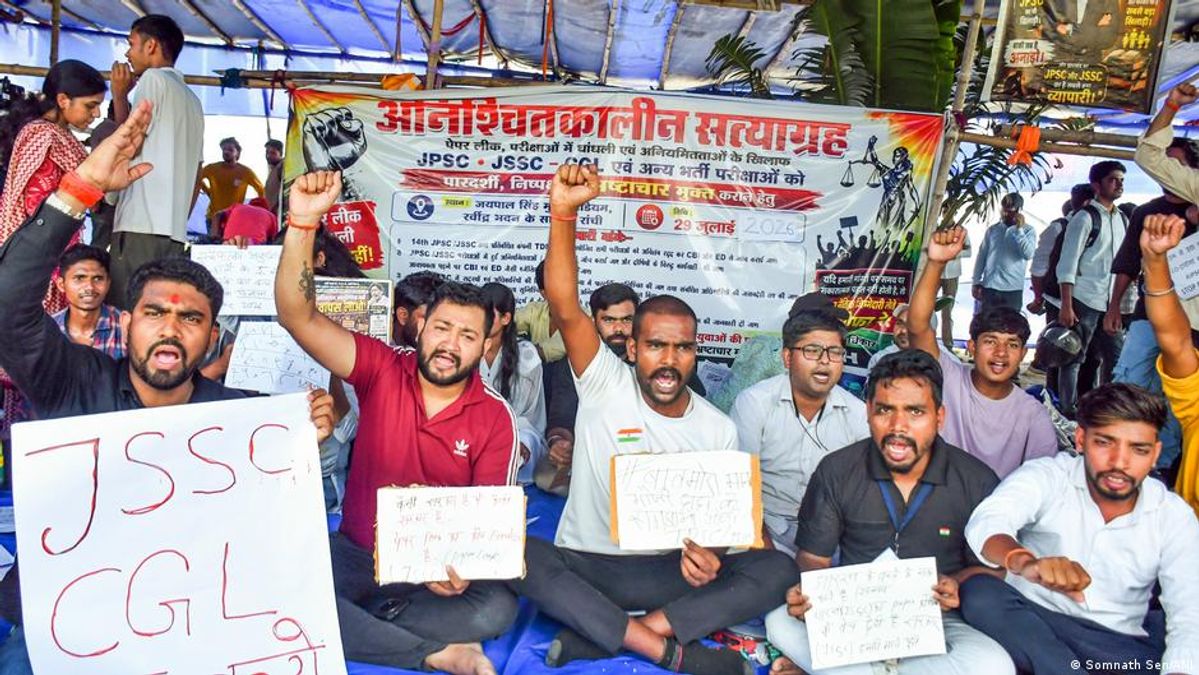
Protests have been ongoing in Jharkhand, India, for over two weeks, with thousands of students and job aspirants demanding a federal inquiry into alleged irregularities in recruitment exams for government jobs. The movement began after an image went viral, showing a candidate who had passed an exam despite completing very little of it, prompting allegations of manipulation.
The protests in Jharkhand are a manifestation of the deeper structural issues in India's recruitment system. The country's youth are facing intense competition for limited government jobs, and the perception of corruption and irregularities in the hiring process has led to widespread frustration. The government's initial response to the protests, including the use of water cannons against demonstrators, has only exacerbated the situation. The fact that the protests have been led by student groups and youth organizations, rather than traditional political parties, highlights the growing disillusionment of India's young people with the existing power structures.
The human cost of the exam irregularities and the subsequent protests has been significant. Several protesters have gone on hunger strike, with at least one being moved to intensive care after his health deteriorated. The protests have also led to clashes with police, resulting in injuries and arrests. Moreover, the uncertainty and lack of transparency in the recruitment process have left thousands of young people in limbo, unsure of their future prospects.
What is being downplayed by the government and other powerful actors is the systemic nature of the problem. The irregularities in the recruitment exams are not an isolated incident, but rather a symptom of a broader issue of corruption and lack of accountability in India's governance structures. The government's concession to suspend this year's disputed exam and the resignation of three members of the commission are seen as insufficient by the protesters, who are demanding a more comprehensive overhaul of the recruitment system.
As the protests in Jharkhand continue, it is essential to watch for the government's next move. Will they agree to a federal inquiry into the alleged irregularities, or will they attempt to suppress the protests through force? The outcome of this movement will have significant implications for India's youth and the country's governance structures as a whole. Additionally, the spread of similar protests to other states, such as Bihar, Uttar Pradesh, and Rajasthan, could indicate a broader movement for change in India's recruitment system.
Editor's Note: The analysis is based on publicly available information and may not reflect the full complexity of the situation on the ground.
Source referenced: DW
This brief was synthesized by our Editorial Engine and reviewed by The Ground Narrative team.


