TRENDING

Tuesday, 6 October 2026
----------------------
25 Rabi' Al-Thani 1448 AH
India's Ministry of External Affairs declared passports are not conclusive proof of citizenship, sparking widespread anxiety amidst intensified electoral roll revisions and ongoing debates over national identity. This move highlights a fundamental gap in India's citizenship framework and carries significant geopolitical implications for human rights, regional stability, and democratic processes.
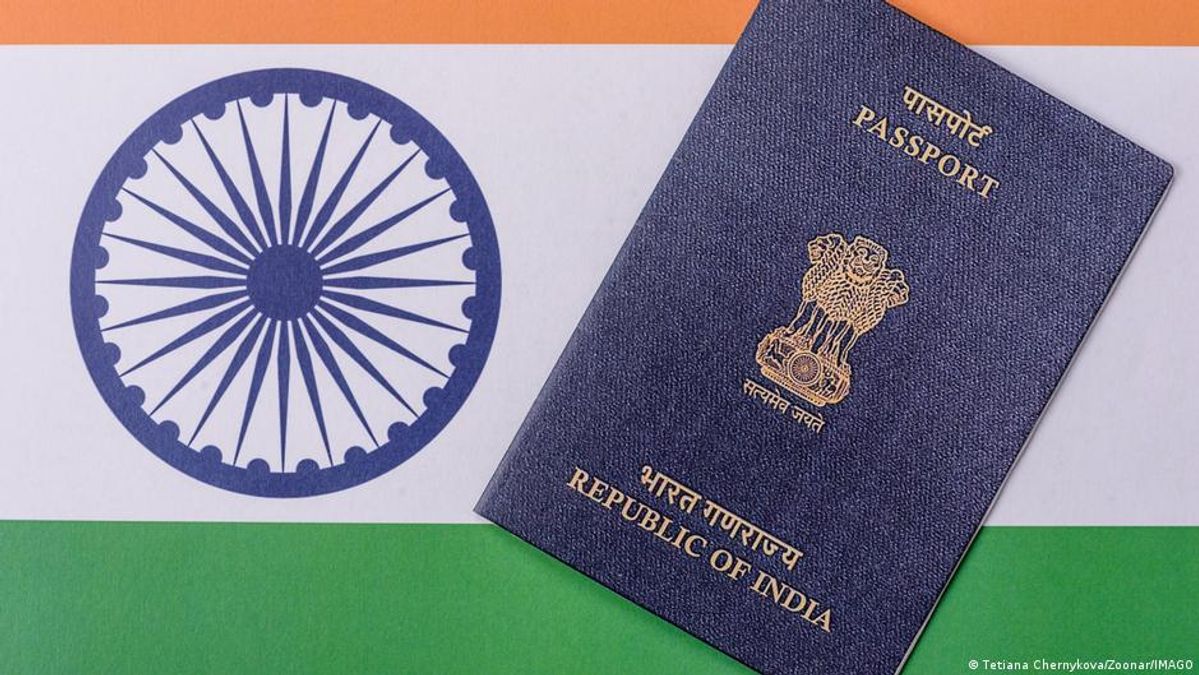
The recent assertion by a senior official from India's Ministry of External Affairs (MEA) that an Indian passport serves primarily as a travel document and not as conclusive proof of citizenship has ignited a significant national debate, carrying profound geopolitical and domestic implications. This statement, while legally consistent with existing statutes, has gained heightened political salience due to its timing amidst ongoing intensive revisions of electoral rolls and a broader governmental push to redefine citizenship.
What transpired was a clarification from the MEA, reported last week, emphasizing that the Ministry of Home Affairs, not the MEA, holds the sole authority to determine and grant citizenship. As former diplomat Veena Sikri noted, a passport is an "attribute of citizenship" but does not inherently confer it. This legal distinction, though not new, has historically been less prominent in public discourse. For decades, Indian citizenship was largely assumed for those born in the country, with documents like passports, voter IDs, and Aadhaar cards serving practical purposes without their foundational validity being routinely questioned.
When this clarification emerged is critical. It coincides with the Election Commission of India's (ECI) "Special Intensive Revision" (SIR) of electoral rolls in several populous states, including Bihar and West Bengal. The ECI states this revision is necessary to remove ineligible voters. However, critics, including legal experts and civil society groups, contend that the exercise is disproportionately skewed against marginalized and minority communities, particularly Bengali-speaking Muslims.
Why this issue has become so contentious is rooted in India's evolving political landscape. Prime Minister Narendra Modi's ruling Bharatiya Janata Party (BJP), a Hindu nationalist party, has long asserted that large numbers of undocumented Muslim migrants from neighboring Bangladesh have fraudulently infiltrated India's electoral rolls. This narrative forms a cornerstone of the BJP's political strategy, aiming to consolidate its Hindu voter base by framing citizenship as a matter of national security and cultural identity.
The MEA's statement, therefore, is not an isolated legal technicality but rather a significant development within a broader governmental agenda. It implicitly supports the intensified scrutiny of citizenship documentation, placing the burden of proof squarely on individuals. This approach aligns with previous initiatives such as the proposed National Register of Citizens (NRC), which was implemented in the northeastern state of Assam. The Assam NRC controversially excluded nearly two million people, both Hindus and Muslims, from Indian citizenship, raising widespread humanitarian concerns and highlighting the practical difficulties many face in proving their lineage.
Furthermore, the controversy is inextricably linked to the contentious Citizenship Amendment Act (CAA), enacted in 2019. The CAA offers a fast-track to Indian citizenship for non-Muslim immigrants (Hindus, Sikhs, Buddhists, Jains, Parsis, and Christians) who fled religious persecution from Muslim-majority Pakistan, Bangladesh, and Afghanistan. Critics argue that the CAA, combined with a potential nationwide NRC, could create a two-tiered system of citizenship, effectively marginalizing India's Muslim population.
How this situation impacts ordinary Indians is through a fundamental gap in India's citizenship framework: the absence of a single, universal document that conclusively establishes citizenship. While various documents like birth certificates, school records, land deeds, Aadhaar cards, voter IDs, and passports serve different purposes, none individually are recognized in law as definitive proof of citizenship for most people. Senior lawyer Rebecca Mammen John highlighted this dilemma, noting that while a passport is issued only to Indian citizens, the government does not issue a separate citizenship certificate for those acquiring citizenship by birth or descent.
This lack of a universal document creates immense uncertainty, particularly for millions of Indians born before widespread birth registration, those whose families have migrated for work, or individuals with incomplete land records or lost school certificates. As Faizan Mustafa, Vice-Chancellor of Chanakya National Law University, argues, this ambiguity leaves "room for arbitrary challenges to their status" and empowers "low-level executive officials" to determine citizenship, potentially leading to widespread disenfranchisement. He suggests that if the state has already issued documents like passports or voter IDs after verification, the burden of proof should shift to the government to prove otherwise, except in cases of fraud.
The implications of this citizenship debate extend beyond India's borders. Domestically, it risks exacerbating social divisions, particularly along religious and ethnic lines, and could lead to large-scale statelessness, creating a significant humanitarian crisis. Regionally, the issue of undocumented migrants, particularly from Bangladesh, has the potential to strain bilateral relations. While the Supreme Court has clarified that deletion from a voter list does not extinguish citizenship, the ongoing scrutiny and the MEA's statement have brought this complex legal debate into the public domain, fueling anxiety and uncertainty.
From a geopolitical perspective, the controversy challenges India's long-standing image as a secular, democratic nation committed to pluralism. International human rights organizations and democratic watchdogs are likely to monitor these developments closely, particularly concerning the treatment of minorities and the integrity of electoral processes. The potential for large-scale disenfranchisement or statelessness could invite international criticism and impact India's diplomatic standing.
In conclusion, the MEA's clarification on the nature of an Indian passport, while legally sound, is a politically charged statement that underscores a deeper, ongoing transformation of India's citizenship framework. It highlights the strategic motivations of the ruling party, the vulnerabilities of marginalized communities, and the profound challenges to India's secular and democratic foundations. The resolution of this complex issue will not only shape the future of millions of Indians but also significantly influence India's geopolitical trajectory and its role on the global stage.
Source referenced: DW
This brief was synthesized by our Editorial Engine and reviewed by The Ground Narrative team.