TRENDING

Monday, 5 October 2026
----------------------
24 Rabi' Al-Thani 1448 AH
Disrupted monsoons are forcing India to confront the harsh realities of climate change, with over 100 people killed and thousands affected by floods, landslides, and lightning strikes. As the country struggles to cope with the changing weather patterns, it's clear that the human cost of climate chaos will only continue to rise.
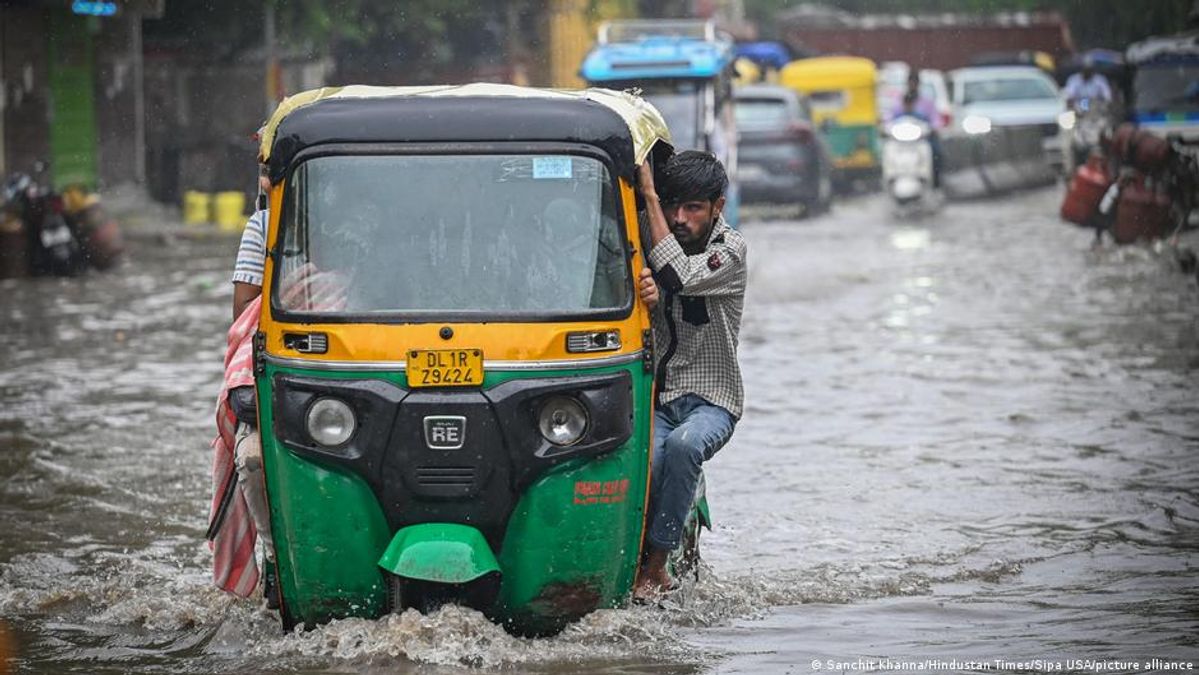
India's southwest monsoon has brought heavy rainfall, floods, landslides, and lightning strikes, resulting in over 100 deaths and thousands of people affected across the country. The northeastern state of Assam has been particularly hard hit, with more than 120,000 people affected by flooding.
The changing monsoon patterns are being driven by a combination of factors, including climate change and El Nino. Scientists warn that the longer-term changes are being driven by a changing climate, with a warmer atmosphere holding more moisture, making active spells, or periods of intense rainfall, more intense. India's infrastructure is increasingly out of step with this changing threat, with drainage systems and flood management still designed around historical seasonal rainfall averages rather than the short, high-impact events that cause the greatest disruption.
The people who bear the human cost of climate chaos are often those who are already vulnerable. Farmers depend heavily on the timing of rainfall, and long dry spells can disrupt sowing and reduce soil moisture, while intense rain can wash away fields and damage crops. Cities are also struggling due to rapid construction, with new roads and buildings leaving less land to absorb water, thus interfering with natural drainage. The rise in extreme rainfall is more than natural variability, representing a structural shift in the monsoon system.
What are governments and corporations downplaying or omitting in their statements? The fact that climate change is no longer a future threat, but a present reality that requires immediate action. The concept of 'climate proofing' does not exist in India's environmental clearance system, and the decision-making process fails to consider climate change while planning construction projects. This lack of consideration is 'weaponizing the environment', with devastating consequences for the people and the planet.
As India struggles to cope with the changing weather patterns, what should readers watch for next? The development and implementation of effective, sector-specific adaptation strategies, such as better flood management in cities, changes in agricultural practices, stronger water-storage systems, and infrastructure designed around short-duration extreme rainfall rather than historical averages. The focus needs to move beyond documenting and discussing these changes towards taking concrete actions to mitigate the human cost of climate chaos.
Editor's Note: The analysis is based on current trends and scientific research, but the exact impact of climate change on India's monsoon patterns is still a subject of ongoing research and debate.
Source referenced: DW
This brief was synthesized by our Editorial Engine and reviewed by The Ground Narrative team.


