TRENDING

Friday, 16 October 2026
----------------------
5 Jumada Al-Awwal 1448 AH
Hungary's parliament is poised to remove President Tamas Sulyok via constitutional amendment, a decisive move by Prime Minister Peter Magyar to dismantle the legacy of former premier Viktor Orban. This action signals a profound shift in Hungarian politics, raising questions about democratic institutions and the nation's future trajectory within the European Union.
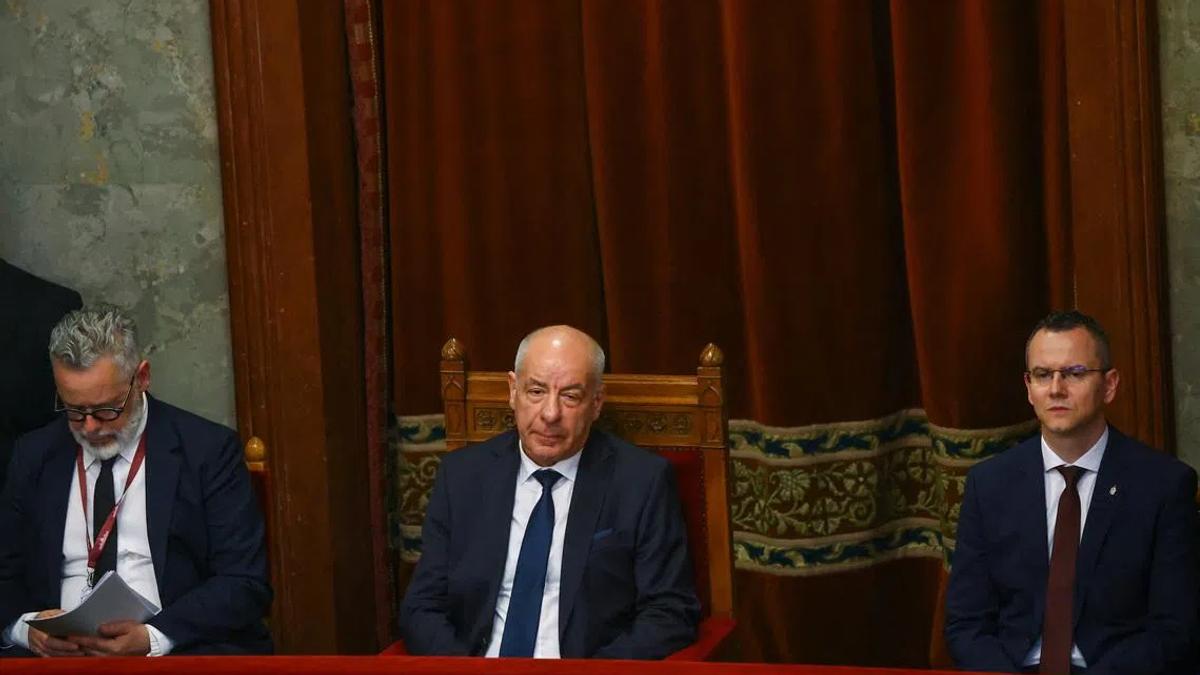
Hungary is on the cusp of a significant political upheaval as its parliament prepares to approve a constitutional amendment aimed at ousting President Tamas Sulyok. This move, spearheaded by Prime Minister Peter Magyar and his Tisza party, represents a critical phase in the dismantling of the political structures established during former Prime Minister Viktor Orban's 16-year rule. The proposed legislation, expected to pass on Monday, July 13, 2026, underscores Magyar's assertive approach to consolidating power and reshaping the nation's governance.
The core of this political maneuver involves a constitutional amendment, a process made possible by Magyar's Tisza party holding a supermajority in parliament. This legislative power enables the government to modify the constitution and reverse changes implemented by the previous administration, which Magyar's government contends eroded democratic principles. Prime Minister Magyar has publicly stated that President Sulyok is a "puppet" of Viktor Orban, asserting that his removal is essential for restoring "constitutional democracy." The amendment itself cites a "serious loss of confidence" in Sulyok as the justification for his immediate term termination.
President Sulyok, who previously served as a Constitutional Court judge and was appointed president in 2024, has maintained that he holds no political agenda. He has, however, objected to the amendment and sought an assessment from the Venice Commission, an advisory body of the Council of Europe focused on constitutional law. While the Venice Commission has declined to comment, its potential involvement highlights the international scrutiny surrounding Hungary's constitutional changes and democratic health. Should Sulyok refuse to sign the legislation within five days of its parliamentary approval, impeachment proceedings would be initiated, further demonstrating the new government's resolve.
The effort to remove President Sulyok is not an isolated incident but rather a key component of a broader strategy by Prime Minister Magyar to dismantle what he describes as Orban's "bastions of power." Magyar's landslide victory in April provided him with a strong mandate from voters to implement these reforms. Beyond the presidency, his government has already taken swift action, including the suspension of news broadcasts on public service television and radio last week. This move is part of an overhaul aimed at ensuring the independence of public media, a sector that critics often accused Orban's government of controlling.
Magyar's administration also plans a comprehensive constitutional reform in the autumn, with the current bill also proposing to limit lawmakers' terms to 12 years. These actions collectively signal a profound reorientation of Hungary's political and institutional framework, moving away from the centralized power structures that characterized the Orban era.
This dramatic power shake-up carries significant geopolitical and democratic implications. For Hungary domestically, it marks a decisive break from the political continuity of the past 16 years. The speed and method of these changes, particularly the use of a supermajority to amend the constitution and remove a head of state, will be closely watched by both Hungarian citizens and international observers. While framed as a restoration of democracy, such rapid and fundamental shifts can also raise concerns about the stability of institutional checks and balances.
Internationally, Hungary's relationship with the European Union is a critical factor. Under Orban, Hungary frequently clashed with Brussels over rule-of-law issues, judicial independence, and media freedom. Magyar's stated aim of restoring constitutional democracy could, in theory, improve relations with the EU. However, the manner in which these reforms are implemented, particularly regarding the independence of institutions and adherence to democratic norms, will be crucial. The involvement of bodies like the Venice Commission underscores the EU's and broader international community's interest in ensuring that Hungary's political transition aligns with European democratic standards.
The immediate future will see the election of a new president, who will serve until a new constitution takes effect or for a maximum of five years. This period will be critical in defining the nature of Magyar's leadership. The question remains whether these actions will genuinely lead to a more robust and pluralistic democracy, or if they represent a new consolidation of power under a different political force. The strategic motivations behind these reforms appear to be a complete overhaul of the state apparatus to prevent a return to the previous political order and to align Hungary more closely with Western democratic expectations, at least in rhetoric. The long-term consequences will depend on the sustained commitment to democratic principles and the avoidance of similar accusations of overreach that plagued the previous administration.
This period of intense political transformation in Hungary will undoubtedly shape its domestic governance, its standing within the European Union, and its broader geopolitical alignment for years to come.
Source referenced: STRAITSTIMES
This brief was synthesized by our Editorial Engine and reviewed by The Ground Narrative team.