TRENDING

Friday, 9 October 2026
----------------------
28 Rabi' Al-Thani 1448 AH
The US Department of Justice has subpoenaed New York Times journalists over articles questioning security measures on President Trump's new Air Force One, sparking a significant debate on press freedom. The reports cited anonymous sources regarding a plane switch in Turkey due to alleged Iranian threats, linking domestic media scrutiny to international security concerns.
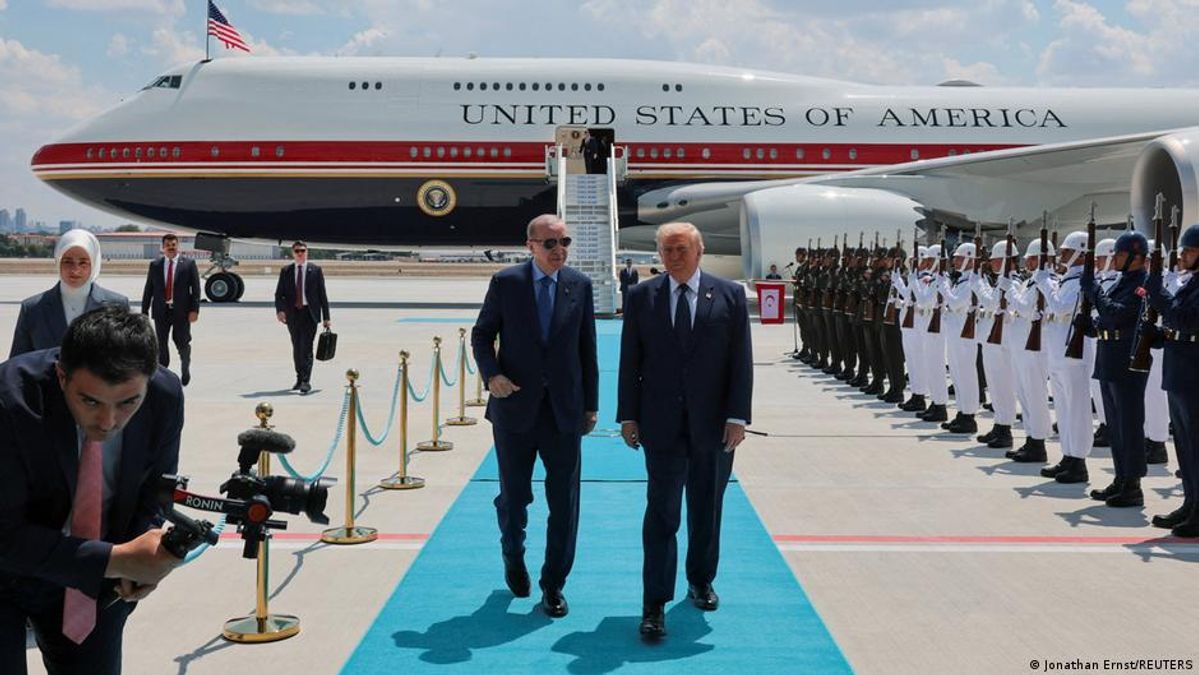
TheThe United States Department of Justice (DOJ) has issued subpoenas to journalists from The New York Times, demanding their testimony before a federal grand jury. This action stems from articles published by the newspaper that raised questions about the security protocols surrounding President Donald Trump's new Air Force One aircraft. The move has been widely condemned by media organizations as an unprecedented challenge to press freedom and a continuation of the Trump administration's contentious relationship with independent journalism.
The journalists' reports focused on an incident where President Trump, during a recent trip to Turkey, utilized two different Air Force One jets. He reportedly arrived in Turkey on the new aircraft, a gift from Qatar, but departed on an older model, which transported him to a Royal Air Force base in England. From there, he switched back to the new Air Force One for the return flight to the US. The New York Times, citing anonymous sources, reported that the Secret Service had urged this mid-trip aircraft change due to security concerns. These concerns were reportedly linked to the collapse of a 'shaky ceasefire' with neighboring Iran, suggesting a potential threat environment in the region.
The articles specifically highlighted that the newer Air Force One reportedly lacks some of the advanced security features present in older models, such as sophisticated anti-missile defense systems. President Trump has publicly denied that security concerns were the reason for the plane switch. However, when pressed by reporters about potential threats from Iran, he stated, "I have a threat all the time. I'm No. 1 on their list," implicitly acknowledging ongoing security risks.
The DOJ's decision to subpoena journalists, compelling them to testify about their reporting and potentially reveal confidential sources, has provoked a strong backlash from journalism advocacy groups and legal experts. Organizations like the National Press Club have called for the immediate withdrawal of the subpoenas, characterizing the action as an "extraordinary assault on the freedom of the press that strikes at the heart of the First Amendment." David McCraw, a lawyer for The New York Times, echoed these sentiments, stating that the appearance of federal agents at reporters' homes "should shock the conscience of any American who believes in the Constitution and the press freedom it protects."
This incident is not isolated but rather fits into a broader pattern of the Trump administration's aggressive posture towards the media. Throughout his tenure, President Trump has frequently labeled the press as an "enemy of the American people," filed lawsuits against critical news outlets, and even threatened to revoke broadcast licenses. Previous instances of the DOJ issuing subpoenas to reporters, though later withdrawn, further underscore a consistent effort to challenge and, critics argue, intimidate independent news organizations.
Beyond the domestic debate over press freedom, this controversy carries significant geopolitical and national security implications. The alleged security concerns surrounding Air Force One, particularly the reported lack of anti-missile defense on the newer aircraft, raise serious questions about the safety of the US President and the integrity of presidential transport protocols. The fact that these concerns were reportedly triggered by a "shaky ceasefire with neighboring Iran" collapsing in Turkey highlights the volatile security landscape in the Middle East and the potential for regional instability to directly impact US presidential security.
Iran's perceived threat, as alluded to by both the anonymous sources and President Trump's own comments, underscores the ongoing tensions between Washington and Tehran. Any perceived vulnerability in US presidential assets could be interpreted as a strategic weakness or an opportunity by adversaries. The involvement of Qatar, as the donor of the new Air Force One, also adds a subtle layer to the geopolitical context, though the article does not elaborate on its specific implications.
The subpoenas issued to The New York Times journalists represent a critical juncture, simultaneously testing the boundaries of press freedom in the United States and shining a spotlight on national security vulnerabilities amidst complex geopolitical dynamics. The incident forces a public reckoning with the balance between government transparency, the public's right to information, and the executive branch's efforts to control narratives, especially concerning sensitive national security matters. As the legal proceedings unfold, the outcome will likely have lasting repercussions for both American journalism and the perceived robustness of presidential security in an increasingly unpredictable global environment.
Source referenced: DW
This brief was synthesized by our Editorial Engine and reviewed by The Ground Narrative team.