TRENDING

Thursday, 15 October 2026
----------------------
4 Jumada Al-Awwal 1448 AH
Doctors Without Borders (MSF) has issued a stark condemnation of Russia's alleged deliberate targeting of Ukraine's healthcare infrastructure, documenting over 20 attacks on its own facilities and highlighting a broader pattern of destruction. This systematic assault, also corroborated by the WHO and Ukraine's Health Ministry, is framed as a strategy to collectively punish the population and constitutes a grave violation of international humanitarian law.
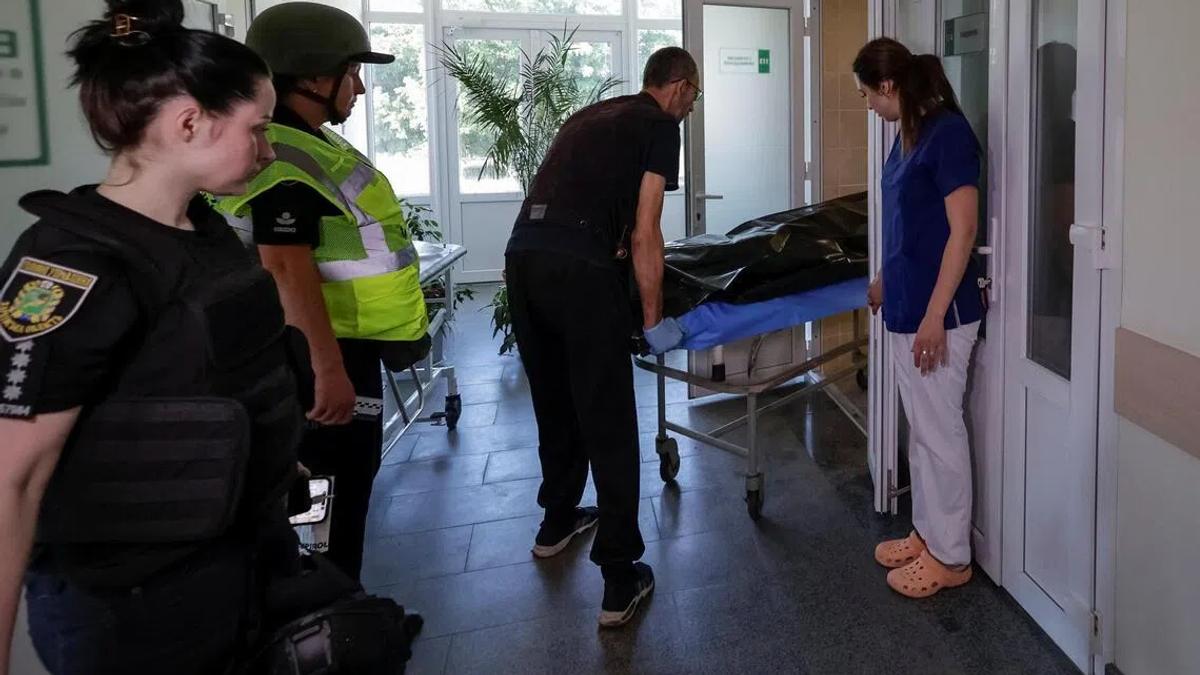
Doctors Without Borders (MSF) has issued a severe condemnation, alleging that Russia is pursuing a "deliberate strategy to destroy the healthcare system" in Ukraine. This accusation, made on July 13, 2026, by the prominent medical humanitarian organization, underscores a consistent pattern of attacks on medical facilities and personnel since Russia's full-scale invasion began on February 24, 2022.
Between April 2022 and December 2025, MSF documented more than 20 direct attacks on facilities associated with its operations. These incidents, according to MSF, are not incidental consequences of the conflict but rather appear to be a calculated effort to collectively punish the Ukrainian population and dismantle its vital healthcare infrastructure. Robin Meldrum, MSF's country coordinator in Ukraine, emphasized the precision and frequency of these assaults, stating, "When hospitals are struck repeatedly, when ambulances are targeted with precision drones, when medical workers are killed whilst en route to delivering medicines in clearly marked vehicles – this is no coincidence. This is a pattern; patterns are driven by intent."
The scale of destruction is extensive and corroborated by other international bodies. The World Health Organization (WHO) recorded 2,815 attacks on healthcare in Ukraine between February 2022 and the end of 2025. The vast majority of these, 2,319, directly impacted facilities, resulting in 224 deaths and 902 injuries. While the WHO documents these incidents, it refrains from attributing blame. Concurrently, Ukraine’s Health Ministry reports that Russian forces have damaged or destroyed over 2,500 medical facilities during the same period, with 327 completely obliterated.
This systematic targeting has plunged Ukraine into a profound humanitarian crisis, severely restricting access to essential medical care. Beyond emergency trauma, individuals requiring treatment for chronic conditions such as cardiovascular disease, diabetes, and epilepsy face immense challenges, leading to preventable suffering and fatalities. Operational healthcare facilities are critically understaffed; for instance, a hospital supported by MSF in Kherson has seen its doctor count plummet by 66 percent since 2022, exacerbating the strain on an already fragile system.
A significant and alarming development highlighted by MSF is the increasing use of first-person view (FPV) drones in these attacks. These precision drones allow operators to identify and strike targets in real-time, posing a constant threat to medical staff and patients, particularly in eastern and southern Ukraine. A stark example occurred on September 29, 2025, when a nurse and a director from an MSF-supported health center in Lyman, Donetsk, were struck by a Russian FPV drone while delivering medicines in a clearly marked vehicle.
This shift in warfare tactics is also altering the nature of injuries. While artillery previously caused the majority of trauma cases, drone strikes now account for a growing proportion. These attacks often result in multiple victims with complex, simultaneous wounds, higher infection rates, and an increased incidence of sepsis. The rapid evolution of drone warfare is outpacing the medical response capabilities, presenting new challenges for humanitarian aid organizations operating near the front lines.
The alleged deliberate destruction of healthcare infrastructure carries significant geopolitical implications. Attacks on medical facilities and personnel are grave violations of international humanitarian law, specifically the Geneva Conventions, which mandate the protection of healthcare in armed conflict. If proven deliberate, these actions constitute war crimes, further isolating Russia on the international stage and strengthening calls for accountability.
MSF has urged all parties to uphold their obligations under international humanitarian law and called upon states with influence over Russia to demand an immediate cessation of attacks on health facilities. Furthermore, the organization has appealed to the UN Security Council to investigate and publicly condemn these assaults. The ongoing documentation by MSF, WHO, and Ukrainian authorities provides crucial evidence that could be used in future international legal proceedings, underscoring the long-term consequences for Russia's international standing and the principles of global humanitarian law.
The systematic targeting of healthcare not only inflicts immediate suffering but also undermines Ukraine's long-term recovery and societal resilience. It creates a protracted humanitarian crisis that will require immense international effort to address, even after the cessation of hostilities. The international community's response to these alleged war crimes will be a critical test of its commitment to upholding humanitarian principles and ensuring accountability in modern conflict.
Source referenced: STRAITSTIMES
This brief was synthesized by our Editorial Engine and reviewed by The Ground Narrative team.