TRENDING

Friday, 16 October 2026
----------------------
5 Jumada Al-Awwal 1448 AH
French President Emmanuel Macron delivered his final address to the nation's armed forces on July 13, 2026, ahead of Bastille Day, marking a significant moment for reflection on France's defense policy and its role in global security. The speech underscored the culmination of his administration's strategic vision amidst evolving geopolitical landscapes.
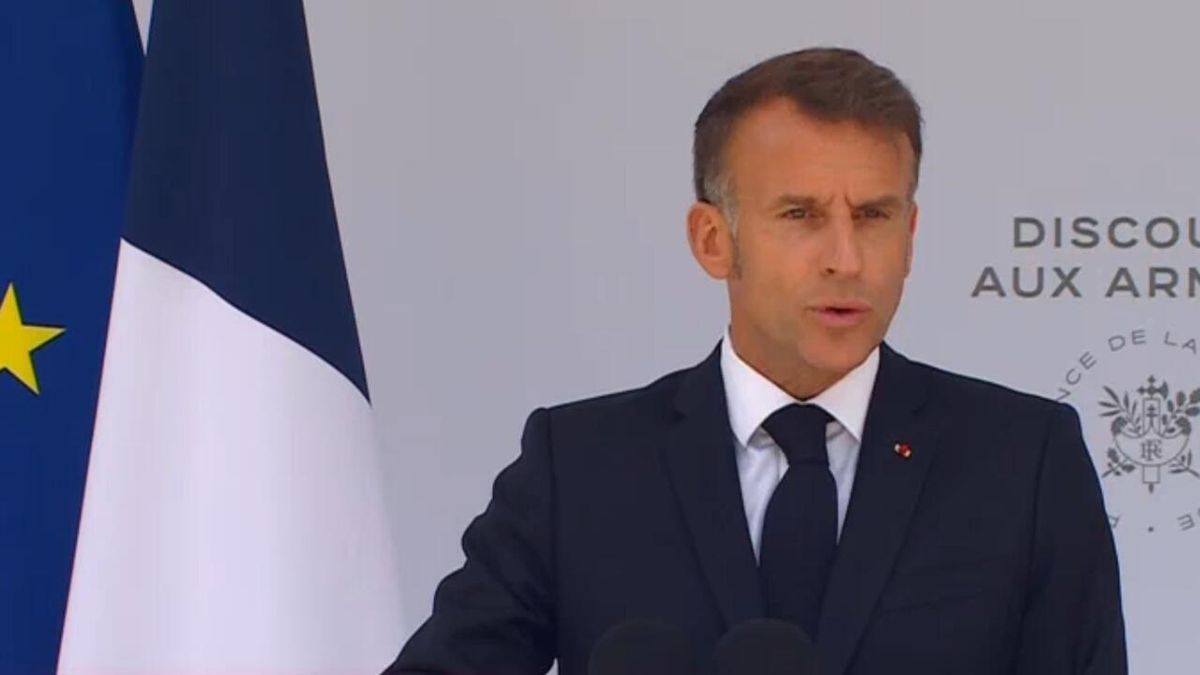
On July 13, 2026, French President Emmanuel Macron delivered what was described as his final address to the nation's armed forces, a customary yet profoundly significant event held at the Hôtel de Brienne on the eve of France's national holiday, Bastille Day. This address, coming towards the end of his second presidential term, served as a pivotal moment for the President to reflect on his administration's defense legacy, articulate France's strategic priorities, and acknowledge the sacrifices of its military personnel.
The timing of the speech, just before the July 14 celebrations that traditionally showcase France's military might and national unity, amplified its symbolic weight. For a sitting president, such an address is not merely a ceremonial gesture but a comprehensive review of defense policy, military achievements, and future challenges. Macron's 'final' address in this context signals a summation of his strategic vision and the trajectory he set for French defense and foreign policy over his tenure.
President Macron's presidency has been characterized by a robust and often assertive foreign and defense policy, aiming to bolster France's strategic autonomy and its influence on the global stage. His addresses to the armed forces throughout his terms consistently emphasized several key pillars that were likely central to this valedictory speech:
* European Strategic Autonomy: A cornerstone of Macron's vision has been the push for a stronger, more independent European defense capability. This initiative seeks to reduce Europe's reliance on the United States for security, advocating for increased intra-European defense cooperation, joint military projects, and a shared strategic culture. His final address would have been an opportunity to assess progress on this front and reiterate its long-term importance in a multipolar world.
* NATO and Transatlantic Relations: While championing European autonomy, Macron has also navigated France's commitment to NATO. His speeches often sought to balance these two imperatives, advocating for a more strategically aware and capable European pillar within the Alliance, rather than a complete decoupling. The speech likely addressed the evolving role of NATO in 2026, particularly in light of ongoing conflicts and shifting global power dynamics.
* Global Interventions and Presence: France maintains a significant military presence and conducts operations across various regions, notably in the Sahel, the Levant, and the Indo-Pacific. Macron's administration has overseen complex withdrawals and reconfigurations of forces, particularly in Africa, while simultaneously seeking to project power and influence in new strategic theaters. The address would have acknowledged these deployments, the challenges faced by French forces, and the strategic rationale behind France's global engagement.
* Modernization and Innovation: Under Macron, France has committed to significant investments in its armed forces, focusing on technological modernization, cyber defense, space capabilities, and the development of future combat systems. This emphasis on innovation is crucial for maintaining France's military edge and its capacity to respond to contemporary threats. The speech would have highlighted these advancements and the ongoing commitment to equipping the military for future challenges.
* Nuclear Deterrence: As a nuclear power, France's independent nuclear deterrent remains a fundamental component of its defense doctrine. Macron has consistently reaffirmed the importance of this capability for national security and its role in European stability. His final address would have underscored the enduring relevance of France's nuclear posture in a complex international security environment.
Domestically, the President's address to the armed forces serves to reinforce national pride, acknowledge the service and sacrifice of military personnel, and articulate the government's commitment to defense. It is a moment to connect the public with the strategic realities faced by the nation and its forces abroad. Internationally, such a speech is closely watched by allies and adversaries alike, providing insights into France's strategic thinking, its resolve, and its future foreign policy orientation.
Coming in 2026, the speech would have been delivered against a backdrop of persistent global instability, including potential regional conflicts, the impacts of climate change on security (as hinted by other news items from the same period), and intensified great power competition. Macron's reflections would have therefore been framed by these pressing geopolitical realities, offering a comprehensive overview of France's position and its contributions to international peace and security.
Emmanuel Macron's final address to the French armed forces on July 13, 2026, was more than a ceremonial farewell; it was a strategic summation of his presidency's defense policy. It provided an opportunity to consolidate his legacy of advocating for European strategic autonomy, modernizing France's military capabilities, and maintaining an active global presence. The speech underscored France's enduring commitment to its national security interests and its pivotal role in shaping the future of European and global defense, setting a clear strategic tone for the remainder of his term and beyond.
Editor's Note: The analysis of the speech's content is inferred from President Macron's known defense policy priorities and the general significance of a head of state's address to the armed forces, as the provided article offers no specific details from the speech itself.
Source referenced: FRANCE24
This brief was synthesized by our Editorial Engine and reviewed by The Ground Narrative team.