TRENDING

Sunday, 4 October 2026
----------------------
23 Rabi' Al-Thani 1448 AH
A federal judge's decision to allow the termination of Temporary Protected Status for 350,000 Haitians places them at risk of deportation to a country the US State Department deems highly dangerous. This ruling follows a Supreme Court decision limiting judicial review over such immigration policies.
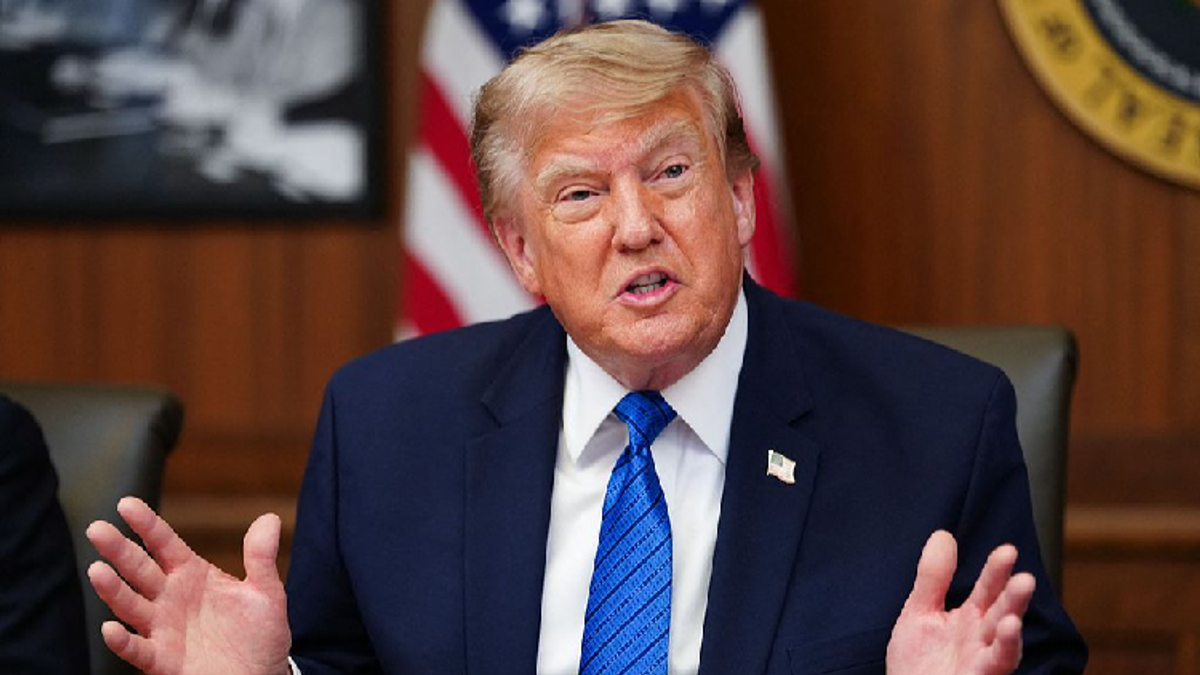
A federal judge in Washington D.C. has reversed an earlier decision, allowing the Trump administration to proceed with the termination of Temporary Protected Status (TPS) for approximately 350,000 Haitians. This ruling follows a Supreme Court decision that found TPS determinations are not subject to judicial review, effectively removing a key legal hurdle for the administration's policy. The decision places hundreds of thousands of individuals at risk of deportation to Haiti, a nation the US State Department itself designates as a Level 4 (highest risk) destination due to severe instability and humanitarian concerns.
The termination of TPS for Haitians reveals a complex interplay of executive power, judicial interpretation, and the political weaponization of immigration policy. The Trump administration's drive to end TPS for several countries, including Haiti, was framed as a return to the "temporary" nature of the status, arguing that original conditions no longer applied, despite evidence to the contrary regarding Haiti's ongoing crises. The Supreme Court's 6-3 ruling, asserting that TPS determinations are not subject to judicial review, significantly consolidated executive power over immigration policy, stripping lower courts of their ability to intervene on humanitarian grounds. This legal shift empowers the executive branch to unilaterally decide the fate of hundreds of thousands of long-term residents, aligning with a broader political agenda to reduce immigration and fulfill campaign promises. For the administration, this move is a demonstration of control and a signal to its base, despite the practical implications for US labor markets and the humanitarian situation in Haiti.
The direct human cost falls squarely on the 350,000 Haitians who have built lives in the United States, many for over a decade since the devastating 2010 earthquake. Approximately 200,000 of these individuals are employed, contributing significantly to sectors like healthcare, food service, warehousing, retail, and long-term caregiving—industries often reliant on their labor. Their sudden loss of legal status means not only the threat of deportation but also the unraveling of families, communities, and economic stability. Children born in the US to TPS holders, who are US citizens, face the agonizing choice of remaining in the US without their parents or moving to a country they may have never known, a country grappling with extreme hunger, crime, and political instability. The psychological toll of living under constant threat of removal, coupled with the economic disruption to their families and communities, represents a profound and immediate human tragedy.
What is often downplayed by official statements is the deep economic integration of TPS holders into the US economy and the historical context of US-Haiti relations. The narrative often focuses on "illegal immigration" or "temporary status" expiring, rather than acknowledging the substantial contributions of these workers, particularly in essential services. The sudden removal of 200,000 workers from critical sectors will create labor shortages and disrupt local economies, a cost rarely factored into the political calculus. Furthermore, the US's historical involvement in Haiti, from military occupations to supporting various regimes, has contributed significantly to the very instability that necessitated TPS in the first place. This complex history, and the US's role in the ongoing crisis in Haiti, is conveniently omitted from discussions about "temporary" status. The State Department's own Level 4 advisory for Haiti underscores the contradiction of deeming it safe for return while simultaneously warning US citizens against travel.
The immediate focus will be on the practical implementation of these deportations and any potential last-minute legal challenges or administrative delays. Watch for how the US government manages the logistics of such a large-scale removal, and whether any new legislative efforts emerge to protect these populations, though unlikely in the current political climate. Beyond the individual deportations, this ruling sets a precedent for how future administrations may wield executive power over immigration, particularly for other TPS recipient groups. Observe the political rhetoric leading up to future elections, as immigration policy will remain a potent issue. Finally, monitor the humanitarian situation in Haiti itself. A mass influx of deportees, many without current ties or resources in Haiti, could exacerbate an already dire crisis, further destabilizing the nation and potentially creating new waves of migration.
Source referenced: CGTN
This brief was synthesized by our Editorial Engine and reviewed by The Ground Narrative team.