TRENDING

Sunday, 4 October 2026
----------------------
23 Rabi' Al-Thani 1448 AH
Israel's far-right National Security Minister has called for 'nightly killings' in Gaza, sparking international alarm. This analysis unpacks the political incentives behind such extreme rhetoric and its devastating human implications for Palestinians.
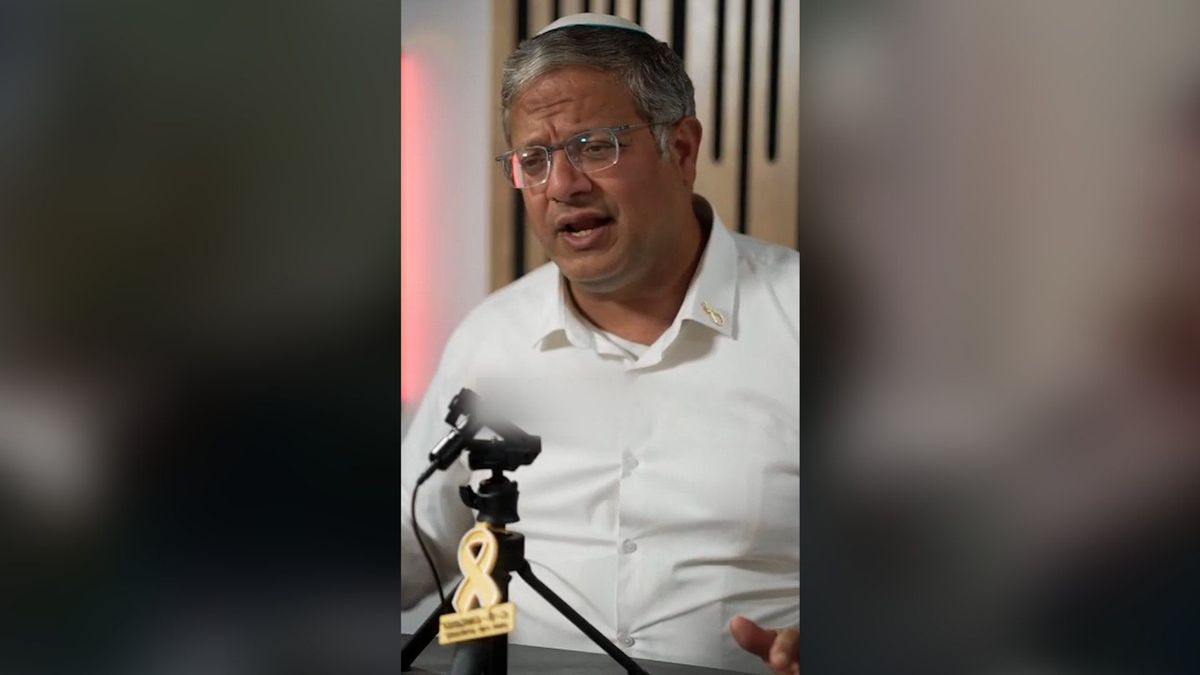
Israel's far-right National Security Minister Itamar Ben-Gvir recently called for the "nightly killings" in Gaza of "dozens of people who he says are 'not worthy of life'." This statement follows a pattern of increasingly severe rhetoric and policies aimed at Palestinians, exacerbating an already dire humanitarian situation in the besieged territory. The minister's remarks have drawn widespread condemnation and highlight the escalating extremist discourse within parts of the Israeli government.
Ben-Gvir's statement is not merely an isolated outburst but a calculated move within a specific political ecosystem. For hardline factions in Israel, such rhetoric serves multiple purposes: it solidifies their base, signals unwavering commitment to a particular ideological vision of Israeli security and territorial control, and pressures the broader government to adopt more aggressive stances. The minister's political survival and influence are often tied to his ability to demonstrate strength and uncompromising resolve to his constituents, who often feel that previous governments were too lenient. This dynamic creates a feedback loop where extreme positions are rewarded with political capital, making moderation a perceived weakness. Furthermore, such calls can be a way to test the boundaries of international tolerance and shift the Overton window, making previously unthinkable policies seem more acceptable over time. The structural power lies in the ability of a government minister to articulate such a position, leveraging the authority of his office to shape public discourse and potentially policy direction, even if not immediately implemented. It also reflects a broader political trend where the line between security concerns and punitive measures against an entire population becomes increasingly blurred, driven by nationalist fervor and a desire for absolute control over contested territories.
The immediate and profound human cost of such rhetoric falls squarely on the Palestinian population in Gaza. Already living under a prolonged blockade, experiencing widespread poverty, limited access to essential services, and the psychological trauma of repeated conflicts, these statements amplify an omnipresent fear for their lives and future. The call for "nightly killings" dehumanizes an entire population, implicitly sanctioning violence against civilians and eroding any remaining sense of security. For families in Gaza, these words translate into heightened anxiety, a deeper sense of vulnerability, and the chilling realization that their existence is openly debated and devalued by powerful figures. Beyond the immediate threat, such declarations contribute to a climate of despair, making daily life an unbearable struggle for dignity and survival. The international community often focuses on state-level diplomacy or military operations, but it is the ordinary families, children, and elderly in Gaza who bear the direct psychological and physical brunt of this escalating dehumanization.
What is consistently downplayed or omitted in official statements and much of the mainstream discourse is the long-term strategic objective behind such extreme declarations. Beyond immediate political gains, such rhetoric contributes to a broader strategy of making life in Gaza — and other Palestinian territories — untenable. The unspoken aim for some hardline elements is to encourage voluntary displacement or create conditions so harsh that the population has no choice but to leave. This is rarely articulated directly, as it would constitute a clear violation of international law and humanitarian principles. Instead, the narrative is framed around security imperatives, deterrence, or the need to eliminate threats, thereby obfuscating the underlying demographic and territorial ambitions. The international community, while often condemning the rhetoric, frequently fails to address this deeper, systemic intent, focusing instead on immediate humanitarian aid or calls for de-escalation without confronting the root causes of the escalating pressure on Palestinian populations. The historical context of displacement and land control is often sidelined in favor of present-day security narratives.
Readers should closely watch several indicators. Firstly, observe whether this rhetoric translates into concrete policy changes or military actions on the ground. Any shift in rules of engagement, increased punitive measures, or further restrictions on Gaza's population will be critical. Secondly, monitor the international response, particularly from key allies of Israel. The strength or weakness of international condemnation and any subsequent diplomatic or economic pressure will signal the perceived limits of such extreme discourse. Thirdly, pay attention to internal Israeli politics: whether other coalition members distance themselves from Ben-Gvir's statements, or if his influence grows, indicating a further shift in the political center of gravity. Finally, the resilience and reactions of Palestinian civil society and resistance movements will be crucial, as they respond to an increasingly hostile environment. The interplay of these factors will determine whether this extreme rhetoric remains confined to words or precipitates a new, more dangerous phase in the ongoing conflict.
Source referenced: ALJAZEERA
This brief was synthesized by our Editorial Engine and reviewed by The Ground Narrative team.