TRENDING

Wednesday, 7 October 2026
----------------------
26 Rabi' Al-Thani 1448 AH
Gaza City's vital port, once a hub for fishing and tourism, has been systematically destroyed as part of the ongoing conflict. This act cripples a key artery for the besieged territory, reshaping its future and deepening its isolation.
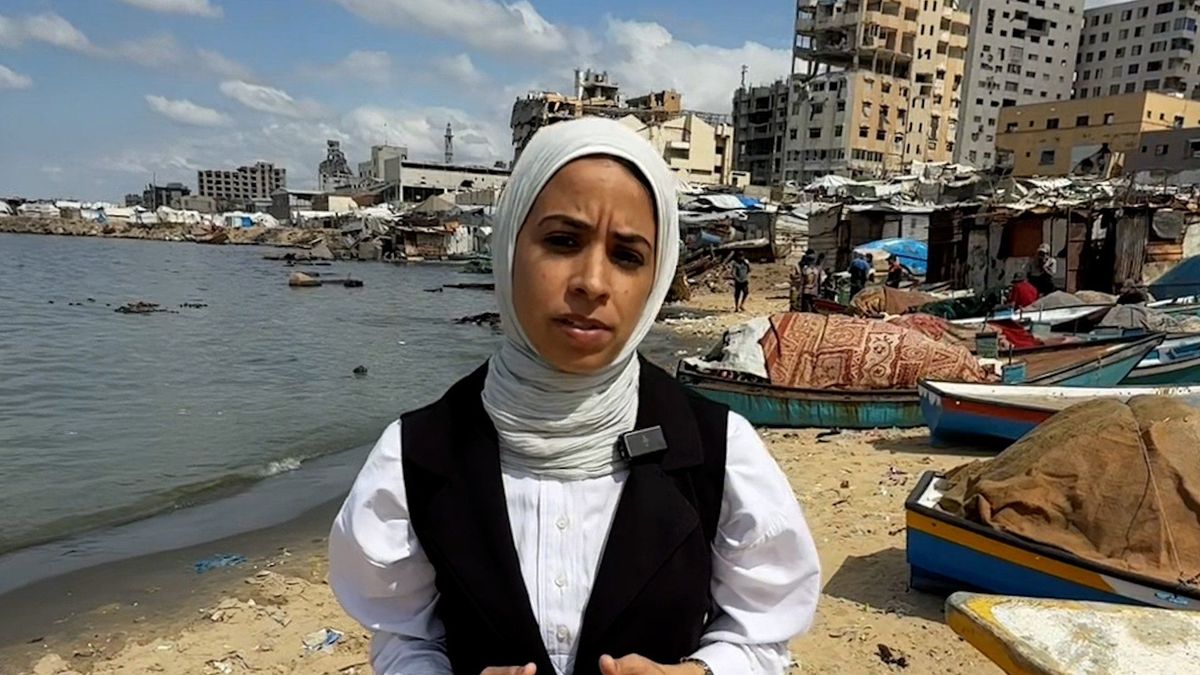
In the ongoing military operations following the events of October 7, 2023, Israel's forces have systematically dismantled and destroyed Gaza City's port. This critical piece of infrastructure, once a modest but vital hub for both fishing and the nascent tourism industry in the Gaza Strip, now lies in ruins. The destruction of the port is not an isolated incident but part of a broader campaign that has targeted civilian infrastructure across Gaza, fundamentally altering the physical and economic landscape of the besieged enclave. For a population already enduring a prolonged blockade, the obliteration of its only direct maritime link to the outside world represents a profound escalation of its isolation and a further erosion of its capacity for self-sufficiency.
The destruction of Gaza City's port can be understood through several interlocking power dynamics, primarily driven by Israel's long-standing security objectives and its approach to managing the Gaza Strip. For Israel, the port, like other infrastructure, is viewed through the lens of potential dual-use by militant groups, specifically Hamas. The argument often made is that any point of entry or exit, including maritime routes, could be exploited for smuggling weapons, personnel, or materials that could bolster military capabilities against Israel. Therefore, denying Gaza independent maritime access is framed as a necessary security measure to prevent such threats.
However, this security rationale also serves to reinforce Israel's comprehensive control over Gaza's borders and its economy. The Gaza Strip has been under an Israeli and Egyptian blockade since 2007, severely restricting the movement of goods and people. The port, even in its limited capacity, represented a symbolic and practical connection to the wider world, albeit one heavily policed by Israel. Its destruction eliminates any vestige of Gaza's ability to conduct independent trade or receive goods directly by sea, solidifying Israel's role as the sole gatekeeper for virtually all imports and exports.
This strategy aligns with a broader pattern of de-development, where Gaza's economic potential is systematically suppressed. By destroying key infrastructure like the port, Israel not only removes immediate perceived security threats but also ensures Gaza's long-term economic dependency and inability to rebuild without external, often conditional, aid. This dependency weakens any independent governing authority within Gaza and reduces its capacity to challenge the status quo. The power dynamic is one of overwhelming military and economic leverage wielded by Israel, which shapes the very physical and social fabric of Gaza to suit its security and strategic imperatives, regardless of the human cost.
The destruction of Gaza City's port carries a devastating human cost, impacting thousands of ordinary citizens whose lives were intertwined with its operations and the broader economy it supported. The immediate and most direct victims are the fishermen and their families. Fishing has historically been a cornerstone of Gaza's economy and a vital source of protein for its population. With the port in ruins, the ability to launch boats, process catches, and access markets is severely hampered, if not entirely eliminated. This means thousands of livelihoods are instantly wiped out, pushing already vulnerable communities deeper into poverty and food insecurity.
Before its destruction, the port was a hub of activity, employing not only fishermen but also dockworkers, traders, and those in ancillary services like boat repair and fish processing. The collapse of this industry leaves a massive void in Gaza's already struggling job market. For a territory where unemployment rates were already among the highest in the world, this loss exacerbates an acute humanitarian crisis. Furthermore, the reduction in locally sourced seafood places additional strain on food supplies, making Gaza's population even more reliant on external aid, which itself is often inconsistent and subject to political constraints.
The port was more than just an economic asset; it was a symbol of Gaza's connection to the sea and, by extension, to the outside world. Its destruction represents a profound psychological blow to a population that has endured decades of siege and conflict. It signifies a further shrinking of their world, a physical manifestation of their increasing isolation. For children growing up in Gaza, the port offered a glimpse of normalcy, a place of work and commerce, and even a limited recreational space. Its obliteration contributes to a sense of hopelessness and the systematic dismantling of any infrastructure that could support a viable future.
While the port was not a primary entry point for humanitarian aid due to Israel's blockade, its destruction further complicates any future efforts to deliver assistance by sea. In times of severe crisis, alternative routes become crucial. The absence of a functional port means that any large-scale maritime aid operations, which could potentially alleviate pressure on overwhelmed land crossings, are now impossible without significant, costly, and time-consuming reconstruction. This prolongs the suffering of Gaza's population, making relief efforts more arduous and less efficient.
Official statements and public narratives surrounding the destruction of infrastructure in Gaza often center on immediate security imperatives, presenting such actions as regrettable but necessary to counter militant threats. What is often downplayed or entirely omitted is the long-term strategic impact of these actions on Gaza's viability as a self-sustaining entity and the potential for demographic shifts.
The systematic destruction of Gaza's productive infrastructure, including its port, goes beyond immediate security concerns. It is part of a broader pattern that critics argue amounts to a policy of de-development. By dismantling the capacity for local industry, trade, and even basic services like water and sanitation, Gaza is rendered perpetually dependent on external aid and, by extension, on the powers that control its access to that aid. This creates a deeply unstable and unsustainable environment, making long-term reconstruction and self-governance exceptionally challenging. The untold story here is how these actions contribute to a strategic objective of maintaining absolute control over Gaza's future, rather than merely addressing immediate threats.
Another critical element often overlooked is the potential demographic implication. When an area becomes uninhabitable or economically unviable due to widespread destruction, populations are often compelled to leave. While not explicitly stated as a goal, the cumulative effect of destroying homes, hospitals, schools, and vital infrastructure like the port could be seen as creating conditions that make life in Gaza unsustainable for a large portion of its residents. This raises profound questions about forced displacement and the future presence of Palestinians in the Gaza Strip, a narrative rarely acknowledged in official discourse.
Governments and powerful actors often frame military actions within the bounds of international law, emphasizing concepts like proportionality and distinction. However, the extensive and systematic destruction of civilian infrastructure, including a port critical for civilian livelihoods and humanitarian access, raises serious questions about adherence to these principles. The untold story is the lack of robust international accountability for such actions. While international bodies may issue condemnations, the practical consequences for the perpetrators are often minimal, allowing for a continuation of policies that severely impact civilian populations without significant deterrence. The silence or inaction from key international players on these specific acts of destruction is a critical part of this untold narrative, highlighting the selective application of international norms.
Moving forward, the destruction of Gaza City's port sets several critical indicators for the future of the Gaza Strip and the broader regional power dynamics. Observers should closely monitor the following:
- Reconstruction Efforts and Access: Will Israel permit the reconstruction of the port, and if so, under what conditions? Any reconstruction would likely be subject to stringent security checks and international oversight, potentially further limiting Gaza's autonomy. The speed and scope of these efforts, and the degree of access granted, will be a key indicator of any shift in policy towards Gaza.
- Humanitarian Aid Delivery: The absence of a functional port places even greater reliance on land crossings for humanitarian aid. Watch for how this impacts the volume and efficiency of aid delivery, and whether new maritime aid initiatives, such as temporary piers, are proposed or implemented, and under whose control they operate. The long-term food security and health outcomes for Gaza's population will be directly linked to these logistics.
- Economic Viability and Livelihoods: The fate of Gaza's fishing industry and other port-related sectors will be a crucial measure of the territory's economic future. Will there be international efforts to support alternative livelihoods for those displaced by the port's destruction? The ability of Gaza's economy to recover, even partially, will depend on more than just aid; it will require fundamental changes in access and trade policy.
- International Legal Scrutiny: Continue to watch for any further actions by international legal bodies, such as the International Criminal Court (ICC) or the International Court of Justice (ICJ), regarding the destruction of civilian infrastructure in Gaza. While immediate consequences may be limited, sustained legal pressure can shape future state behavior and establish precedents for accountability.
- Regional Diplomatic Initiatives: Any proposals for Gaza's post-conflict governance or reconstruction from regional powers or international bodies will need to address the issue of Gaza's access to the sea. Whether these initiatives prioritize Gaza's self-sufficiency or reinforce its isolation will be a critical point of contention and a strong indicator of the international community's true commitment to a viable future for the territory.
Gaza City's port was a vital hub for the territory's fishing industry, providing livelihoods for thousands and a crucial source of food. It also supported a small tourism sector and represented one of Gaza's few direct connections to the outside world, albeit under strict blockade.
The destruction eliminates thousands of livelihoods in the fishing and related industries, exacerbating unemployment and poverty. It further cripples Gaza's already besieged economy, increases reliance on external aid, and deepens the population's isolation and food insecurity.
Long-term implications include increased dependency on external powers for reconstruction and aid, diminished prospects for economic self-sufficiency, and potential demographic shifts due to the unviability of life in Gaza. It also raises questions about international law and accountability for extensive civilian infrastructure damage.
Editor's Note: The raw intelligence's date (Oct 7, 2026) is interpreted as a publishing date for content related to the ongoing conflict following Oct 7, 2023, given the context of 'genocide' and 'Hamas-attack anniversary.' The analysis proceeds based on the destruction being part of current or recent events.
Source referenced: ALJAZEERA
This brief was synthesized by our Editorial Engine and reviewed by The Ground Narrative team.


