TRENDING

Wednesday, 7 October 2026
----------------------
26 Rabi' Al-Thani 1448 AH
Beijing is increasingly focused on a strategy of 'nonforcible realignment' to bring Taiwan under its control, leveraging political influence and economic ties rather than military force. This approach presents a complex challenge for Taiwan's democracy and international observers.
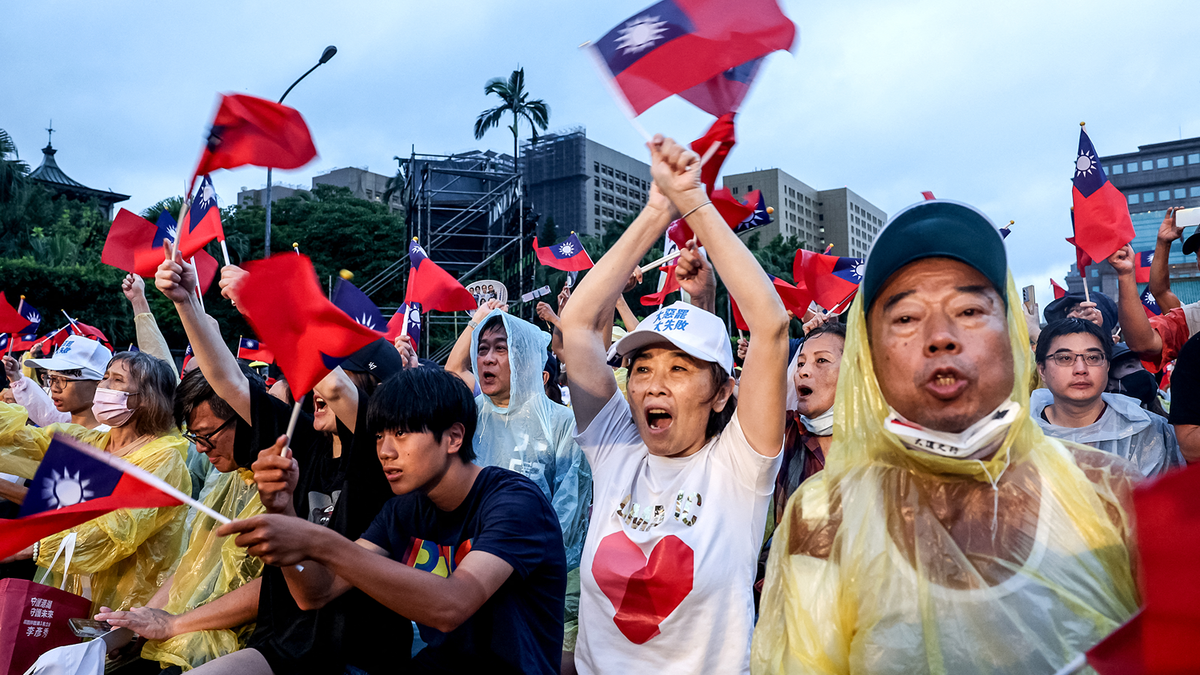
A growing body of analysis suggests that Beijing is shifting its primary strategy for absorbing Taiwan from a direct military invasion to a more insidious campaign of political and economic coercion, termed "nonforcible realignment" or "bloodless annexation." This approach seeks to achieve China's long-held goal of "peaceful reunification" by influencing Taiwan's democratic processes, cultivating pro-Beijing leaders, and eroding the island's international and internal resilience, all without firing a single shot. The strategy aims for a scenario where an elected Taiwanese government might voluntarily conclude a treaty effectively ceding its territory to the People's Republic of China, a development for which Washington appears largely unprepared.
China's pursuit of Taiwan through non-military means is a sophisticated application of long-standing strategic thought, echoing principles of "winning without fighting." This approach leverages Beijing's immense economic and political power to create an environment where Taiwan's eventual political alignment with the mainland appears to be the most logical, or even inevitable, outcome.
At its core, this strategy relies on several interlocking mechanisms. Economically, China has cultivated deep ties with Taiwan, making many sectors of the island's economy reliant on mainland markets and supply chains. This interdependence creates powerful incentives for Taiwanese businesses and, by extension, political actors, to maintain good relations with Beijing, often at the expense of closer ties with other democracies. The promise of continued economic prosperity, or the threat of its withdrawal, becomes a potent tool of persuasion.
Politically, Beijing's influence operations are extensive. These include funding local Taiwanese officials to travel to China, where they are exposed to pro-unification messaging. State-backed media and sophisticated, AI-enabled disinformation campaigns target Taiwanese elections, aiming to sow discord, undermine faith in democratic institutions, and promote candidates amenable to Beijing's agenda. There are also documented cases of espionage and infiltration within Taiwan's military, legislature, and executive branch, suggesting a concerted effort to compromise key decision-making bodies. The goal is not necessarily to install a puppet government directly, but to foster a political climate where leaders who advocate for closer ties with China are seen as pragmatic or even patriotic, subtly shifting the national discourse.
Internationally, China continues its relentless campaign to isolate Taiwan, pressuring countries and international organizations to deny its sovereignty and diplomatic recognition. This isolation reinforces the narrative within Taiwan that its future lies with the mainland, as its global space shrinks. The constant diplomatic pressure, combined with military intimidation through exercises and incursions into Taiwan's air defense identification zone, creates a sense of vulnerability and a desire for stability, which Beijing then frames as only achievable through "peaceful reunification."
For the United States, this non-military coercion presents a profound dilemma. The Taiwan Relations Act of 1979 commits Washington to resisting "any resort to force or other forms of coercion that would jeopardize the security, or the social or economic system, of the people on Taiwan." However, defining and responding to "coercion" that manifests as seemingly voluntary political decisions or economic frameworks is far more ambiguous than reacting to an overt military invasion. The appearance of a democratically elected Taiwanese government choosing closer ties with Beijing could tie Washington's hands, making intervention politically and legally difficult, even if the underlying decision was made under intense, covert pressure.
The shift towards nonforcible realignment carries a significant human cost, primarily borne by the ordinary citizens of Taiwan who stand to lose the most fundamental aspect of their society: democratic self-determination. While a military invasion would be catastrophic, a gradual political absorption could be just as devastating for the island's vibrant democracy and way of life.
The most immediate human cost is the potential erosion of the democratic freedoms and human rights that Taiwanese citizens currently enjoy. The precedent set by Hong Kong, where the "one country, two systems" framework was systematically dismantled by Beijing well before its promised 50-year lifespan, serves as a stark warning. The imposition of national security laws, the suppression of dissent, and the re-engineering of electoral systems to ensure only "patriots" (i.e., those loyal to the Chinese Communist Party) can govern, demonstrate the likely trajectory for Taiwan should it fall under Beijing's control, regardless of how that control is achieved. For Taiwanese citizens, this means losing their right to free speech, assembly, and a truly representative government.
While economic ties are presented as a benefit, deeper integration with China without political autonomy can lead to increased economic vulnerability. Taiwanese businesses and workers could find their livelihoods dictated by Beijing's political whims, with economic opportunities contingent on political loyalty. This creates a chilling effect on independent thought and action, as individuals and companies self-censor to protect their economic interests. Furthermore, the loss of Taiwan's independent economic identity could stifle innovation and limit its global reach, turning its dynamic economy into a mere appendage of the mainland.
Living under constant political pressure and sophisticated disinformation campaigns takes a heavy psychological toll. Citizens are forced to navigate a complex landscape of information, questioning the legitimacy of their own media, political leaders, and even their neighbors. This can lead to deep societal divisions, distrust, and a sense of powerlessness. For a people who have built a distinct Taiwanese identity over decades, separate from mainland China, the prospect of being absorbed represents a profound loss of cultural and national selfhood, impacting generations to come.
What often goes unstated or downplayed by powerful actors, particularly by Beijing and some international observers, is the sheer depth and systemic nature of China's non-military campaign against Taiwan. The narrative of "peaceful reunification" is presented as a benign, even desirable, outcome, yet it masks a relentless and coercive strategy designed to dismantle a functioning democracy through means that fall short of overt warfare but are no less destructive.
Beijing's use of the term "peaceful reunification" is a masterful euphemism. It implies a voluntary, harmonious coming together, often framed as the natural conclusion of a shared history. What is omitted is that this "peace" is predicated on Taiwan's capitulation to Beijing's terms, which explicitly rule out genuine self-determination or the preservation of Taiwan's democratic system. The "peace" offered is the peace of submission, where the absence of military conflict is achieved through the elimination of political resistance and independent choice. The Hong Kong experience is a critical, often ignored, case study in how Beijing interprets and implements such agreements.
Governments and official statements often focus on easily quantifiable threats like military build-ups or direct cyberattacks. However, the true scale of China's political warfare and influence operations in Taiwan is far more pervasive and difficult to detect. It extends beyond traditional espionage to include subtle media manipulation, the cultivation of political figures through financial incentives or ideological alignment, and the deployment of advanced AI-driven disinformation. This "invisible hand" operates beneath the radar of conventional security analysis, making it challenging for Washington or other international actors to identify and counter effectively. The difficulty lies in proving coercion when the outcome appears to be the result of a democratic election or legitimate political discourse.
While Washington has long maintained a policy of strategic ambiguity regarding military intervention in Taiwan, it has largely focused its contingency planning on a military invasion scenario. The possibility of a "bloodless annexation" through political means represents a significant strategic blind spot. The Taiwan Relations Act provides a legal basis to counter "coercion," but the practical application of this in a scenario where a seemingly legitimate Taiwanese election brings a pro-Beijing government to power is fraught with complications. The debate over what constitutes "coercion" in a political context, especially when it is covert and incremental, is largely absent from public discourse, leaving a critical vulnerability unaddressed. The US risks being caught in a situation where it perceives no clear trigger for intervention, even as Taiwan's democracy is systematically dismantled from within.
As China refines its non-military strategy for Taiwan, several key indicators will reveal the trajectory of this silent struggle. Observers should look beyond traditional military movements and focus on the subtle shifts in Taiwan's internal political landscape and Beijing's sustained influence campaigns.
First, the upcoming Taiwanese presidential and legislative elections will be critical. Pay close attention to the platforms of leading candidates, particularly their stance on cross-strait relations and economic ties with China. Any significant shift in public opinion or the election of leaders openly advocating for closer alignment with Beijing, especially those who downplay Taiwan's self-defense capabilities or question its alliances, will signal a deepening of China's influence.
Second, monitor China's continued use of economic incentives and disincentives. Watch for new "peace frameworks" or wide-ranging economic agreements proposed by Beijing or pro-Beijing elements within Taiwan. These frameworks, while seemingly beneficial, could create irreversible dependencies that bind Taiwan's future to the mainland. Conversely, observe any sudden economic pressures applied by Beijing to punish perceived anti-unification stances.
Third, closely follow Taiwan's internal efforts to bolster its counter-intelligence capabilities and media literacy. The volume of prosecuted spy cases, while concerning, also suggests a robust counter-intelligence effort. The effectiveness of Taiwanese civil society and government initiatives to combat disinformation and protect democratic processes will be crucial in resisting Beijing's political warfare.
Finally, observe how the United States and other democratic allies adapt their policies. Will Washington clarify its interpretation of "coercion" under the Taiwan Relations Act to explicitly address non-military influence operations? Any public statements or policy shifts from the US, Japan, or the European Union that acknowledge and prepare for a non-forcible annexation scenario will indicate a growing awareness of this complex threat. The global response to Taiwan's democratic resilience, or its erosion, will set a precedent for how powerful states might absorb smaller democracies in the future.
Source referenced: FOREIGNPOLICY
This brief was synthesized by our Editorial Engine and reviewed by The Ground Narrative team.