TRENDING

Wednesday, 7 October 2026
----------------------
26 Rabi' Al-Thani 1448 AH
France is gripped by widespread student and union protests demanding better learning conditions. Clashes with riot police, injuries, and arrests highlight a deepening crisis in the nation's public education system.
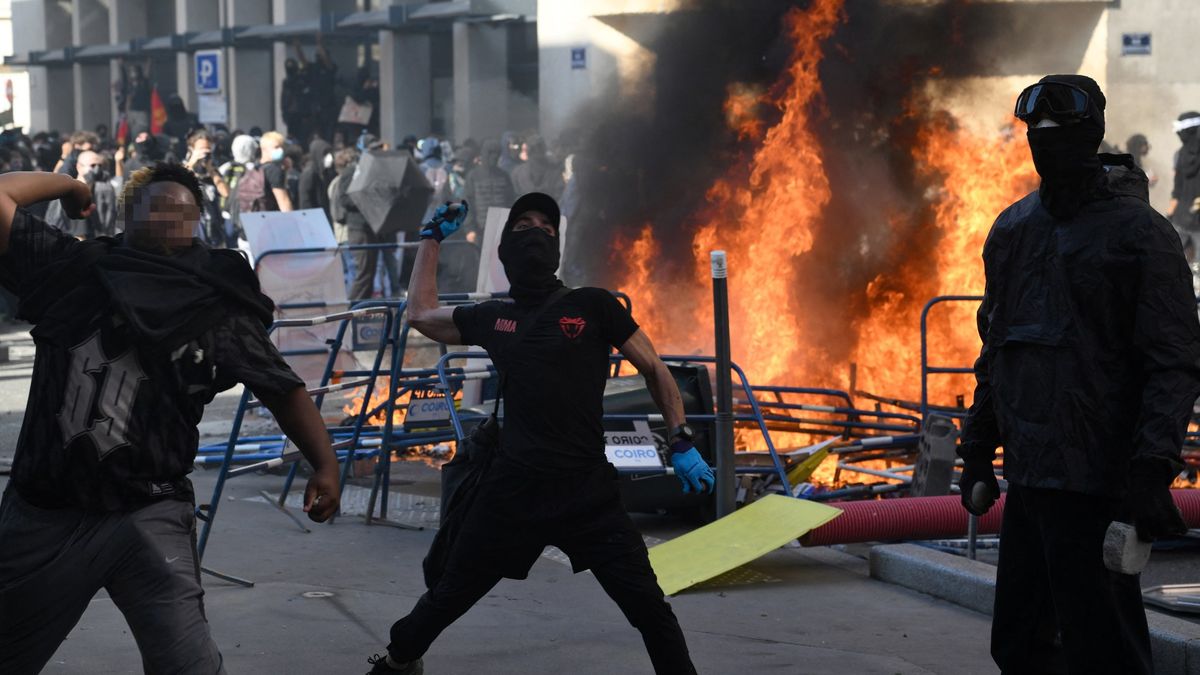
France has been engulfed by a wave of intense protests, as tens of thousands of high school students, joined by teachers and unions, took to the streets across the country. The demonstrations, which began in late September, escalated into widespread blockades of hundreds of schools and confrontations with riot police. Students are demanding urgent improvements to their learning environments, citing critical issues such as missing teachers, overcrowded timetables, dilapidated classrooms, and buildings ill-equipped to handle rising temperatures. While many protests remained peaceful, some instances saw demonstrators engage in property damage and clashes with law enforcement, who responded with batons, tear gas, and riot-control rounds.
Official figures from the French Ministry of the Interior reported 86,000 participants on a recent protest day, though the General Confederation of Labour (CGT) union claimed 260,000. The unrest has resulted in significant casualties: 215 students, 715 police officers, and 85 teaching staff have been injured. Tragically, a 15-year-old lost a hand to a stun grenade. Over 5,000 people, predominantly minors, have been arrested, and 24 schools have been burned or ransacked. In response, the government has launched internal investigations into allegations of police brutality and is pushing legislation to make those responsible for damaging public property financially liable for repairs.
At the heart of the French protests lies a fundamental tension between the state’s centralized authority and the demands of its citizens, particularly its youth. The French state, historically characterized by a strong, top-down governance model, often defaults to a firm stance when confronted with public dissent. This approach is not merely about maintaining order; it is a display of state capacity and a reaffirmation of the Republican order, which views challenges to public property or state authority with particular gravity. The government, led by Prime Minister Sebastien Lecornu, is under immense pressure to project strength, especially after previous nationwide protests over pension reforms that severely tested its resolve. Appearing weak or yielding too quickly could embolden other social movements and undermine its political capital.
Economic constraints play a significant role. Years of austerity measures and underinvestment in public services, particularly education, have created the very conditions now fueling the protests. While France prides itself on a robust welfare state and universal public education, budget cuts have hollowed out resources, leading to the reported shortages of teachers and crumbling infrastructure. The government's incentive is often to balance budgets and manage public debt, which can come at the expense of long-term investment in social infrastructure. This creates a cycle where deferred maintenance and understaffing eventually boil over into public anger.
Unions, like the CGT, wield considerable power in France, acting as crucial intermediaries between the public and the state. Their ability to mobilize large numbers and lend organizational weight to student grievances transforms localized school protests into a national movement. Their participation legitimizes the students' demands and amplifies the pressure on the government. The police response, often perceived as heavy-handed, is also a reflection of a specific doctrine of crowd control that prioritizes rapid dispersal and the re-establishment of order, sometimes at the cost of public trust and individual safety. The proposed legislation to make protesters pay for damages is a clear signal of the state's intent to shift financial responsibility and deter future acts of property damage, reinforcing its authority through economic penalties.
The immediate and most visible human cost of these protests falls squarely on the students themselves. Beyond the disruption to their education, many have faced physical injury, with the tragic loss of a hand by a 15-year-old to a stun grenade serving as a stark reminder of the potential for severe harm. The use of tear gas, batons, and riot-control rounds against young people can lead to lasting physical and psychological trauma. For those arrested, often minors, the experience of detention, legal proceedings, and potential criminal records can profoundly impact their future prospects, creating barriers to employment and further education.
Families bear a significant emotional and financial burden. The worry for their children's safety during protests, the stress of dealing with injuries, and the potential legal costs associated with arrests can be overwhelming. For many, these protests are a desperate cry for a better future for their children, and seeing them met with state force can deepen feelings of alienation and distrust towards public institutions. The disruption to schooling also places additional strain on parents, particularly those who rely on the educational system for childcare or who struggle to provide alternative learning environments.
Beyond the individual, the protests exact a toll on the broader community. The sight of burning schools and ransacked public property, while often the work of a small minority, creates a sense of insecurity and division. The accusations of disproportionate police force, even if investigated, erode public trust in law enforcement and the state's commitment to protecting its citizens. This erosion of trust can have long-term consequences for social cohesion, making it harder for communities to address shared challenges collaboratively. Teachers, caught between their students' legitimate grievances and their roles within the state system, also suffer, facing injuries and working in increasingly difficult and demoralizing conditions.
What often goes unsaid or is deliberately downplayed by official narratives is the systemic nature of the crisis underlying the French student protests. Governments tend to frame incidents of property damage as isolated acts of vandalism or criminality, thereby shifting the focus away from the deeper, structural failures that ignite such desperation. The dilapidated classrooms, missing teachers, and overloaded timetables are not random occurrences; they are the direct consequences of sustained policy choices, budget cuts, and a lack of long-term strategic investment in public education. By focusing on the
Source referenced: ALJAZEERA
This brief was synthesized by our Editorial Engine and reviewed by The Ground Narrative team.