TRENDING

Tuesday, 6 October 2026
----------------------
25 Rabi' Al-Thani 1448 AH
Indonesian President Prabowo Subianto's efforts to forge closer ties with the United States are creating significant political headaches at home, sparking widespread public and political backlash. From controversial peace initiatives in Gaza to contentious trade deals and military access, Jakarta finds itself walking a tightrope between superpower demands and its own national interests.
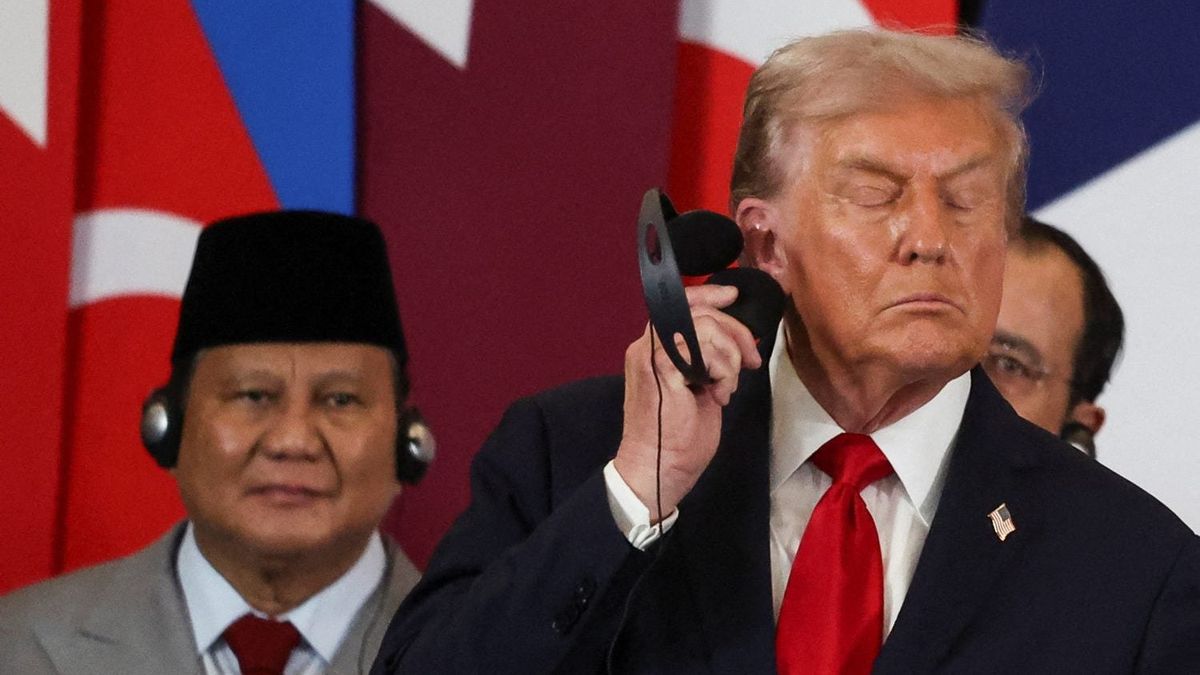
Indonesian President Prabowo Subianto has faced mounting domestic criticism and strategic complications following his administration's attempts to align with U.S. President Donald Trump's priorities during his second term. This alignment has manifested in several key areas, including a controversial pledge of Indonesian troops and financial aid for a Gaza settlement, participation in a U.S.-led 'Board of Peace', and a willingness to consider recognizing Israel. Simultaneously, Indonesia has navigated contentious trade negotiations with the U.S. that resulted in significant concessions impacting its economic sovereignty, alongside a proposal for precleared U.S. military access to Indonesian airspace. These moves have been met with widespread skepticism and outright opposition from Indonesian civil society, Muslim organizations, and even elements within Prabowo's own governing coalition, forcing Jakarta to backtrack or re-evaluate several commitments.
At its core, this situation reveals the intricate dance of power between a rising regional player and a global superpower, complicated by domestic political realities and historical foreign policy principles. Prabowo Subianto's incentives for aligning with Washington are multi-faceted. Economically, securing favorable trade terms, attracting investment, and fostering critical minerals cooperation with the U.S. offers significant benefits for Indonesia's development agenda. Strategically, closer military ties, exemplified by the expanding Super Garuda Shield exercises, can be seen as a hedge against growing regional uncertainties, particularly in the context of the South China Sea where China's assertiveness is a constant concern for Southeast Asian nations. Furthermore, for a newly elected leader, cultivating a personal relationship with a powerful U.S. president like Donald Trump could be perceived as enhancing Indonesia's global standing and Prabowo's own political capital.
However, these incentives clash directly with Indonesia's deeply ingrained foreign policy doctrine of 'Bebas Aktif' – 'free and active.' This principle, established during the Cold War, dictates that Indonesia maintains an independent stance, avoiding alignment with any major power bloc and actively contributing to global peace. Prabowo's perceived leaning towards Washington challenges this foundational tenet, triggering a strong nationalist and anti-imperialist sentiment among the populace and political elite. The proposed U.S. military airspace access, for instance, directly threatens Indonesia's sovereign control over its territory and risks entangling it in potential conflicts, particularly in the South China Sea, a scenario that runs counter to its non-aligned position.
From the U.S. perspective, the push for deeper engagement with Indonesia is part of a broader strategy to solidify its influence in the Indo-Pacific region, a critical arena for competition with China. Securing access, ensuring supply chain resilience (especially for critical minerals), and integrating Indonesia into a U.S.-led security framework serves to bolster Washington's regional architecture. The Trump administration's approach, characterized by assertive trade demands and a transactional foreign policy, leverages U.S. economic might to extract concessions, as seen with the tariffs and the restrictive trade agreement. The
Source referenced: FOREIGNPOLICY
This brief was synthesized by our Editorial Engine and reviewed by The Ground Narrative team.