TRENDING

Tuesday, 6 October 2026
----------------------
25 Rabi' Al-Thani 1448 AH
Spanish Prime Minister Pedro Sanchez has called a snap general election for November 29, 2026, a direct response to parliament's rejection of crucial housing decrees and escalating public protests over the country's housing crisis. This move represents a high-stakes political gamble to secure a stronger mandate amidst deep societal divisions.
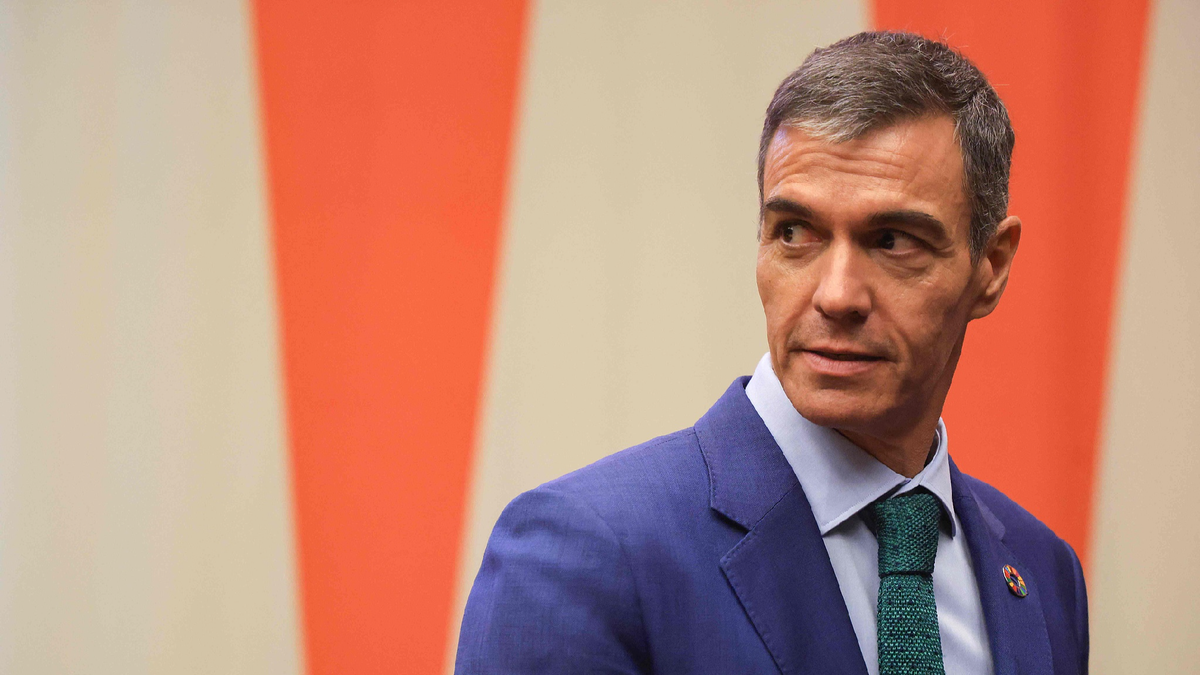
Spanish Prime Minister Pedro Sanchez announced on October 5, 2026, that a snap general election would be held on November 29 of the same year. The decision came swiftly after Spain's parliament rejected two key government decrees aimed at addressing the nation's escalating housing crisis. In a televised statement from the Moncloa Palace, Sanchez declared the need to "renew people's support" and "mobilize and win a much larger progressive majority in parliament," citing a desire to "overcome vested interests, deliver new social advances and continue transforming Spain." This unexpected call to the polls throws Spain into a period of intense political uncertainty, directly linking the stability of its government to the deeply felt economic anxieties of its citizens.
Pedro Sanchez's decision to call a snap election is a calculated political maneuver, a high-stakes gamble born from a position of parliamentary weakness. His coalition government, likely a minority or fragile alliance, evidently lacked the stable majority required to pass critical legislation, as evidenced by the rejection of the housing decrees. In such a scenario, a prime minister faces a choice: limp along, constantly negotiating and risking further legislative defeats, or dissolve parliament and seek a stronger mandate from the electorate.
Sanchez is betting that the current political climate, marked by public frustration over housing and a fragmented opposition, offers him a window to consolidate power. He aims to capitalize on the perceived disunity among right-wing and far-right parties, while simultaneously energizing his progressive base by framing the election as a fight against "vested interests" and for social justice. This strategy is not unique; leaders often call snap elections when they believe their opponents are unprepared, or when they can frame a specific issue—in this case, housing—as a clear choice for voters.
Spain's political landscape has been increasingly fragmented since the 2008 financial crisis, leading to a series of coalition or minority governments. The traditional two-party system has given way to a multi-party environment where forming stable majorities is challenging. Sanchez's Socialist Workers' Party (PSOE) has often relied on support from smaller regional parties and left-wing allies. The rejection of the housing decrees signals that this delicate balance has become unsustainable, either due to internal disagreements within the coalition or a unified opposition block. By calling an election, Sanchez is attempting to break this deadlock, but he risks deepening it further if the outcome results in another hung parliament.
Beyond domestic politics, Spain's economic performance and its standing within the European Union play a significant role. Spain has been a major recipient of EU recovery funds, and Brussels closely monitors its fiscal stability and structural reforms. Political instability, especially one triggered by a fundamental social issue like housing, can raise concerns among EU partners and financial markets. A strong, stable government is seen as crucial for implementing reforms, managing debt, and ensuring the country's economic trajectory aligns with EU expectations. Sanchez's move, therefore, also carries an implicit message to Europe: he seeks a clear mandate to govern effectively and fulfill Spain's commitments.
The immediate trigger for this snap election – the housing crisis – places the human cost squarely at the center of Spain's political drama. For millions of ordinary Spanish citizens, particularly young people, low-income families, and precarious workers, the struggle to secure affordable housing is a daily reality that overshadows political rhetoric.
Spain's housing market has been characterized by soaring rents, unaffordable property prices, and a severe shortage of social housing. This crisis is not new, but it has intensified in recent years, exacerbated by factors such as speculative investment, the proliferation of short-term tourist rentals, and stagnant wages failing to keep pace with housing costs. The rejected housing decrees were an attempt to alleviate some of this pressure, suggesting that the government's previous efforts were either insufficient or met with significant resistance. The human cost is tangible: young adults unable to leave their parents' homes, families spending an unsustainable portion of their income on rent, and the growing specter of homelessness for the most vulnerable. This election forces these individuals to confront the uncertainty of political change while their fundamental need for shelter remains unmet.
Beyond housing, the snap election introduces a period of political instability that inevitably impacts public services and policy implementation. Essential reforms, budgetary decisions, and long-term strategic planning can be delayed or put on hold as political parties campaign. This uncertainty can ripple through the economy, affecting investor confidence, job creation, and the delivery of critical social programs. For citizens, it means a potential pause in progress on issues ranging from healthcare and education to environmental policy, all while their immediate economic pressures persist. The constant cycle of elections and coalition negotiations can also lead to public fatigue and cynicism, further eroding trust in democratic institutions.
Elections, especially those called under duress, tend to amplify existing social and political divisions. The debate around housing, for instance, is not just about economics; it touches on property rights, the role of the state, and intergenerational fairness. A snap election forces these contentious issues to the forefront, potentially exacerbating polarization between different segments of society. The rhetoric of the campaign trail can deepen divides between landlords and tenants, urban and rural populations, and different ideological camps, making consensus-building even harder once the votes are counted.
While Prime Minister Sanchez frames the snap election as a direct response to parliamentary gridlock and a quest for a stronger "progressive majority," the full calculus behind his decision is likely more complex and less altruistic than presented. Governments rarely call elections purely for the sake of renewed public support; there are always deeper strategic considerations at play.
One significant untold story is the possibility that Sanchez is making a preemptive strike. It's plausible that his internal polling or intelligence suggested that his government's position might deteriorate further in the coming months. Perhaps his coalition partners were becoming increasingly unreliable, or an economic downturn was anticipated, which would make an election later even riskier. By calling it now, he might be attempting to cut his losses or seize a perceived moment of relative strength before his hand is forced under less favorable circumstances. This is less about seeking a mandate and more about tactical survival.
Sanchez explicitly mentioned the need to "overcome vested interests." While this resonates with the public, the identity and influence of these interests are often downplayed or generalized. In the context of Spain's housing crisis, these "vested interests" likely include powerful real estate developers, large institutional landlords, and financial entities that benefit from a deregulated or speculative housing market. Governments, regardless of their stated progressive agendas, often find themselves constrained by the lobbying power and economic influence of these actors. The rejection of the housing decrees might not just be about parliamentary arithmetic, but also about the successful pressure exerted by these powerful groups on various political factions, including those within Sanchez's own broader political sphere. What were the exact provisions of the rejected decrees, and who stood to lose or gain from them?
Sanchez's promise to "continue transforming Spain" and deliver "new social advances" is a common political rallying cry. However, the reality of governing, especially in a fragmented political landscape, often means compromise and incremental change rather than radical transformation. The untold story here is the inherent difficulty, and perhaps the political unwillingness, to challenge the fundamental structures that perpetuate issues like the housing crisis. True transformation would require significant shifts in economic policy, land use regulation, and potentially even the re-evaluation of property as a fundamental right versus a social good. These are battles that often transcend electoral cycles and require sustained political will, which can be difficult to maintain when constantly facing the threat of losing power.
While not explicitly stated, the European Union's influence often casts a long shadow over national elections in member states. Spain is a significant player in the EU, and its economic stability is crucial for the bloc. It's an untold story how much pressure, if any, Brussels might have subtly exerted for Spain to achieve greater political stability to ensure the smooth implementation of EU recovery funds and adherence to fiscal rules. A snap election, while disruptive, could be seen by some in Brussels as a necessary evil if it leads to a more stable government capable of pushing through necessary, albeit unpopular, reforms.
As Spain heads to the polls, several key indicators will reveal the true impact of Sanchez's gamble and the direction the nation is likely to take.
First, the election outcome itself will be paramount. Will Sanchez's Socialist Workers' Party (PSOE) and its progressive allies secure the "larger majority" he seeks, or will the right-wing opposition, potentially including the far-right Vox, gain ground? A fragmented result leading to another hung parliament or a difficult coalition negotiation would prolong political uncertainty and potentially deepen the crisis of governance.
Second, pay close attention to the composition of the next government and the stability of any resulting coalition. The ability of the winning parties to form a durable alliance will dictate their capacity to address Spain's pressing issues, especially the housing crisis. A weak or unstable government will likely struggle to pass meaningful legislation, leading to continued public frustration.
Third, observe the post-election housing policy. Regardless of who wins, the housing crisis will remain a dominant issue. Will the new government propose genuinely transformative solutions, or will it resort to incremental measures that fail to address the systemic problems? The nature of future protests and public mobilization around housing will indicate whether citizens feel their concerns are being adequately addressed.
Finally, monitor Spain's economic trajectory and its relationship with the EU. Political stability is often linked to economic confidence. Any prolonged political deadlock or radical policy shifts could impact investor sentiment and Spain's standing within the European Union, potentially affecting its ability to access funds or influence EU policy decisions. The human cost of this political maneuver will ultimately be measured by how effectively the next government tackles the fundamental challenges facing ordinary Spanish citizens.
Prime Minister Pedro Sanchez called a snap election for November 29, 2026, after parliament rejected two key government decrees aimed at addressing the country's severe housing crisis. He stated his intention to secure a larger progressive majority to overcome vested interests and implement social reforms.
The primary issue is Spain's escalating housing crisis, characterized by unaffordable rents, high property prices, and a lack of social housing. Widespread public protests against these conditions and the parliamentary rejection of government housing policies directly led to the election call.
The election could lead to a more stable government if Sanchez secures a stronger mandate, allowing for more effective policy implementation. However, it also risks prolonged political instability if the outcome results in another hung parliament or a difficult coalition formation, potentially delaying crucial reforms and exacerbating social divisions.
Source referenced: CGTN
This brief was synthesized by our Editorial Engine and reviewed by The Ground Narrative team.