TRENDING

Tuesday, 6 October 2026
----------------------
25 Rabi' Al-Thani 1448 AH
President Trump has approved the execution of Fort Hood shooter Nidal Hasan by firing squad, marking a rare and highly symbolic act of military justice. This decision signals a forceful reassertion of state power and raises critical questions about the nature of justice, political messaging, and the human cost of such a brutal method.
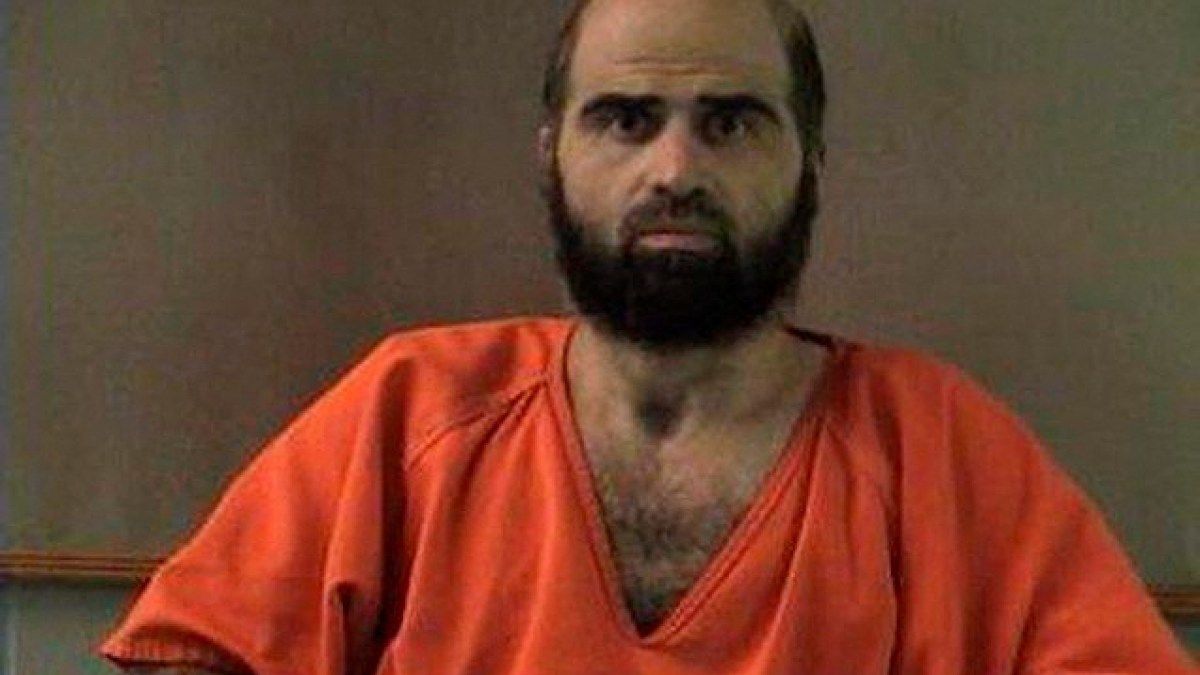
United States President Donald Trump has approved the execution of Nidal Hasan, the former army psychiatrist responsible for the 2009 mass shooting at Fort Hood, Texas. The execution, to be carried out by firing squad, was recommended by Defense Secretary Pete Hegseth and marks a profoundly rare event: Hasan would be the first US soldier executed by the US military in over 60 years, and the first by firing squad since 1945. Hasan was sentenced to death in 2013 after being found guilty of killing 13 people and wounding 31 others, an act he claimed was to prevent soldiers from deploying to Afghanistan and harming Muslims.
This decision is not merely a legal formality; it is a potent display of executive authority and a calculated political maneuver. Under the Uniform Code of Military Justice, presidential approval is the final hurdle for military executions, making President Trump's direct involvement a deliberate choice. The timing, particularly in a politically charged environment, allows the administration to project an image of decisive leadership and an uncompromising stance on national security and military discipline.
The choice of a firing squad, a method rarely employed in modern Western nations and one often associated with wartime or authoritarian regimes, carries significant symbolic weight. It bypasses the more common, albeit controversial, lethal injection, which has faced its own legal and ethical challenges. By opting for a method that evokes a sense of raw, immediate justice, the administration sends a clear message: certain crimes, particularly those deemed to be against the state or military cohesion, will be met with the most stark and unambiguous form of retribution. This is a powerful signal intended to resonate with a public that often demands swift and severe punishment for heinous acts, and it reinforces a narrative of strength and unyielding resolve.
Furthermore, the decision serves as a powerful instrument of internal military discipline. While Nidal Hasan's actions were an extreme outlier, his execution, particularly by such a visceral method, is intended to be a stark deterrent against any form of internal dissent or radicalization within the ranks. It reasserts the absolute authority of the state and the military chain of command, reminding all service members of the severe consequences for betraying their oath. This act is not just about punishing an individual; it is about reinforcing the structural integrity and loyalty demanded by a powerful military institution, especially one engaged in complex global operations.
The approval also highlights the unique dual nature of justice within the United States: a civilian system and a separate military one. The military justice system, designed for the specific needs of maintaining order and discipline in a fighting force, grants the President unique powers that differ from the civilian judicial process. This distinction allows for actions that might be viewed differently if applied to civilian defendants, underscoring the distinct power dynamics at play when the state acts to protect its military apparatus and its perceived national security interests.
The immediate human cost of Nidal Hasan's actions in 2009 was borne by the 13 individuals killed and the dozens wounded at Fort Hood, along with their families and the wider military community. For over a decade, these families have navigated a protracted legal process, a journey often framed by the promise of
**Nidal Hasan** is a former US Army psychiatrist who carried out a mass shooting at **Fort Hood**, **Texas**, in November 2009. He killed 13 people and wounded 31 others. He was convicted and sentenced to death by a military jury in 2013.
The approval for **Nidal Hasan's** execution by firing squad is significant because it would be the first US soldier executed by the US military in over 60 years, and the first by firing squad since 1945. This method, rarely used in modern times, carries strong symbolic weight, signaling a forceful assertion of state power and military discipline.
Military executions are extremely rare in the **United States**. The last US military execution occurred in 1961 by hanging, and the last by firing squad was in 1945. All military death penalty cases require final approval from the President, making them subject to high-level executive review.
Editor's Note: Analysis focuses on the political and symbolic significance of the execution method and timing, aligning with TGN's doctrine of examining power dynamics and untold stories.
Source referenced: ALJAZEERA
This brief was synthesized by our Editorial Engine and reviewed by The Ground Narrative team.