TRENDING

Tuesday, 6 October 2026
----------------------
25 Rabi' Al-Thani 1448 AH
In five days the IRGC navy struck seven oil tankers it labeled as violating, reigniting a flashpoint that underpins world energy trade. The attacks expose a clash of power, profit and peril for crews, markets and governments alike.
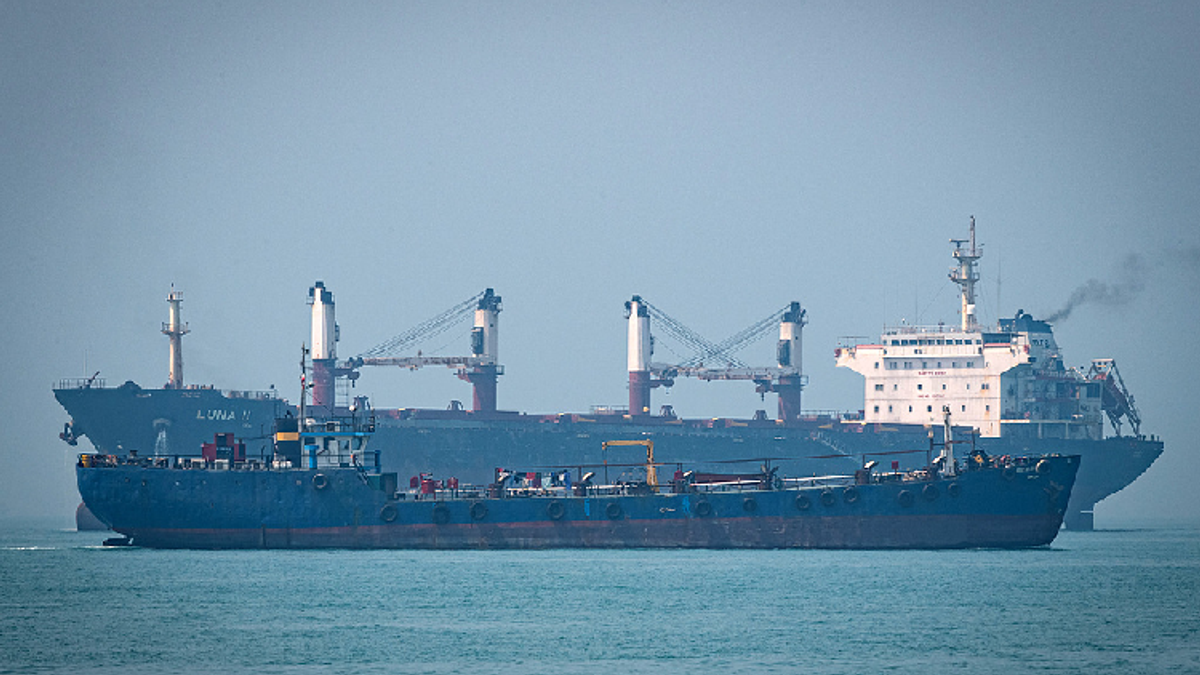
The Islamic Revolution Guard Corps (IRGC) navy reported hitting seven oil tankers in the Strait of Hormuz between October 1 and October 5, 2026. Two of the vessels were struck on Friday alone, one at the waterway’s entrance and another as it tried to exit. The ships included two Kuwaiti tankers, *AL FUNTAS* and *KAZIMAH III*, and three from the United Arab Emirates, *SINBAD*, *MERSIN PROSPERITY* and *AL RUWAIS*.
Iran’s semi‑official Fars news agency cited the independent monitor MenchOsint for the details, noting that the IRGC claims the vessels were “violating” navigation rules. The attacks came despite repeated statements from the United States that the strait remains open and under American control.
Iran’s decision to target tankers is rooted in a blend of deterrence, domestic politics and economic leverage. After the February 28 joint Israeli‑U.S. strikes on Iranian soil, Tehran announced a blanket ban on vessels linked to Israel or the United States. By extending the definition of “violating” to include neutral commercial ships, the IRGC signals that the ban is a broader bargaining chip, not a narrow retaliation.
The move also serves internal power dynamics. The IRGC, a rival to the regular navy and a key pillar of the regime, uses high‑visibility actions to demonstrate relevance and to claim a share of any future concessions in any diplomatic settlement. The timing—just weeks before the OPEC+ meeting on production cuts—suggests Tehran hopes to extract concessions on oil pricing or sanctions relief.
Internationally, the attacks test the limits of U.S. naval presence. The United States maintains a carrier strike group in the region, but the IRGC’s ability to strike multiple vessels in a short span forces Washington to allocate additional assets, stretching its already‑busy fleet across the Indian Ocean, the Red Sea and the South China Sea.
Economic incentives also play a role. By disrupting the flow of Persian Gulf crude, Iran can push up global oil prices, indirectly boosting its own export revenues even as sanctions choke its economy. The threat of further disruptions pressures insurance firms and ship owners to accept higher premiums, a cost that ultimately filters down to consumers worldwide.
The most immediate victims are the sailors aboard the struck tankers. Even a minor explosion can cause injuries, burns, or loss of life, and the trauma of being targeted in a contested waterway lingers long after the ship reaches port. Many of the crew members are from South Asian labor pools—India, Pakistan and Bangladesh—who work under contracts that offer limited medical coverage and little recourse in the event of injury.
Owners of the damaged vessels face costly repairs, delayed cargo deliveries and heightened insurance premiums. The Lloyd’s Register has already flagged a surge in war‑risk premiums for Hormuz transits, a cost that is passed on to oil importers and, ultimately, to households that pay higher gasoline prices.
Both Kuwait and the United Arab Emirates rely heavily on oil export revenues. Damage to their tankers not only reduces immediate cash flow but also threatens the credibility of their shipping registries, which could see a shift of vessels to flags of convenience that offer lower fees but less regulatory oversight.
When a chokepoint like the Strait of Hormuz is threatened, world oil markets react swiftly. Even the perception of risk can push Brent crude above $90 a barrel, inflating transport costs for everything from food to manufactured goods. The poorest consumers feel the pinch first, as higher energy bills erode disposable income.
Western officials repeatedly claim the strait is “open and safe,” yet the IRGC’s recent actions reveal a gap between rhetoric and reality. By emphasizing the openness of the waterway, the United States downplays the operational challenges its navy faces in deterring a well‑armed militia that can launch fast‑boat attacks and missile strikes from shore.
Iran, meanwhile, frames the attacks as defensive enforcement of its sovereignty, omitting the broader economic calculus. The IRGC’s public statements rarely mention the potential profit boost from higher oil prices or the internal political capital gained by projecting strength ahead of domestic elections.
Corporate oil traders and shipping conglomerates also stay quiet about the profit windfall from price spikes. While they publicly call for calm, their trading desks benefit from volatility, a fact rarely highlighted in official briefings.
Finally, the narrative that only U.S. and Israeli vessels are targeted is incomplete. By labeling neutral tankers as “violators,” Tehran expands the scope of its enforcement, a nuance absent from most diplomatic statements that focus solely on the Israel‑U.S. ban.
- U.S. naval deployments: Expect the Pentagon to announce additional surface combatants or a second carrier group in the Gulf, a move that could either deter further IRGC strikes or provoke a tit‑for‑tat escalation.
- Diplomatic overtures: Track any back‑channel talks between Tehran and the European Union, which may seek to mediate a de‑escalation in exchange for limited sanctions relief.
- Insurance trends: War‑risk premiums for Hormuz transits will be a leading indicator of perceived danger; a sharp rise could push shippers to reroute via the longer Cape of Good Hope, reshaping global shipping lanes.
- Oil market response: Monitor OPEC+ meeting minutes for language on “security of supply.” Any acknowledgment of Hormuz risks could signal coordinated price support measures.
- Local protests: Communities in coastal Iran, especially in Bandar Abbas, may experience heightened security measures and economic disruption as the IRGC ramps up its presence.
Staying alert to these developments will help ordinary readers understand how a handful of missile strikes in a narrow waterway ripple through global energy prices, employment, and everyday life.
Around 20% of the world’s oil passes through the strait, making any disruption a direct threat to global supply and price stability.
Iran cites a broad interpretation of its ban on vessels linked to Israel or the United States, labeling any ship it deems non‑compliant as a violator of its navigation rules.
Editor's Note: Analysis based on open‑source reports and expert assessments; details may evolve as the situation develops.
Source referenced: CGTN
This brief was synthesized by our Editorial Engine and reviewed by The Ground Narrative team.