TRENDING

Wednesday, 7 October 2026
----------------------
26 Rabi' Al-Thani 1448 AH
Hundreds of French schools have closed as students nationwide protest dilapidated conditions, overcrowding, and teacher shortages. These demonstrations coincide with the government's efforts to pass a deficit-narrowing budget, highlighting a deep societal struggle over public services.
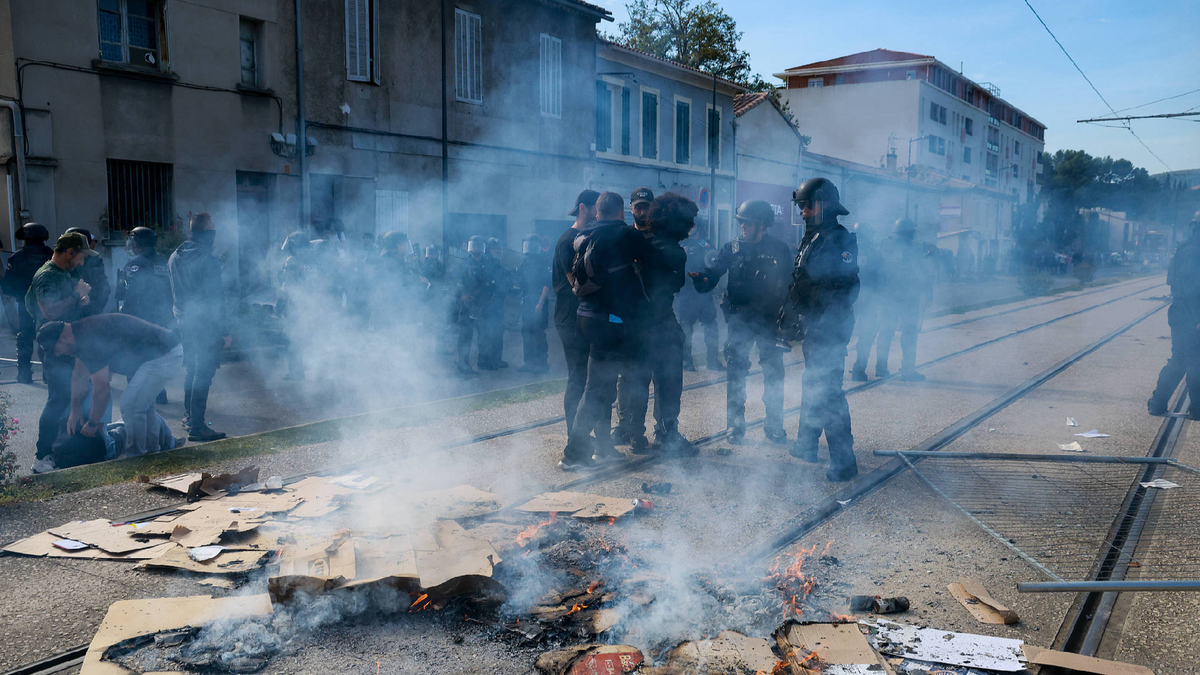
French high schools are experiencing their second consecutive week of widespread closures and disruptions as students across the nation mobilize in protest. These demonstrations, which began in late September over critical teacher shortages in Paris suburbs, have rapidly escalated into a nationwide movement addressing dilapidated school infrastructure, severe overcrowding, and continued understaffing. The escalating student unrest, marked by clashes with police, the use of tear gas, and thousands of arrests, precedes a major national day of demonstrations, coinciding with the government's contentious efforts to pass a deficit-narrowing budget for 2027.
The current wave of student protests in France is not merely a localized grievance; it represents a clash between the state's fiscal imperatives and its foundational social contract. At the heart of the government's actions is the pressing need to address a ballooning national deficit. With France's 10-year bond yield recently topping 5% – its highest level since 2002 – the pressure from financial markets and international creditors, particularly within the European Union's stability framework, is immense. The government, regardless of its political stripe, faces an acute dilemma: implement austerity measures to reassure investors and maintain sovereign creditworthiness, or risk further economic instability.
This economic pressure directly collides with the power of collective action from a demographic often underestimated: students. Historically, French student movements have been potent forces for social and political change, from the May 1968 uprisings to more recent protests against pension reforms. Their power lies in their ability to disrupt the normal functioning of society, draw significant media attention, and, crucially, galvanize broader public sympathy. The closure of hundreds of schools, affecting thousands of families, creates a tangible crisis that the government cannot easily ignore. The sheer scale of arrests – approximately 5,000, predominantly teenagers – underscores the state's immediate response to contain the disruption, but also highlights the depth of the confrontation.
The government's political survival hinges on its ability to navigate this tightrope. Conceding too much to the students could undermine its fiscal credibility and embolden other sectors to demand more, creating a domino effect that derails the budget. Cracking down too harshly, however, risks alienating a generation, fueling social resentment, and potentially leading to a broader loss of legitimacy. The Paris police chief's public statements, acknowledging the protests have grown beyond the control of their initial organizers and warning against "far-left and anarchist groups," reveal a classic state tactic: attempting to delegitimize the movement by portraying it as hijacked by extremist elements, rather than acknowledging the deep-seated grievances at its core. This framing allows the state to justify robust security responses while sidestepping the uncomfortable questions about public service provision.
Furthermore, the protests expose a fundamental tension within the French model of state intervention. France prides itself on a robust public sector and a strong social safety net, including universal access to high-quality education. When the state begins to visibly divest from these core services, it challenges a deeply ingrained national identity and social expectation. The power dynamic here is less about a simple negotiation and more about a renegotiation of the very terms of the social contract between the state and its citizens, particularly its youth. The government's incentive is to maintain fiscal discipline, while the students' incentive is to reclaim the promise of a functioning, equitable public education system. The bond market, acting as an external arbiter, adds another layer of pressure, forcing the government's hand towards austerity, often at the expense of social spending.
The immediate and long-term human cost of these protests falls disproportionately on the very individuals whose future is at stake: the students themselves. Their education is directly disrupted by school closures and the volatile atmosphere. For many, this means missed lessons, delayed curriculum progression, and an environment of uncertainty that is far from conducive to learning. Beyond the academic impact, there is the direct physical and psychological toll of participating in protests that turn violent. Thousands of teenagers have been arrested, facing potential criminal records that can impact their future opportunities. Dozens have been injured in clashes, a stark reminder of the physical risks involved when young people confront state authority.
The core grievance – dilapidated schools, overcrowding, and teacher shortages – points to a systemic erosion of educational quality. Students are not just protesting abstract budget cuts; they are experiencing the daily reality of learning in crumbling buildings, struggling to get individual attention in overcrowded classrooms, and facing a revolving door of substitute teachers, if teachers are available at all. This environment fosters disillusionment and a sense of being undervalued by the state. The long-term consequences are severe: a generation of students potentially receiving a sub-standard education, which can translate into reduced human capital, diminished job prospects, and a widening of social inequalities. Those from less affluent backgrounds, who rely most heavily on public education, are likely to bear the brunt of this decline.
Teachers are also caught in the crossfire. They are expected to deliver quality education often in impossible conditions, with inadequate resources and insufficient support. The existing teacher shortages mean increased workload for those who remain, leading to burnout and a further exodus from the profession. Some teachers have also been attacked during the unrest, highlighting the dangerous environment they are forced to navigate. For families, the protests bring immense stress. Parents worry about their children's safety during demonstrations and the impact of school closures on their education. The disruption also creates practical challenges, such as childcare arrangements, especially for working parents. The tens of millions of euros in property damage, while an economic cost, also represents a human cost in terms of public resources diverted from other essential services or future investments.
Beyond the immediate participants, the protests contribute to a broader sense of social unrest and a fracturing of the social fabric. When the state and a significant portion of its youth are in open conflict, it signals a deeper societal malaise. The images of tear gas and clashes on city streets erode public trust in institutions and can deepen political polarization. The human cost extends to the erosion of civic peace and the potential for long-term scars on the relationship between citizens and their government. This is particularly poignant in France, a nation with a strong republican tradition where the state is expected to be the guarantor of public welfare. When that guarantee falters, the human cost is measured not just in injuries or arrests, but in a loss of faith in the system itself.
Governments and official statements often frame protests as isolated incidents, driven by specific grievances, or worse, by "agitators" seeking to sow chaos. What is often downplayed or omitted in the official narrative surrounding the French student protests is the deeper, systemic erosion of the French social model and the profound intergenerational contract being broken.
France has long been a global exemplar of a strong welfare state, where public services like education, healthcare, and social security are considered fundamental rights. The current protests are not just about a few broken windows or missing teachers; they are a symptom of decades of gradual underinvestment and austerity measures that have chipped away at this model. Successive governments, under pressure from EU fiscal rules and global financial markets, have prioritized deficit reduction over robust public spending. The "untold story" here is that the state is slowly retreating from its traditional role as the primary provider and guarantor of public welfare, and this retreat is now becoming glaringly visible in the nation's classrooms. Official statements focus on the immediate budget figures or the need for "order," but rarely address the long-term strategic choice to divest from the public sector.
Another critical, often unstated, dimension is the strain on the intergenerational contract. Older generations in France have largely benefited from the robust public services established in the post-war era. However, the burden of maintaining fiscal stability, particularly through pension reforms and cuts to public services, often falls disproportionately on younger generations. These students are facing an uncertain economic future, environmental crises, and now, a visible decline in the quality of the public education system that is supposed to equip them for these challenges. Governments are quick to talk about "future generations" when discussing long-term debt, but less forthcoming about how current austerity measures directly compromise the opportunities and well-being of those very generations. The protests are a raw expression of this perceived betrayal, a demand for the state to uphold its end of the bargain.
The police chief's swift move to label the protests as potentially "taken over" by "far-left and anarchist groups" is a classic rhetorical tactic designed to delegitimize popular movements. While it is true that fringe elements may attempt to exploit any large-scale unrest, this narrative often serves as a convenient smokescreen. It shifts the focus away from the legitimate grievances of thousands of students and their families, instead portraying the movement as inherently violent or manipulated. This framing allows the state to justify more aggressive policing tactics and avoid a deeper engagement with the root causes of the discontent. It implies that the students themselves are not capable of independent thought or organization, or that their concerns are not genuine enough to warrant such disruption.
Finally, what is often downplayed in the pursuit of immediate fiscal targets is the long-term economic cost of underinvesting in education. While cutting education budgets might offer short-term savings and appease bond markets, a less educated and less skilled workforce will inevitably lead to reduced productivity, innovation, and competitiveness in the future. The damage to human capital is not easily reversible and can have profound, lasting impacts on a nation's economic potential. Governments rarely quantify this future cost when presenting their austerity budgets, focusing instead on the immediate "savings" and the imperative of deficit reduction. The protests are a stark reminder that these are not just social issues; they are fundamental economic investments that, when neglected, carry a heavy price tag for the entire nation.
The unfolding situation in France demands close attention on several fronts, as the choices made in the coming days and weeks will have significant ramifications for the nation's social cohesion and political landscape.
First, observe the government's immediate response to the national day of demonstrations. Will they opt for further crackdowns, or will there be an attempt at genuine dialogue and negotiation with student representatives? The balance between maintaining public order and addressing legitimate grievances will be critical. Any significant escalation in police force or a perceived indifference to student demands could further inflame the situation, potentially drawing in broader segments of society, such as labor unions or parent associations, which could transform the student protests into a wider social movement.
Second, monitor the fiscal outlook and investor reaction. The government's primary motivation for austerity is to stabilize its financial position. How will financial markets react to continued social unrest? Will the 10-year bond yield remain elevated, signaling ongoing investor concern, or will the government's resolve to pass its budget, even amidst protests, reassure them? The interplay between social stability and economic confidence is a delicate one, and the outcome will dictate the government's room for maneuver.
Third, pay attention to the sustainability and evolution of the student movement. Can the student unions maintain momentum beyond the initial burst of anger? Will their demands become more organized and specific, or will the movement fragment under pressure? The police chief's concerns about "far-left and anarchist groups" taking over also bear watching, as any genuine shift towards more radical elements could alter the nature of the protests and the state's response.
Finally, consider the broader political fallout. These protests are a stress test for the current administration. How will public opinion shift? Will the government's approval ratings suffer, and what impact might this have on future electoral cycles? The handling of this crisis could define the political legacy of those in power, shaping the discourse around public services, youth engagement, and the future direction of the French state. The outcome will reveal much about the resilience of France's social contract in an era of global economic constraints.
Students are protesting widespread issues within the French education system, including dilapidated school buildings, severe overcrowding in classrooms, and critical shortages of teaching staff. These conditions are seen as a direct result of chronic underfunding.
The government has acknowledged the school closures, with the Education Minister confirming hundreds of partial or full closures. Police have made thousands of arrests and used tear gas, while the Paris police chief has called for peaceful protest, expressing concern over external groups.
The protests are unfolding as the French government attempts to pass a stringent deficit-narrowing budget for 2027. The unrest has exacerbated investor concerns, pushing France's 10-year bond yield to its highest point in over two decades, linking social stability directly to economic policy.
Source referenced: CGTN
This brief was synthesized by our Editorial Engine and reviewed by The Ground Narrative team.