TRENDING

Wednesday, 7 October 2026
----------------------
26 Rabi' Al-Thani 1448 AH
Israeli forces have demolished the Martyrs' Monument at Birzeit University, a stone pillar commemorating students killed by Israel. This act is part of a broader campaign to suppress Palestinian national memory and resistance.
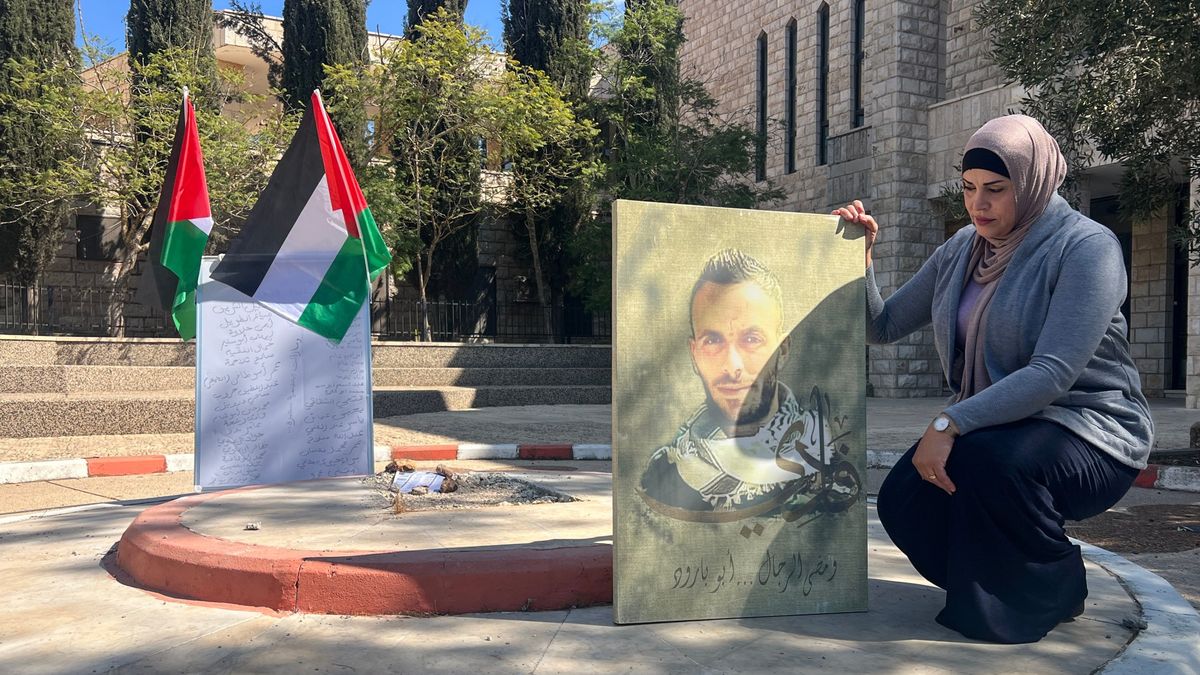
In the early hours of a recent Monday, Israeli soldiers, accompanied by ten military vehicles and a bulldozer, stormed the campus of Birzeit University near Ramallah in the occupied West Bank. Their objective was the Martyrs' Monument, a stone pillar erected between 1994 and 1996, bearing the names of 38 students and alumni killed by Israeli forces since 1984. The bulldozer systematically demolished the pillar, and soldiers removed the marble stone inscribed with the names. In its place, they left a planter containing a fig sapling, bearing the cryptic inscription: "Water it twice." This raid marks the fifth such incursion into the Birzeit campus since the start of 2026, and the 28th since 2002, signaling an escalating campaign against Palestinian educational institutions and symbols of national identity.
The demolition of the Martyrs' Monument at Birzeit University is not an isolated act of vandalism; it is a calculated move within a broader strategy to exert control over the Palestinian narrative and dismantle the infrastructure of Palestinian resistance. At its core, this action reveals an asymmetric power dynamic where the occupying force seeks to erase the memory of those who have fallen in the struggle against occupation, thereby attempting to delegitimize their cause and intimidate future generations.
From the Israeli perspective, the monument, like others targeted across the West Bank, is framed as a "symbol of incitement." This framing is critical. By labeling acts of remembrance as incitement, the Israeli government seeks to justify their destruction under the guise of security and order. This narrative allows powerful political actors, particularly from the far-right, to advance their agenda. Figures like Knesset member Zvi Sukkot and Finance Minister Bezalel Smotrich, who has reportedly submitted a list of 40 Palestinian memorials for destruction, leverage these actions to consolidate their political base and demonstrate a hardline stance. The goal is to control the public space, both physically and symbolically, ensuring that the memory of resistance does not inspire future generations.
For Palestinians, universities like Birzeit have historically served as vital centers of national identity, intellectual discourse, and political activism. They are not merely academic institutions but cultural and political anchors, fostering a sense of collective purpose and resilience. The monument, therefore, was more than stone; it was a physical manifestation of shared history, grief, and defiance. Its destruction is an attempt to sever this connection, to fragment collective memory, and to weaken the social cohesion that underpins Palestinian resistance. The repeated raids on universities, detention of students, and restrictions on campus activities are designed to create an environment of fear, stifling dissent and preventing the emergence of new leadership.
This act also highlights the legal and moral ambiguities of occupation. While international law often protects cultural heritage, the occupying power frequently interprets its security prerogatives broadly, allowing for actions that would otherwise be condemned. The power imbalance ensures that such interpretations often go unchallenged by effective international enforcement. The leaving of a fig sapling with the instruction "Water it twice" can be seen as a cynical attempt to replace a potent symbol of sacrifice with a benign, apolitical gesture, further asserting control over the narrative and the very landscape of Palestinian memory.
The destruction of the Martyrs' Monument at Birzeit University carries a profound human cost, extending far beyond the physical removal of stone. For families who lost loved ones, it is a fresh wound, a re-traumatization that denies them the dignity of public remembrance and collective mourning. The monument was a tangible link to their personal tragedies, a place where their grief was acknowledged and shared by a community that understood their sacrifice.
Rania Washaha, whose brother Fadi was among the 38 students listed on the monument, articulated this pain poignantly. Fadi, shot in the head by an Israeli soldier in 2021, had spent years in detention, never completing his studies or experiencing graduation. For Rania, the monument was a testament to his life, his struggle, and his unfulfilled potential. Its demolition felt like a renewed act of violence, a suppression not just of a physical object but of the very memory of her brother and what he represented. The personal connection is further underscored by the fact that Fadi himself, during his time at Birzeit, would stand by the memorial, contemplating the names of those who came before him, unaware that his own would eventually join theirs. This cycle of loss and remembrance, now disrupted, inflicts a deep emotional toll on families who are already grappling with decades of occupation and conflict.
The impact also reverberates through the student body and the broader academic community. Students like Sami Adel express a profound sense of loss and intimidation. The monument was a part of their campus life, a symbol of their history and their collective identity. Its destruction, coupled with the explicit threats and detentions faced by students participating in political activities, creates a chilling effect. Rania Washaha's son, a first-year student at Birzeit, received a phone call from an Israeli officer threatening him if he engaged in student activities, explicitly referencing what "we did to your uncle." This direct intimidation aims to quash dissent, stifle free expression, and deter future generations from engaging in political or nationalistic discourse. Universities, meant to be safe spaces for intellectual exploration and critical thought, are transformed into contested zones, undermining the very essence of education and academic freedom. The erosion of these spaces directly impacts the ability of Palestinian society to nurture its future leaders and thinkers, forcing them to operate under a constant shadow of fear and surveillance.
What governments and official statements often omit or downplay in these incidents is the profound cultural and psychological warfare at play, disguised under the veneer of security concerns. The destruction of the Birzeit University Martyrs' Monument is not merely about removing a stone pillar; it is a calculated assault on the Palestinian collective memory and identity, an attempt to control the past to dictate the future.
Israeli military statements routinely justify such actions by labeling the memorials as "symbols of incitement." This framing is a powerful rhetorical tool that shifts the blame and legitimizes aggressive actions. It portrays Palestinian remembrance as inherently provocative and dangerous, rather than a natural human response to loss and a fundamental aspect of national identity. What is downplayed is the fact that these monuments serve as vital historical markers for Palestinians, documenting their experiences, their sacrifices, and their ongoing struggle for self-determination. They are not calls for violence, but rather anchors of memory, ensuring that the stories of those killed are not forgotten. By erasing these symbols, the powerful actors seek to erase the historical narrative itself, creating a void that can then be filled with a dominant, unchallenged narrative that denies the legitimacy of Palestinian grievance and resistance. The act of tearing down a memorial to students killed by military forces, then replacing it with a fig sapling and a cryptic instruction, is a stark example of this psychological manipulation, attempting to impose a new, sterile reality devoid of historical context or national meaning.
Another critical element often omitted is the broader international community's inconsistent application of principles regarding the protection of cultural heritage in conflict zones. While there is often outrage when ancient sites or historical artifacts are destroyed by non-state actors, the systematic targeting of Palestinian cultural symbols and memorials by an occupying power frequently elicits a muted response. This silence or inaction effectively emboldens the powerful actor, signaling that such actions carry minimal international consequence. The Birzeit University administration rightly condemned the destruction as a violation of international law, but without robust international pressure, such condemnations often remain just words. The "untold story" here is the implicit permission granted by the international community's selective engagement, allowing the slow, systematic erosion of Palestinian cultural patrimony to continue largely unchecked. This selective focus on certain forms of heritage over others reveals a power dynamic where the cultural memory of the less powerful is deemed less worthy of protection, or even actively framed as a legitimate target.
Moving forward, several critical developments bear close observation as this campaign against Palestinian memory and identity intensifies. The immediate aftermath of the Birzeit University memorial demolition will likely see continued Palestinian resilience and creative acts of remembrance. Students have already begun rewriting the names of the martyrs, signaling that physical destruction cannot easily extinguish collective memory. Watch for further spontaneous acts of defiance and alternative forms of commemoration, both on university campuses and in broader Palestinian society, as communities seek new ways to preserve their history.
Secondly, monitor the Israeli government's continued pursuit of its policy to target Palestinian memorials and cultural sites. With Finance Minister Bezalel Smotrich's reported list of 40 such sites, this is clearly a systematic campaign, not an isolated incident. The extent to which these plans are implemented, and the specific types of sites targeted (cemeteries, historical landmarks, monuments), will reveal the full scope of this strategy to control the narrative and suppress Palestinian identity. This will also indicate the political strength of the hardline elements within the Israeli government.
Finally, the reaction, or lack thereof, from the international community will be crucial. Will international bodies and human rights organizations move beyond condemnations to concrete actions aimed at protecting Palestinian cultural heritage and academic freedom? The effectiveness of any diplomatic pressure or legal challenges will determine whether this campaign of erasure continues unchecked or if there will be a concerted effort to uphold international law and protect the memory of an occupied people. The future of Palestinian universities as centers of intellectual life and resistance will depend heavily on these dynamics, shaping the educational and political landscape for generations to come.
The Martyrs' Monument was a stone pillar at Birzeit University in the occupied West Bank, erected between 1994 and 1996. It listed the names of 38 students and alumni who had been killed by Israeli forces since 1984, serving as a symbol of Palestinian national memory and resistance.
Israeli forces justified the demolition by labeling the monument as a 'symbol of incitement,' part of a broader policy to remove markers of Palestinian identity and resistance. This action is seen as an attempt to control the Palestinian narrative, intimidate students, and suppress collective memory.
The destruction inflicts renewed pain and trauma on families of those commemorated, denying them public remembrance. It also creates a chilling effect on students and academic freedom, aiming to suppress dissent and the development of Palestinian national identity and leadership.
Source referenced: ALJAZEERA
This brief was synthesized by our Editorial Engine and reviewed by The Ground Narrative team.