TRENDING

Wednesday, 7 October 2026
----------------------
26 Rabi' Al-Thani 1448 AH
Drones struck two commercial ships off Bulgaria's coast, sinking one and injuring crew, marking a dangerous expansion of the conflict into vital shipping lanes. The attacks highlight the vulnerability of civilian maritime trade and the human toll of an undeclared naval war.
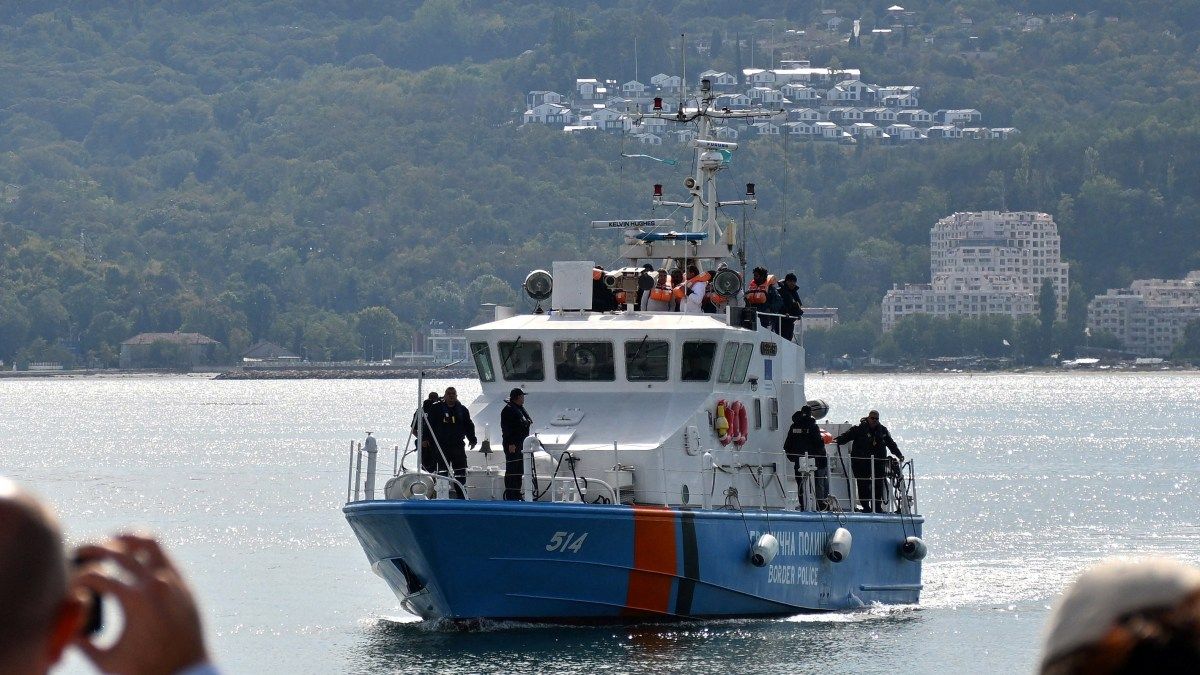
Two commercial vessels, the Togo-flagged Alfa Watan and the Palau-flagged Able, were struck by sea and aerial drones approximately 70 nautical miles off Bulgaria's coast. The attack, which occurred in the early hours, resulted in the Alfa Watan suffering critical structural damage and sinking, with its crew reported missing. The Able caught fire, prompting a rescue operation that evacuated all 18 crew members, two of whom sustained serious injuries and required hospitalization. Bulgarian Prime Minister Rumen Radev condemned the incident as an "absolutely unacceptable" attack and a "blatant violation of international law and maritime law," noting its occurrence within Bulgaria's exclusive economic zone.
The drone attacks in the Black Sea, particularly those targeting commercial shipping, reveal a calculated expansion of the Russia-Ukraine war into a critical economic and strategic domain. This is not merely an act of aggression but a deliberate application of power designed to achieve specific objectives without triggering direct military confrontation with NATO members like Bulgaria. The use of drones offers plausible deniability, a cornerstone of modern hybrid warfare. By not immediately attributing the attacks, the aggressor can test boundaries, disrupt trade, and sow uncertainty without facing immediate, overt retaliation.
For Russia, disrupting shipping in the Black Sea serves multiple purposes. It can undermine Ukraine's ability to export grain and other commodities, thereby weakening its economy and its capacity to fund its defense. It also aims to increase the cost and risk of maritime trade for all nations operating in the region, driving up insurance premiums and potentially forcing shipping companies to seek alternative, more expensive routes. This economic pressure is a form of attrition, designed to exhaust adversaries and their supporters. Furthermore, these attacks demonstrate a reach and capability that extends beyond the immediate front lines, projecting power into the exclusive economic zone of a NATO and EU member state without a direct military engagement that would invoke Article 5 of the NATO treaty.
From Ukraine's perspective, maintaining open shipping lanes is vital for its economic survival and for global food security. Any disruption, regardless of its origin, directly impacts its ability to export agricultural products that are crucial for its revenue and for feeding populations worldwide. The broader context of maritime drone warfare in the Black Sea has seen both sides deploy these unmanned systems, transforming the naval landscape into a zone of constant, low-level conflict where traditional naval power is increasingly challenged by asymmetric threats.
The attacks also highlight the structural vulnerabilities of international maritime law and the collective security frameworks designed to uphold it. While Bulgaria has condemned the act as a violation of international law, the practical enforcement mechanisms are slow and often ineffective in the face of state-sponsored ambiguity. The incident forces NATO to grapple with the question of how to respond to attacks on civilian assets within a member's EEZ that fall short of a direct military assault on sovereign territory, yet clearly undermine regional stability and economic interests.
While headlines often focus on geopolitical maneuvering, the immediate and profound human cost of these Black Sea drone attacks falls squarely on the shoulders of ordinary sailors and the global populations reliant on maritime trade.
For the crew members of the Alfa Watan, their fate remains unknown, leaving families in agonizing uncertainty. The injured sailors from the Able face physical recovery and the psychological trauma of surviving a sudden, violent attack at sea. These are not soldiers in uniform but civilian workers, often from developing nations, whose livelihoods depend on navigating dangerous waters. The increasing risk in the Black Sea makes their jobs exponentially more perilous, forcing them to choose between economic necessity and personal safety. The fear of being caught in the crossfire of a war they are not a part of is a heavy burden, impacting mental health and the willingness of skilled mariners to accept contracts in the region.
The Able was reportedly carrying wheat, a critical commodity for global food security. Disruptions to Black Sea shipping lanes, a major artery for grain exports, directly translate into higher food prices and increased scarcity, particularly for vulnerable populations in the Global South. Countries in Africa and the Middle East that rely heavily on affordable Ukrainian and Russian grain imports are the silent victims of this economic warfare. Increased insurance premiums and the reluctance of shipping companies to operate in high-risk zones mean higher transportation costs, which are ultimately passed down to consumers already struggling with inflation and economic instability. This makes basic foodstuffs less accessible, exacerbating hunger and potentially fueling social unrest far from the actual conflict zone.
Beyond the immediate human toll on sailors, the sinking of the Alfa Watan carries the risk of environmental pollution, particularly if its cargo included hazardous materials or if fuel leaks occur. Such spills can devastate marine ecosystems and impact the livelihoods of coastal communities dependent on fishing and tourism. The overall disruption to maritime trade also has a chilling effect on regional economies, deterring investment and hindering the free flow of goods essential for prosperity.
Governments and official statements, while condemning the attacks, often downplay or omit several critical aspects of this escalating conflict, particularly concerning attribution, NATO's response, and the broader implications for international norms.
While Ukrainian President Volodymyr Zelenskyy was quick to attribute a *previous* attack off Romania to Russia, the lack of immediate, definitive attribution for the attacks off Bulgaria is a telling omission. This ambiguity is not accidental; it is a strategic tool. By not explicitly naming the aggressor, powerful actors can avoid direct accountability, sidestep the need for a forceful response, and maintain a degree of deniability. This allows the conflict to escalate in a grey zone, where attacks on civilian infrastructure can occur without triggering the full weight of international condemnation or military retaliation. The
Source referenced: ALJAZEERA
This brief was synthesized by our Editorial Engine and reviewed by The Ground Narrative team.