TRENDING

Wednesday, 7 October 2026
----------------------
26 Rabi' Al-Thani 1448 AH
China has opened its third overseas military base, and first air force facility, in Laos. This move signals a significant expansion of Beijing's power projection capabilities into Southeast Asia.
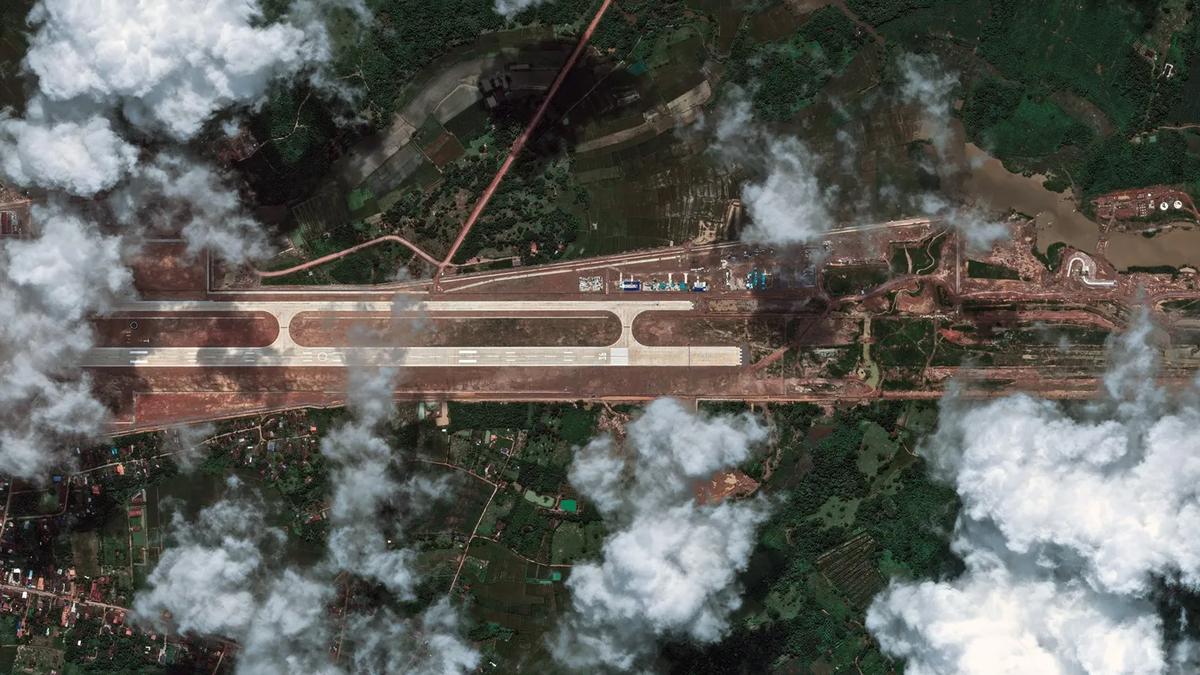
China has officially established a new military base in Laos, marking its third overseas military facility and its inaugural overseas air force base. Located about 30 miles from Laos's capital, Vientiane, the site hosts the China-Laos Joint Support and Training Center and the China-Laos Friendship Aviation Academy. Satellite imagery confirms construction began last year, culminating in an announcement from Beijing's Defense Ministry last week. Officially, the facilities are intended to assist Laos in training its air force pilots, but the strategic implications for the wider Indochina Peninsula and Southeast Asia are profound.
This new base in Laos is a critical piece in Beijing's long-term strategy to expand its influence and project power beyond its immediate maritime borders. While China's global military footprint remains significantly smaller than that of the United States, each new overseas facility represents a deliberate and strategic expansion. The base in Djibouti secured a logistics hub in the Horn of Africa, and the joint training center at Ream Naval Base in Cambodia provided a foothold on the Gulf of Thailand. The Laos base, however, is unique as China's first overseas air force facility, extending its reach inland.
For China, the incentives are clear: to deepen military-to-military ties, encourage the purchase of Chinese military hardware, and enhance its ability to conduct joint exercises, potentially with nations like Thailand. More critically, it positions China to exert greater influence over the entire Indochina Peninsula. This move directly challenges Vietnam's long-held perception of the region as its own strategic backyard, a historical tension underscored by past conflicts. In a crisis, particularly over the South China Sea or Taiwan, this base could provide China with a crucial advantage, potentially enabling it to intercept U.S. Air Force assets transiting Indochina from bases like Diego Garcia in the Indian Ocean.
Laos, a landlocked nation deeply entwined with China economically, finds itself in a complex position. Heavily indebted to Beijing through projects like the China-Laos Railway, Vientiane has limited leverage. The decision to host a Chinese military base, while framed as a sovereign choice, is likely influenced by economic dependencies and the need for political survival within the regional power dynamic. For Laos, the immediate benefits might include military modernization and training, but the long-term trade-offs involve a significant commitment to China's strategic orbit.
Regional actors like Thailand are forced into a delicate balancing act. As a treaty ally of the United States, Thailand also cultivates warm ties with both Laos and China. Its official stance acknowledges Laos's sovereign right but emphasizes close monitoring, highlighting the inherent tension. The growing involvement of major powers in the region, as noted by Thai officials, elevates Bangkok's perceived importance as a nation that
The new military base is situated at an airport approximately 30 miles from Laos's capital, Vientiane, in the Ban Keun area. It hosts a joint support and training center and an aviation academy.
According to China's Defense Ministry, the facilities are intended to help Laos train its air force pilots. This official purpose focuses on military cooperation and support for Laos's defense capabilities.
The base significantly expands China's power projection capabilities into the Indochina Peninsula, challenging Vietnam's historical influence and offering China strategic leverage. It also forces other nations like Thailand to carefully balance their relationships with both China and the United States.
Editor's Note: Analysis is based on reported facts and widely understood geopolitical dynamics of the region.
Source referenced: FOREIGNPOLICY
This brief was synthesized by our Editorial Engine and reviewed by The Ground Narrative team.


