TRENDING

Monday, 5 October 2026
----------------------
24 Rabi' Al-Thani 1448 AH
Despite assurances that the Gaza peace plan is still operative, the path to implementation is fraught with challenges, including the disarmament of Hamas and the commitment of Israeli Prime Minister Benjamin Netanyahu. The human cost of delayed progress weighs heavily on the civilian population. As the international community watches, the question remains: what are the true intentions of the powerful actors involved?
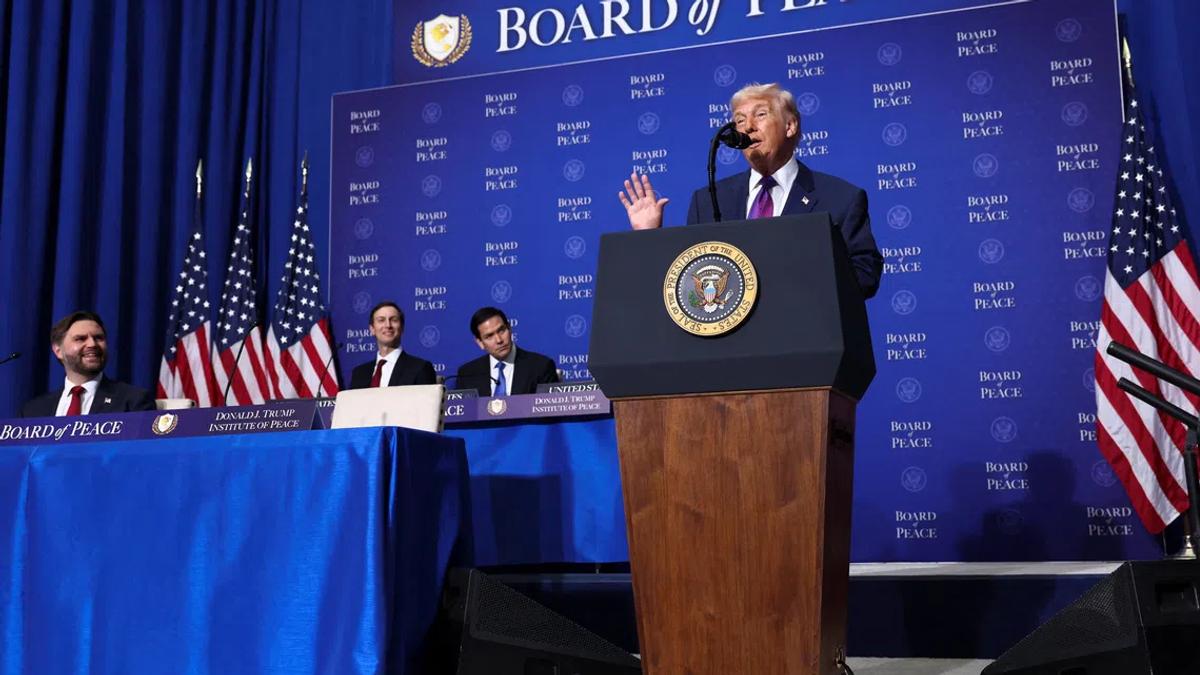
The Gaza Board of Peace official has confirmed that the plan for peace in the region is still in operation, with ongoing discussions between the US and Israel. This development comes after Israeli Prime Minister Benjamin Netanyahu reiterated his stance that an Israeli withdrawal from Gaza would only occur once the Palestinian militant group Hamas is fully disarmed.
The mechanics of power at play here are complex, involving the interplay between the US, Israel, and the Palestinian factions. The US, under President Donald Trump, has been a key driver of the peace plan, leveraging its influence to halt Israeli military attacks in Gaza. However, the success of this plan hinges on the commitment of all parties involved, particularly Israel, which has expressed reservations about the plan's viability without the disarmament of Hamas. This condition poses a significant obstacle, as it is unclear whether Hamas would agree to such terms, and if so, how their disarmament would be verified and enforced.
The civilian population of Gaza bears the brunt of the delays and uncertainties surrounding the peace plan. Living under the constant threat of violence and with limited access to basic necessities, the people of Gaza are the human face of the conflict. Their lives are suspended in a state of limbo, as the world waits for powerful actors to make decisions that will determine their future. The humanitarian crisis in Gaza is a stark reminder of the human cost of political stalemates and the importance of finding a lasting solution to the conflict.
What is being downplayed in official statements is the depth of the challenges facing the implementation of the peace plan. The issue of Hamas's disarmament is not merely a technical problem but a deeply political one, touching on issues of sovereignty, security, and the balance of power in the region. Furthermore, the plan's success depends on the willingness of Israel to make significant concessions, which, given the current political climate, seems unlikely. The international community's role in facilitating a solution is also understated, with the US pressure on Israel to halt attacks being a crucial, yet fragile, component of the peace process.
As the situation in Gaza continues to unfold, several key developments will be worth watching. Firstly, the response of Hamas to the conditions set by Israel will be crucial, as will the stance of other Palestinian factions. Secondly, the extent to which the US can maintain pressure on Israel to adhere to the peace plan without compromising its own strategic interests in the region will be significant. Lastly, the humanitarian situation in Gaza will remain a critical indicator of the success or failure of the peace efforts, with any deterioration likely to escalate tensions and undermine the already fragile process.
Editor's Note: The analysis is based on current developments and may evolve as more information becomes available.
Source referenced: STRAITSTIMES
This brief was synthesized by our Editorial Engine and reviewed by The Ground Narrative team.


