TRENDING

Monday, 19 October 2026
----------------------
8 Jumada Al-Awwal 1448 AH
Spain's recent World Cup victory against Argentina became a focal point for global geopolitical sentiment, particularly concerning the Israel-Gaza conflict. The match highlighted how diplomatic stances and symbolic gestures by athletes can influence public perception and allegiances on an international stage.
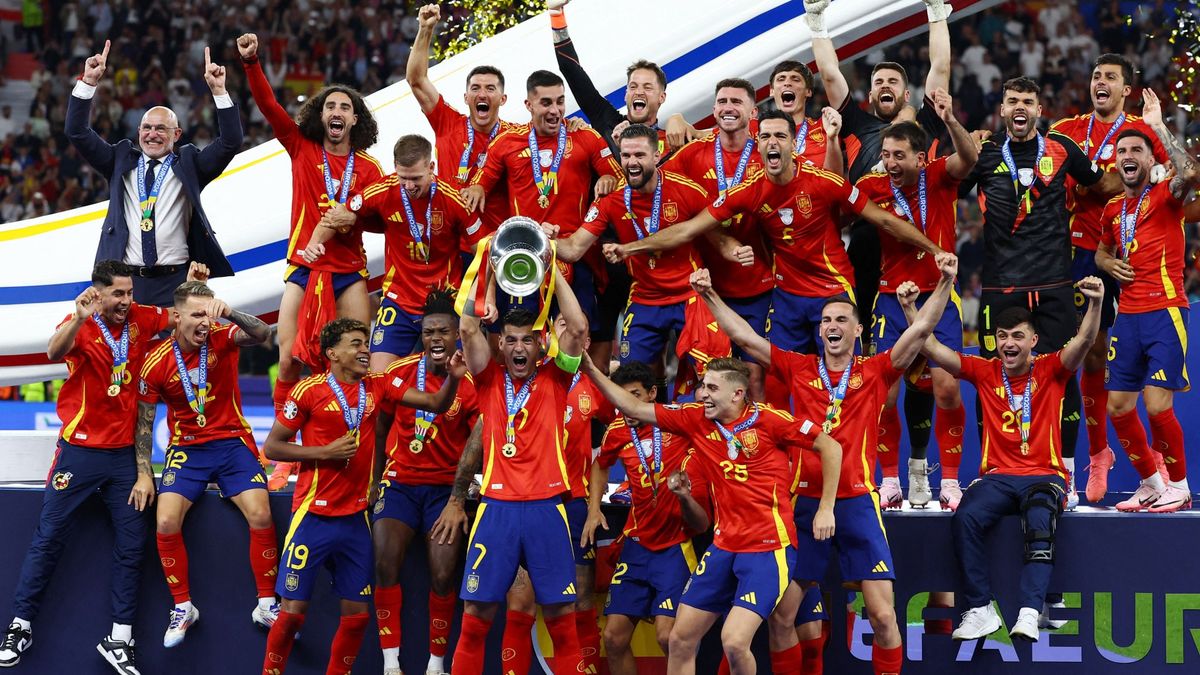
The recent World Cup final, where Spain triumphed over Argentina, transcended mere athletic competition for many observers globally. The event, held on July 19, 2026, became an unexpected arena for the expression of geopolitical allegiances, primarily influenced by the ongoing Israel-Gaza conflict. This phenomenon underscores how major international events, even in sports, are increasingly viewed through the prism of global political and moral concerns.
Spain's government, under Prime Minister Pedro Sánchez, has adopted a notably distinct position regarding the Israel-Gaza conflict compared to many of its Western allies. This stance includes the official recognition of the State of Palestine, the use of the term "genocide" to describe actions in Gaza, and the implementation of an arms embargo against Israel. These diplomatic actions have positioned Spain as a significant voice within the European Union advocating for Palestinian rights, a move that has garnered both international support and criticism.
This diplomatic posture was symbolically reinforced by Spanish footballer Lamine Yamal, who, during Barcelona's La Liga celebrations, was seen waving the Palestinian flag. While a football team's actions are distinct from governmental policy, such gestures by prominent public figures resonate deeply with a global audience, particularly those who feel a strong moral connection to the Palestinian cause. Yamal's subsequent participation in Spain's World Cup victory amplified this symbolism, creating a powerful narrative for those who align with Spain's broader diplomatic approach.
In stark contrast, Argentina's political leadership, under President Javier Milei, has articulated a strong pro-Israel stance. President Milei has publicly declared himself "the most Zionist president in the world," aligning his government closely with Israel and the United States, particularly during a period of intense international scrutiny over the Gaza conflict. This alignment was further highlighted by a past image of Argentine captain Lionel Messi at the Western Wall in occupied East Jerusalem, which, despite predating the current crisis, has been re-contextualized by many viewers through the lens of contemporary events.
Beyond the immediate context of the Israel-Gaza conflict, Argentina's alignment with the United States and Israel was also evident in a March 2026 vote at the United Nations General Assembly. On a resolution addressing the historical wrongs of transatlantic slavery and calling for reparatory justice, Argentina joined only the United States and Israel in voting against the measure, while 123 countries voted in favor and 52 abstained. This pattern of alignment on issues of historical injustice and accountability has been noted by analysts as indicative of a broader geopolitical orientation.
The World Cup final, therefore, became a stage where these contrasting geopolitical positions played out, influencing how millions around the world chose to support one team over the other. The article posits that sport is never truly apolitical, serving as a conduit for individuals to project their histories, identities, sympathies, and moral judgments. For many, Spain's victory was not merely a sporting achievement but a symbolic affirmation of solidarity with the Palestinian people, reflecting a shift in what the author terms "moral geography."
While a football victory cannot deliver justice or alleviate suffering in Gaza, the event underscored the profound impact of global conflicts on public consciousness and the unexpected ways in which these conflicts can shape allegiances in seemingly unrelated domains. The intersection of high-stakes sports, national diplomacy, and individual symbolic acts demonstrates the complex and evolving nature of international relations in an interconnected world, where soft power and moral stances increasingly influence global perceptions and allegiances.
Source referenced: ALJAZEERA
This brief was synthesized by our Editorial Engine and reviewed by The Ground Narrative team.