TRENDING

Thursday, 8 October 2026
----------------------
27 Rabi' Al-Thani 1448 AH
Three years after the October 7 attack, global protests have surged, demanding an immediate ceasefire in Gaza and an end to Israeli military operations in the Palestinian territories. This enduring public outcry highlights the deep human cost and complex power dynamics of a conflict that continues to resonate worldwide.
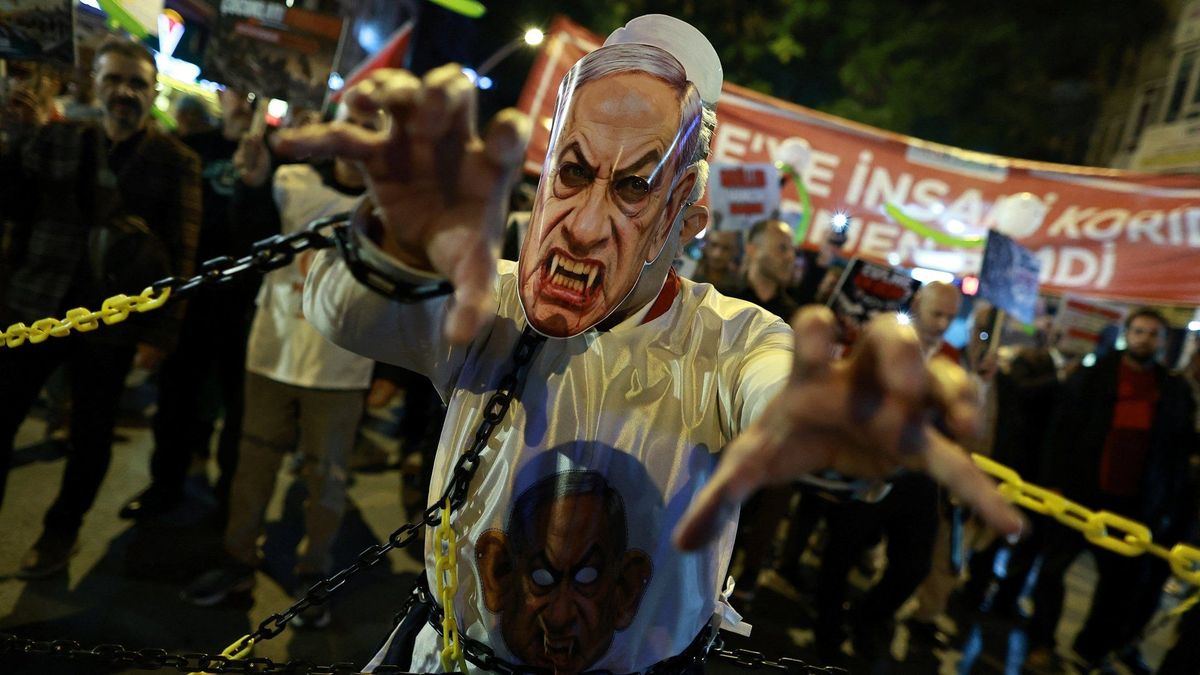
On the third anniversary of the Hamas-led October 7 attack on Israel, cities across the globe witnessed a renewed wave of protests. Demonstrators, spanning diverse demographics and geographies, took to the streets to demand an immediate ceasefire in Gaza and an end to Israeli military actions in both Gaza and the West Bank. These coordinated global demonstrations underscore the sustained international public pressure and humanitarian concern surrounding the enduring conflict.
The persistence of global protests three years into the conflict reveals a complex interplay of power dynamics, where the will of the public increasingly clashes with state interests and security doctrines. For Israel, the October 7 attack remains a foundational trauma, shaping its strategic imperatives. The declared goal of dismantling Hamas is framed as an existential security necessity, a narrative reinforced by domestic political pressures and the need to restore a sense of safety to its citizens. This objective is heavily supported by key allies, notably the United States, which provides substantial military and diplomatic backing, often citing Israel's right to self-defense.
However, this powerful state-centric security logic is increasingly challenged by the global public's focus on the humanitarian catastrophe unfolding in Gaza. The sheer scale of civilian casualties, displacement, and destruction has generated widespread moral outrage, transcending traditional geopolitical alignments. This public sentiment, amplified by social media and independent reporting, creates significant pressure on governments that are perceived as complicit or inactive. For many nations, particularly democracies, ignoring such widespread public dissent risks domestic political instability, electoral consequences, and a loss of international credibility.
Hamas, despite its military setbacks, leverages the ongoing suffering of Palestinians to maintain its narrative of resistance and garner international sympathy for the Palestinian cause. The group's continued existence, even in a diminished capacity, complicates Israel's objectives and prolongs the conflict, thereby fueling the cycle of protests. The international community, represented by bodies like the United Nations, finds itself largely paralyzed, with veto powers in the UN Security Council often preventing decisive action. This institutional gridlock further empowers non-state actors and public movements as alternative channels for demanding change.
Furthermore, the conflict has become a proxy battleground for broader ideological and geopolitical struggles. For some, it represents a fight against perceived Western hegemony and double standards in international law. For others, it is a critical test of democratic values and human rights. The sustained protests are a manifestation of a growing global citizenry demanding accountability from powerful states and challenging the traditional top-down approach to international relations.
Three years of conflict have exacted an immeasurable human cost, primarily borne by the civilian populations caught between warring factions. The protests, while global in scope, are a direct echo of the daily suffering experienced in the Palestinian territories.
In Gaza, the situation remains catastrophic. Hundreds of thousands have been displaced multiple times, living in makeshift shelters or overcrowded refugee camps with inadequate access to food, water, sanitation, and medical care. The healthcare system has largely collapsed, leading to preventable deaths from disease and lack of treatment for injuries. Children, who constitute a significant portion of Gaza's population, bear the brunt of the trauma, suffering from severe malnutrition, psychological distress, and the loss of education. The destruction of homes, infrastructure, and livelihoods has created a generation facing an uncertain future, marked by profound physical and emotional scars. The economic fabric of Gaza has been annihilated, leaving widespread unemployment and dependence on dwindling humanitarian aid.
Beyond Gaza, the West Bank has also seen a significant deterioration in conditions. Increased military raids, settler violence, and movement restrictions have disrupted daily life, stifled economic activity, and fueled a sense of despair. Villages and towns face constant pressure, with land confiscations and checkpoints fragmenting communities and limiting access to essential services. The human cost here is often less visible on global news cycles but equally devastating, contributing to the broader Palestinian experience of occupation and displacement.
On the Israeli side, the trauma of the October 7 attack continues to resonate deeply. The families of hostages still held in Gaza endure unimaginable anguish, while communities near the border live with persistent security fears. The conflict has also exacerbated internal social and political divisions within Israel, impacting mental health and societal cohesion. The economic burden of sustained military operations, coupled with the disruption of daily life, also takes a toll on the average Israeli citizen.
The human cost extends globally, fostering division and tension within societies. Protesters face risks of arrest, violence, and social ostracization. The conflict has fueled a rise in Islamophobia and antisemitism in various parts of the world, eroding trust and fostering animosity between communities. Furthermore, the diversion of international aid and diplomatic resources towards this protracted crisis means less attention and funding for other pressing global issues, indirectly impacting vulnerable populations elsewhere.
Amidst the official statements and diplomatic maneuvers, several critical aspects of the conflict's power dynamics and long-term implications are consistently downplayed or omitted by powerful actors, both state and non-state.
Perhaps the most significant untold story is the profound lack of a viable, internationally supported
Protests persist due to ongoing humanitarian concerns, the high civilian death toll in Gaza, and a perceived lack of decisive international action to end the conflict. Activists highlight the disproportionate impact on Palestinian civilians and call for an immediate cessation of hostilities.
The three-year anniversary of the Hamas-led October 7 attack on Israel serves as a focal point for renewed calls for a ceasefire, reminding the world of the conflict's origins and the subsequent escalation in Gaza. It underscores the enduring nature of the conflict and the unresolved issues driving public dissent.
While not always immediately changing policy, sustained global protests can exert significant pressure on governments by highlighting public discontent, influencing electoral outcomes, and shaping diplomatic discourse. They can force leaders to address humanitarian concerns and reconsider their alliances or strategic positions.
Source referenced: ALJAZEERA
This brief was synthesized by our Editorial Engine and reviewed by The Ground Narrative team.