TRENDING

Thursday, 8 October 2026
----------------------
27 Rabi' Al-Thani 1448 AH
Ethiopia’s recapture of Mekelle revives old rivalries and forces neighboring states to choose sides, while ordinary citizens face displacement and economic ruin.
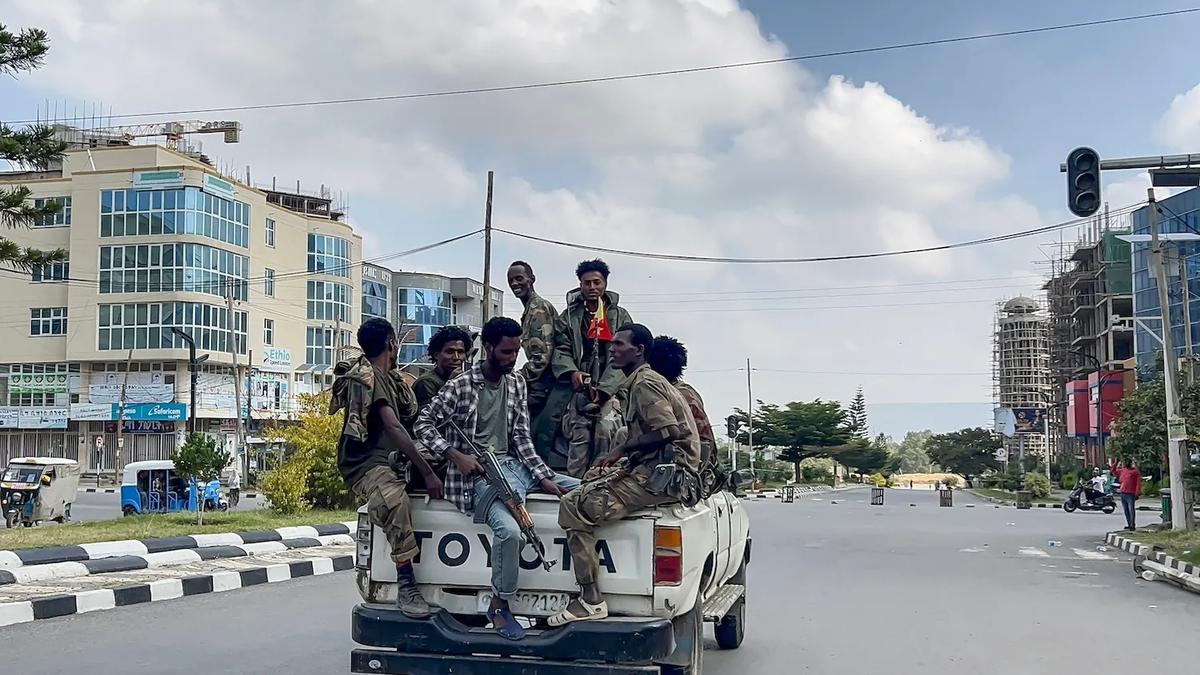
The federal army and the Tigray Peace Force entered Mekelle on Oct. 4, forcing the TPLF to withdraw after a brief but fierce clash. The seizure marks the latest flashpoint in a war that reignited on Sept. 23 when the TPLF seized three regional airports and opened new fronts in Afar and Amhara. Within weeks, an estimated 150,000 people have been displaced, and diplomatic ties between Addis Ababa, Eritrea, Egypt, and Sudan have frayed further.
- Red Sea access as a national imperative – Prime Minister Abiy Ahmed has framed a maritime outlet through Eritrea as essential for Ethiopia’s long‑term growth. The loss of Mekelle threatens to divert military focus away from the Red Sea corridor, forcing Addis to allocate resources to a domestic front instead of securing ports.
- Alliance math in the Horn – Eritrea, Egypt, and Sudan each have separate grievances with Ethiopia: Eritrea fears a resurgence of Ethiopian influence on its coast; Egypt and Sudan view the Grand Ethiopian Renaissance Dam as a water‑security threat. Their public accusations of backing the TPLF serve both to pressure Addis and to signal domestic audiences that they are defending sovereign interests.
- Political survival for Abiy – After winning a second term in June, Abiy faces a legitimacy test. A decisive victory in Mekelle would bolster his image as a strong leader capable of restoring order, while a protracted stalemate could embolden opposition forces and undermine his reform agenda.
- Economic trade‑offs – Ethiopia’s double‑digit growth hinges on foreign investment and access to Djibouti’s port, which handles 97% of its trade. Prolonged fighting risks disrupting supply chains, raising inflation, and deterring investors, a risk the government is keen to contain.
- Military doctrine and proxy risks – Both the Ethiopian army and the Tigray Peace Force rely on heavy artillery and air support, raising the specter of civilian casualties. Meanwhile, regional powers could covertly supply arms to their preferred side, turning the conflict into a broader proxy war that mirrors past Cold‑War contests in Africa.
The renewed clashes have forced roughly 150,000 people to flee their homes, overwhelming already stretched camps in Afar and Amhara. Food aid deliveries, which depend on the Djibouti corridor, are delayed as security checkpoints tighten, leaving families with dwindling rations and limited medical care.
Inflation has spiked as transport routes near Mekelle become unsafe, pushing staple prices higher for market vendors in Addis Ababa and beyond. Small‑scale traders who rely on cross‑border commerce with Kenya and South Sudan face lost income, while informal laborers in the construction sector see projects stalled amid uncertainty.
The conflict coincides with an Ebola outbreak in the Democratic Republic of Congo that has already crossed into Kenya. Health workers warn that population movements triggered by fighting could accelerate disease transmission, stretching already fragile health systems across the Horn.
While Eritrea, Egypt, and Sudan publicly deny involvement, intelligence reports suggest limited arms shipments and financial support to allied militias. By framing the dispute as a matter of “sovereign ports” or “water rights,” these states deflect attention from the strategic calculus of weakening Ethiopia’s bargaining position on the Grand Ethiopian Renaissance Dam.
The United States recently waived human‑rights restrictions to release over $300 million in military aid to Egypt, citing its role in the broader Red Sea security architecture. This infusion of weapons indirectly bolsters Egypt’s capacity to pressure Ethiopia, even as Washington publicly calls for “peaceful solutions.”
International coverage often emphasizes the geopolitical chessboard, sidelining the voices of Tigrayan civilians who have endured two wars in four years. The narrative of “regional powers” steering outcomes obscures the fact that many displaced families are making survival decisions independent of state actors, navigating aid corridors and informal economies.
- Ethiopia’s diplomatic outreach – Watch for any back‑channel talks between Addis Ababa and Eritrea that could signal a breakthrough on the Red Sea corridor, or conversely, a hardening of Eritrean demands that might push Ethiopia toward a more confrontational stance.
- U.S. policy shifts – Monitor whether Washington expands its waivers for military aid to other Horn states, which would indicate a willingness to tolerate human‑rights compromises in exchange for strategic footholds.
- Humanitarian access – The ability of UN agencies to secure safe corridors through Mekelle will be a litmus test for the conflict’s containment; any blockage could trigger a larger refugee flow into Sudan and Kenya, amplifying regional instability.
- Economic indicators – Track inflation rates and port traffic through Djibouti; a sharp decline would reveal the conflict’s spillover into Ethiopia’s growth model and could pressure the government to negotiate.
- Proxy maneuvers – Keep an eye on reports of arms shipments or training missions from Eritrea, Egypt, or Sudan to Tigrayan or federal forces, as these would signal a deepening of the proxy dimension that could drag the Horn into a wider confrontation.
Mekelle is a logistical hub for the federal army and a gateway to the northern front. Holding it allows Addis Ababa to focus resources on securing a corridor through Eritrea to the Red Sea, which is central to its trade and growth strategy.
Eritrea, Egypt, and Sudan each have strategic grievances with Ethiopia and are accused of covertly supporting opposing sides. Their involvement is aimed at pressuring Addis Ababa over port access and water rights while avoiding open warfare.
The conflict has displaced around 150,000 people, disrupted food aid routes, and risks spreading the Ebola outbreak from the Congo into Kenya and Ethiopia, straining already fragile health systems.
Editor's Note: Analysis based on publicly available reports and expert assessments up to October 2026.
Source referenced: FOREIGNPOLICY
This brief was synthesized by our Editorial Engine and reviewed by The Ground Narrative team.