TRENDING

Monday, 5 October 2026
----------------------
24 Rabi' Al-Thani 1448 AH
Donald Trump's defense of FIFA President Gianni Infantino reveals the intricate web of global influence and transactional politics at play within international sports organizations. This move highlights a deeper power struggle for control and legitimacy, impacting the sport's integrity and its global audience.
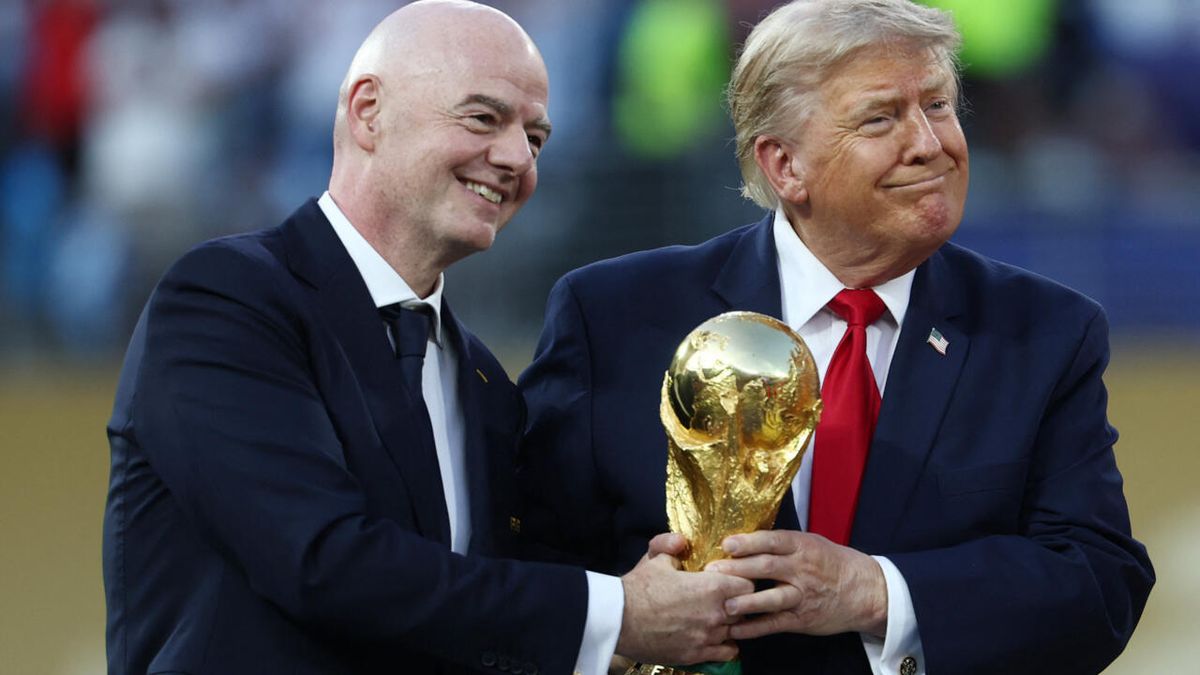
Former US President Donald Trump has publicly defended FIFA President Gianni Infantino, calling him "fantastic" and crediting him with overseeing "the most successful World Cup, by four times, ever presented." Trump's intervention comes as Infantino faces allegations of a workplace affair and criticism over a failed private investment scheme. While football organizations in North America and Europe, including US Soccer and UEFA, have critiqued Infantino, he has found support from FIFA itself, as well as the Confederation of African Football (CAF) and CONMEBOL (South America), ahead of his re-election bid next March.
Trump's endorsement of Infantino is not merely a casual observation but a calculated move within the complex mechanics of global power. For Trump, aligning with a figure perceived as successful in a major international organization, especially one connected to the US-hosted 2026 World Cup, offers a chance to burnish his own legacy and project influence on the world stage. It signals a transactional approach to international relations, where support is often a precursor to future reciprocity or a means to leverage soft power. By backing Infantino, Trump also positions himself against the critical stance of US Soccer, appealing to a segment that may view establishment sports bodies with skepticism.
For Infantino, Trump's high-profile backing provides a significant political shield, particularly amidst allegations and a contentious re-election campaign. Such an endorsement, even from a former head of state, lends an air of legitimacy and helps to counter the narrative of his critics. The division within global football — with European and North American bodies expressing dissent while African and South American confederations offer support — underscores a deeper geopolitical struggle within FIFA. This often plays out along continental lines, reflecting varying interests in revenue distribution, governance models, and the allocation of major tournaments. Trump's intervention adds a powerful, non-footballing voice to Infantino's corner, solidifying a coalition that prioritizes commercial success and political expediency over governance concerns.
When the leadership of global sports bodies becomes entangled in political maneuvering and allegations of misconduct, the primary casualty is often the trust of the public and the integrity of the sport itself. Fans, players, and grassroots communities worldwide bear the human cost. Allegations against leaders, when met with political endorsements rather than thorough accountability, erode confidence in FIFA's commitment to fair play and transparent governance. The focus shifts from developing football, fostering talent, and ensuring equitable access to the game, to internal power struggles and the survival of political figures. Moreover, the emphasis on a World Cup's "success" primarily in terms of profitability, as highlighted by Trump, often downplays critical considerations such as human rights, labor conditions, and the environmental impact on host nations, whose populations frequently bear the brunt of mega-event preparations without fully sharing in the benefits.
What is often omitted or downplayed in such high-profile endorsements is the underlying transactional nature of global influence. Trump's statement focuses solely on Infantino's perceived success and profitability, entirely sidestepping the allegations of misconduct. This framing suggests that commercial metrics can override ethical concerns, effectively dismissing calls for accountability as mere political attacks. FIFA's own characterization of the backlash as a "concerted and ongoing effort by some to undermine" the organization also deflects from the substance of the criticisms. The unspoken story is the currency of such endorsements: they are rarely given without an expectation of future leverage, access, or a shared strategic interest. This episode starkly illustrates how the world of global sport is deeply politicized, with powerful figures leveraging their platforms to support allies and shape outcomes, often far removed from the ideals of sporting merit or transparent governance.
Readers should watch for several key developments. Infantino's re-election in March will be a crucial indicator of whether political endorsements, like Trump's, can successfully counter internal dissent and allegations of misconduct. The outcome will reveal the true balance of power within FIFA and the priorities of its member federations. Furthermore, observe how these newly forged or reinforced political alliances influence future decisions regarding World Cup bids and hosting rights for 2030 and 2034. Finally, this event highlights a broader trend: the increasing involvement of former heads of state in global influence operations, often operating outside traditional diplomatic channels, and the implications this has for the autonomy and integrity of international organizations.
Source referenced: FRANCE24
This brief was synthesized by our Editorial Engine and reviewed by The Ground Narrative team.


