TRENDING

Sunday, 25 October 2026
----------------------
14 Jumada Al-Awwal 1448 AH
Massive wildfires in France and Spain, fueled by extreme heat and drought, have forced over 325,000 evacuations, highlighting the escalating impact of climate change on European security and economies. The crisis strains national resources and underscores the urgent need for enhanced climate adaptation strategies across the continent.
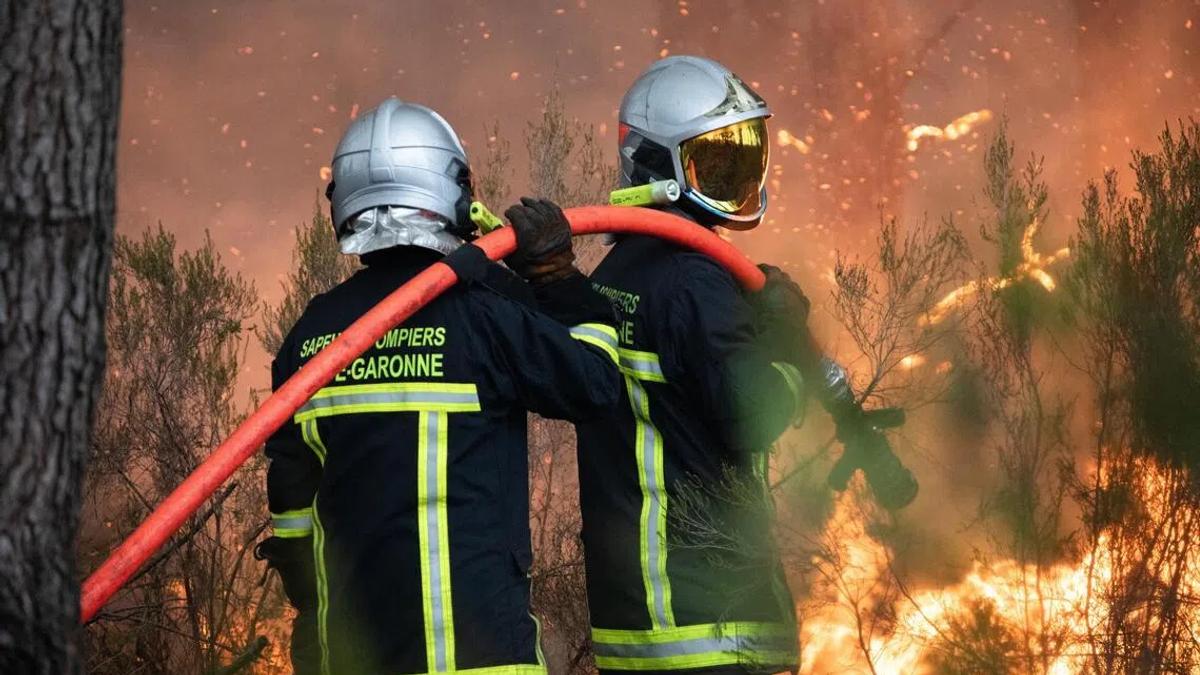
Massive wildfires are currently ravaging vast swathes of south-west France and central Spain, forcing the evacuation of over 325,000 people and causing extensive damage. These "monster" blazes, described by Spanish officials, are fueled by extreme heat, prolonged drought, and successive heatwaves, conditions that scientists unequivocally link to climate change. The crisis, unfolding in late July 2026, represents a significant challenge to European disaster response capabilities, economic stability, and long-term climate resilience strategies.
The fires have been particularly devastating in France's Gironde department, home to Bordeaux, where approximately 250,000 people have been evacuated, and in various regions across Spain, including areas near Madrid, Valencia, Avila, Toledo, and Castellon, accounting for another 75,000 evacuees. The sheer scale of the destruction is immense, with 42,000 hectares burned in Gironde alone – an area seven times the size of Manhattan – and a perimeter of 280 km encompassing 77,000 hectares in Spain's Avila region. Hundreds of homes have been destroyed, and natural heritage has suffered "incalculable" damage, as noted by King Felipe VI of Spain.
A particularly alarming development has been the formation of "pyrocumulonimbus" clouds in France, a rare phenomenon where intense heat creates its own weather system, generating winds and lightning that can spark new fires, further complicating containment efforts. This highlights the escalating and unpredictable nature of these climate-driven disasters.
The immediate response has seen the deployment of thousands of firefighters, military personnel, and police officers in both countries, underscoring the significant strain on national resources. French President Emmanuel Macron and Spanish Prime Minister Pedro Sanchez have held crisis meetings and visited affected areas, signaling the high-level governmental concern over the unfolding emergency. The situation is exacerbated by forecasts of new heatwaves, with temperatures expected to reach 40°C, threatening to intensify existing blazes and ignite new ones.
Economically, the fires strike at the heart of key European sectors. The Gironde region, renowned for its wine industry and a hub for France's aerospace sector, faces potential long-term impacts on its agricultural output and industrial stability. The disruption of the summer holiday season, with 45 campsites forced to close and tens of thousands of tourists affected, delivers a blow to the tourism industries of both France and Spain, vital components of their national economies. Furthermore, the closure of major transport arteries, such as the main freeway south of Bordeaux and disrupted rail services, impacts supply chains and regional connectivity.
Beyond the immediate crisis, these wildfires serve as a stark reminder of the escalating security and strategic challenges posed by climate change. The increasing frequency and intensity of such extreme weather events demand a fundamental re-evaluation of national and European-level disaster preparedness, land management policies, and climate adaptation strategies. The article's mention of Italy also battling its own fires suggests a broader regional vulnerability across Southern Europe, necessitating enhanced cross-border cooperation and resource sharing mechanisms within the European Union.
The human cost, including injuries to dozens of firefighters and the displacement of hundreds of thousands, coupled with the destruction of livelihoods and natural environments, underscores the urgent need for robust climate action. Governments are not merely battling fires; they are confronting the tangible consequences of a changing climate that increasingly threatens national infrastructure, economic stability, and public safety. The ongoing crisis in France and Spain is a critical indicator of the evolving geopolitical landscape, where environmental factors are becoming central to national security and international relations.
Source referenced: STRAITSTIMES
This brief was synthesized by our Editorial Engine and reviewed by The Ground Narrative team.