TRENDING

Monday, 5 October 2026
----------------------
24 Rabi' Al-Thani 1448 AH
A total solar eclipse swept across Europe, drawing millions to witness a rare celestial event. Beyond the spectacle, the momentary darkness tested the resilience of the continent's interconnected energy grids and public infrastructure.
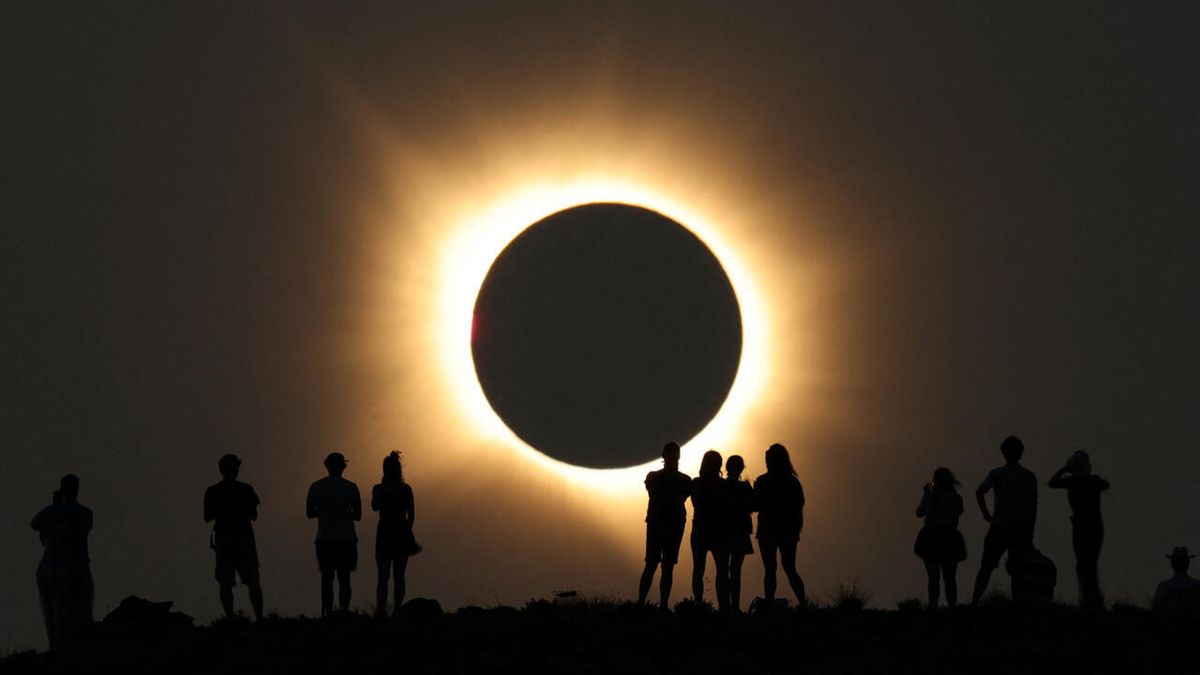
A total solar eclipse captivated millions across Europe, with the path of totality sweeping through Spain and partial views extending across much of the continent, including the UK, France, Germany, and Russia. On August 12, 2026, the rare celestial event momentarily plunged regions into twilight, drawing crowds to vantage points from city parks to remote observatories, all eager to witness the moon obscuring the sun.
While a natural spectacle, the eclipse presented a significant, albeit predictable, challenge to Europe's increasingly interconnected and renewable-dependent energy grids. The sudden, albeit temporary, drop in solar power generation across a vast geographical area required meticulous planning and coordination from national grid operators and energy companies. In a continent committed to decarbonization, solar energy constitutes a substantial portion of the power mix in many countries. The ability to seamlessly compensate for this rapid decline, either through ramping up conventional power plants, drawing on stored energy, or importing power from unaffected regions, was a critical test of Europe's energy resilience. This event underscored the complex interplay between natural phenomena, technological infrastructure, and cross-border energy agreements, revealing the hidden power of grid operators to maintain stability under unusual stress. Beyond energy, the eclipse also demonstrated the economic power of tourism, with governments and local businesses in the path of totality mobilizing to capitalize on the influx of visitors, generating revenue and boosting local economies.
For millions, the eclipse was a moment of shared wonder. However, its management and economic exploitation carried subtle human costs. The massive influx of tourists into specific regions, particularly smaller towns in Spain, strained local infrastructure, from roads and public transport to waste management and emergency services. Residents in these areas often bore the brunt of congestion and disruption, even as local businesses reaped benefits. More critically, while major blackouts were largely averted, any significant grid instability, however brief, could disproportionately affect vulnerable populations reliant on consistent power for medical equipment, heating, or cooling. The intricate dance of grid management, while successful, also highlighted the inherent fragility of modern life's dependence on seamless energy flow, a fragility that often remains invisible until tested.
Official statements from energy authorities and governments will undoubtedly highlight the smooth management of the grid and the successful handling of tourist flows, framing the event as a triumph of planning. What often goes unsaid, however, is the true cost and complexity behind this "smoothness." The extensive contingency planning, the activation of backup power reserves (often fossil-fuel-based), and the precise, minute-by-minute balancing acts by grid operators represent significant operational expenditures and a reliance on non-renewable energy sources that runs counter to long-term climate goals. Furthermore, the environmental footprint of millions traveling to witness the eclipse—through increased air travel, car journeys, and local waste generation—is rarely factored into the celebratory narratives. This downplays the inherent trade-offs between promoting a natural spectacle and the broader ecological impact, subtly omitting the environmental burden placed on the planet for a few minutes of awe.
As the dust settles from the celestial event, observers should look beyond the immediate success stories. Pay attention to the detailed post-mortems from national grid operators and the European Network of Transmission System Operators for Electricity (ENTSO-E). These reports, if transparent, will offer insights into the actual margins of safety, the specific challenges encountered, and the cost implications of maintaining grid stability during such an event. The eclipse serves as a valuable, real-world stress test for Europe's evolving energy landscape. Future policy discussions around renewable energy integration, grid modernization, and cross-border energy cooperation will likely draw lessons from this experience. The capacity of Europe's infrastructure to handle predictable, yet profound, natural disruptions will be a bellwether for its resilience against less predictable challenges, from extreme weather events to cyberattacks targeting critical systems.
Source referenced: FRANCE24
This brief was synthesized by our Editorial Engine and reviewed by The Ground Narrative team.


