TRENDING

Sunday, 4 October 2026
----------------------
23 Rabi' Al-Thani 1448 AH
A tit-for-tat border control dispute between Spain and Italy reveals the deep political divisions over migration within the EU, turning ordinary travelers into pawns in a symbolic power struggle.
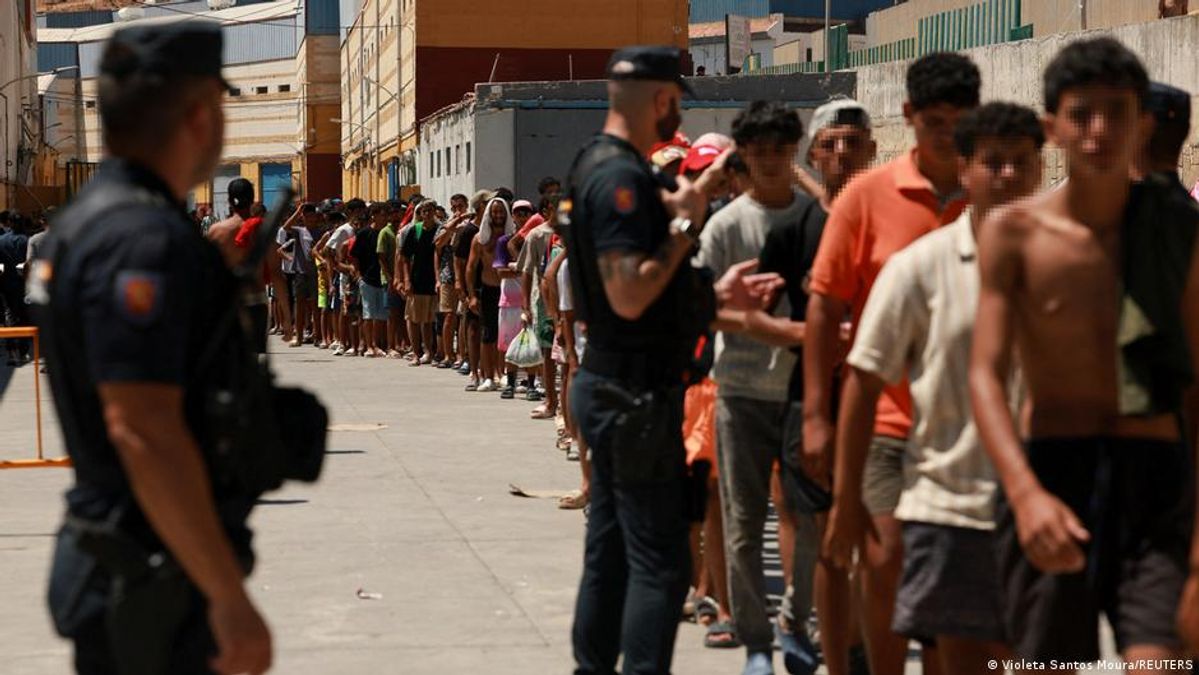
Spain has implemented reciprocal border controls on travelers arriving from Italy, a direct response to Italy's earlier decision to impose similar checks on those coming from Spain. This tit-for-tat measure follows a significant influx of migrants into the Spanish exclave of Ceuta, which Italy's right-wing government cited as justification for its initial border security moves. Despite the largely symbolic nature of these checks, given the absence of a shared land border, the dispute highlights a deepening ideological rift within the European Union over migration policy.
At its core, this standoff is less about practical border security and more about domestic political posturing and the fragile unity of the Schengen Zone. Italian Prime Minister Giorgia Meloni's government, facing pressure from its radical right base, seized on the Ceuta incident to project an image of toughness on migration, even if the measures taken – largely affecting air tourists – were performative. For Spain's Prime Minister Pedro Sanchez, the reciprocal action is a defense of national dignity and a challenge to what Madrid views as an "unjustified" and "discriminatory" act. The broader power dynamic reveals how internal EU migration challenges can be exploited by national governments for political gain, testing the very principle of open borders that underpins the European project. Other EU states, including Germany, have also weighed in on border security, underscoring the collective anxiety, but Italy's move to "suspend" Spain's Schengen status was a particularly aggressive rhetorical escalation.
While politicians exchange barbs and implement largely symbolic checks, the immediate human cost falls on ordinary travelers. Tourists, business people, and families flying between Spain and Italy now face additional scrutiny and potential delays, caught in a political dispute that has little to do with their actual risk profile. Beyond the inconvenience, the underlying issue of migration impacts far more vulnerable populations. The thousands who crossed into Ceuta faced immediate deportation or an uncertain future, their desperation becoming a political prop for European leaders. The broader narrative often overlooks the individuals seeking safety or economic opportunity, reducing them to statistics or threats, while their journeys and struggles remain largely unheard in the corridors of power.
What remains largely unsaid by the governments involved is the profound economic necessity of migration, even in countries whose leaders publicly champion strict border controls. While Meloni's government projects an image of staunch opposition to irregular migration, Italy, like Spain, quietly relies on migrant labor to fill critical gaps in its workforce. Experts point out that hundreds of thousands of people are regularized for the Italian labor market under Meloni's administration, mirroring pragmatic policies pursued by previous governments. This disconnect between public rhetoric and economic reality highlights a cynical political calculus: appear tough on migration to satisfy a domestic base, while simultaneously facilitating the influx of labor that the economy demands. Furthermore, the incident in Ceuta quietly underscores Morocco's potential leverage, with past events suggesting that border control can be a diplomatic tool in its relations with Spain and the EU.
The immediate future will reveal whether this tit-for-tat escalates further or if cooler heads prevail, possibly through EU-level mediation. Watch for any further "suspensions" of Schengen rules by other member states, which would signal a deeper fracturing of the bloc's foundational principles. The long-term implications for the Schengen Area are significant; if national governments continue to prioritize domestic political optics over collective agreements, the open-border system could face irreversible damage. Furthermore, observe how the EU attempts to forge a more coherent and humane migration policy that addresses both security concerns and the economic realities of an aging continent, rather than allowing individual crises to be exploited for political theater.
Source referenced: DW
This brief was synthesized by our Editorial Engine and reviewed by The Ground Narrative team.