TRENDING

Sunday, 15 November 2026
----------------------
5 Jumada Al-Thani 1448 AH
Ethiopia has accused Egypt and Eritrea of actively supporting recent attacks by the Tigray People's Liberation Front (TPLF), rekindling fears of a broader regional proxy conflict. This latest development underscores the deep-seated historical rivalries and resource disputes shaping the Horn of Africa.
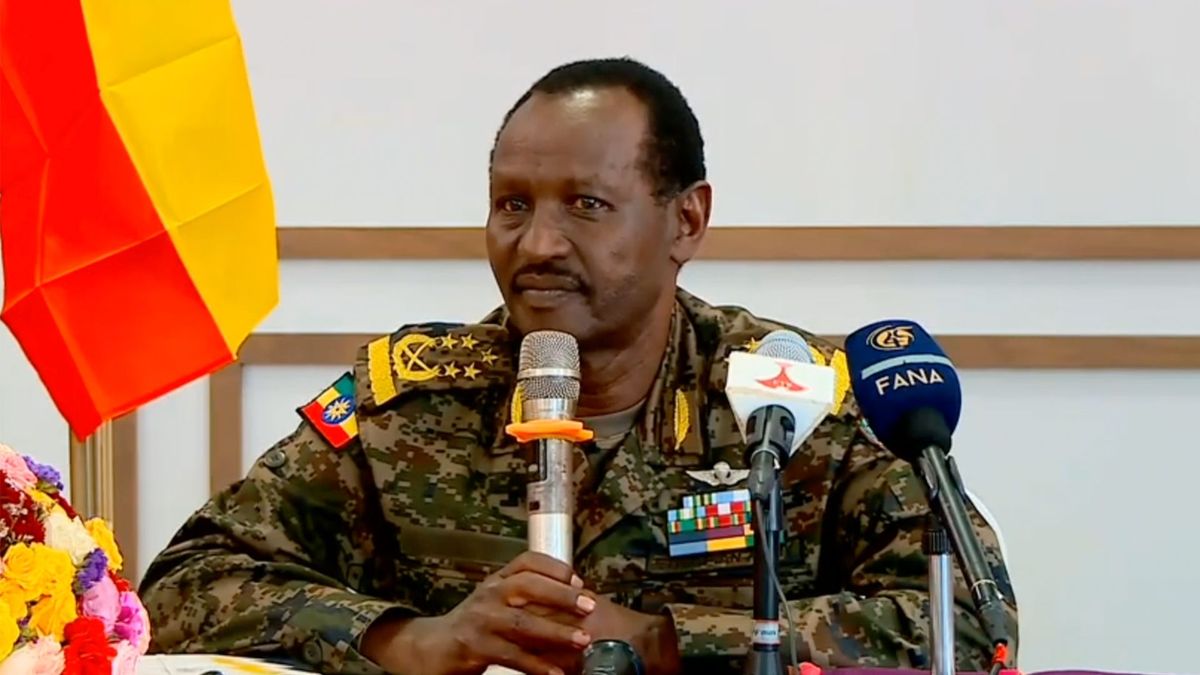
In November 2026, the Ethiopian government publicly accused Egypt and Eritrea of orchestrating and supporting a renewed military offensive by the Tigray People's Liberation Front (TPLF) in the northern Tigray region. According to Addis Ababa, Eritrea allegedly led the military operation, while Egypt provided crucial logistical support and supplies to the Tigrayan forces. Ethiopian army officials stated that their forces successfully repelled these attacks, forcing retreating TPLF leaders to seek refuge in Eritrea, a claim that suggests a direct and ongoing cross-border entanglement in Ethiopia's internal affairs.
The accusations laid by Ethiopia against Egypt and Eritrea are not isolated incidents but rather symptoms of a deeply entrenched web of historical grievances, strategic rivalries, and vital resource disputes that define the Horn of Africa. At its core, this renewed conflict in Tigray is a proxy struggle, where external powers leverage internal divisions to advance their own national interests.
Eritrea's involvement stems from a complex and often hostile relationship with the TPLF. For decades, the TPLF dominated the Ethiopian political landscape, including during the Ethio-Eritrean War (1998-2000), a conflict that left deep scars and unresolved border disputes. While Eritrea initially allied with the Ethiopian federal government against the TPLF during the 2020-2022 Tigray War, its long-term strategic interest often lies in a weakened, decentralized Ethiopia. A strong, unified Ethiopia, particularly one led by a government not aligned with Asmara's interests, is perceived as a threat. By allegedly supporting the TPLF now, Eritrea could be attempting to destabilize its larger neighbor, ensuring that Addis Ababa remains preoccupied with internal strife, thereby reducing any potential external threat or regional competition from a powerful Ethiopia.
Egypt's alleged role is almost entirely dictated by the existential threat it perceives from the Grand Ethiopian Renaissance Dam (GERD) on the Blue Nile. For Cairo, the dam's filling and operation directly impact its historical share of Nile waters, a lifeline for its agriculture and population. Despite ongoing, often stalled, negotiations, Ethiopia has continued with the dam's construction and filling. This creates immense pressure on Egypt to find leverage. Supporting a rebel group like the TPLF within Ethiopia offers a potent, albeit risky, means to exert pressure on Addis Ababa. The goal would be to destabilize the Ethiopian government, forcing it to divert resources and attention away from the GERD, or even to compel a more favorable negotiating position for Egypt. This strategy is a classic example of using internal conflict as a foreign policy tool, transforming a domestic dispute into a regional flashpoint.
For Ethiopia, the challenge is multifaceted. The federal government, led by Prime Minister Abiy Ahmed, seeks to consolidate power and assert national unity after decades of ethnic federalism, which the TPLF largely championed. Renewed conflict in Tigray, especially with external backing, undermines this project and drains vital resources. The government must project strength to its domestic audience and regional partners, demonstrating its capacity to defend its sovereignty and territorial integrity against both internal and external threats. The balancing act involves managing internal dissent while simultaneously navigating complex, often hostile, regional power plays.
The people of the Tigray region are once again at the epicenter of a conflict they did not choose, bearing the brunt of geopolitical maneuvers and historical animosities. The previous war (2020-2022) devastated the region, claiming hundreds of thousands of lives, displacing millions, and shattering infrastructure. The fragile peace brokered by the Pretoria Agreement in November 2022 had offered a glimmer of hope for recovery and stability, but these renewed attacks threaten to plunge the region back into a full-blown humanitarian catastrophe.
Civilians in Tigray face immediate dangers from direct combat, including indiscriminate shelling, aerial bombardments, and ground engagements. Homes are destroyed, livelihoods are disrupted, and the specter of widespread displacement looms large. Many are still living in temporary shelters, struggling with food insecurity and limited access to basic services. The return of fighting means that humanitarian aid, already constrained by bureaucratic hurdles and security concerns, will likely be further disrupted, exacerbating malnutrition and disease.
The psychological toll on the population, particularly children, is immense. Generations have grown up knowing little but conflict, witnessing violence, and experiencing profound loss. The trauma of war is cumulative, leading to long-term mental health challenges that often go unaddressed in conflict zones. Trust within communities, and between citizens and the state, erodes with each new cycle of violence, making reconciliation and peacebuilding efforts significantly harder.
Beyond Tigray, renewed conflict risks wider regional instability. Cross-border movements of refugees and internally displaced persons strain resources in neighboring areas and countries. The diversion of national budgets towards military spending, rather than development, hinders economic growth across Ethiopia and potentially Eritrea. Foreign investment, crucial for rebuilding, will shy away from a region plagued by instability, trapping populations in cycles of poverty and violence.
What powerful actors are downplaying or omitting in their official statements is often more revealing than what they explicitly declare. In this latest flare-up in Tigray, several critical elements remain in the shadows, obscured by nationalistic rhetoric and strategic ambiguity.
While Ethiopia points fingers at Egypt for logistical support, the underlying motive for Cairo's alleged involvement—the Grand Ethiopian Renaissance Dam (GERD)—is rarely articulated with full transparency by any party. Egypt will frame its actions, if acknowledged, in terms of regional stability or humanitarian concerns, never explicitly stating its desire to pressure Ethiopia over the Nile waters. Ethiopia, in turn, will emphasize its sovereignty and territorial integrity, downplaying the intense geopolitical pressure the dam creates. The reality is that the GERD is not just an infrastructure project; it is a profound geopolitical fault line, and its shadow looms large over every move Egypt makes in the Horn of Africa.
Eritrea's motivations are often shrouded in secrecy, but its consistent pattern of strategic opportunism in Ethiopia's internal affairs is a key, often understated, factor. While it allied with Addis Ababa against the TPLF in the initial war, Asmara's long-term goal is not necessarily a strong, stable Ethiopia. Rather, it seeks to ensure that no single power dominates the region, especially one that could challenge Eritrea's own authoritarian regime or its strategic interests. Its alleged support for the TPLF now, despite their historical animosity, highlights a pragmatic, transactional approach to regional power dynamics, prioritizing a fragmented Ethiopia over a unified, potentially powerful neighbor. This complex, often contradictory, strategy is rarely openly discussed by any of the involved parties.
The Pretoria Agreement, which officially ended the major fighting in Tigray, is often presented as a landmark achievement. However, its inherent fragility and the deep-seated grievances it failed to fully address are frequently downplayed. The agreement focused primarily on cessation of hostilities and disarmament, but it left many core political questions unanswered, including the future status of Tigray, accountability for atrocities, and the reintegration of TPLF fighters. The renewed fighting exposes these unhealed wounds and the limitations of a peace deal that did not fully engage with all regional actors or address the root causes of conflict.
All parties engage in an intense information war, carefully curating narratives to garner international sympathy and justify their actions. Civilian casualties, humanitarian blockades, and the true extent of external interference are often minimized or outright denied. The public is fed a sanitized version of events, designed to rally support and deflect blame, making it incredibly difficult to ascertain the full truth of what is happening on the ground and who is truly responsible for the suffering.
The renewed accusations and fighting in Tigray signal a dangerous escalation that demands close attention. The coming months will reveal whether this is an isolated flare-up or the beginning of a more protracted and widespread regional conflict.
First, observe the scale and intensity of the fighting. Will it remain localized within Tigray, or will it spill over into neighboring regions or even across international borders? Any significant escalation could draw in other regional actors, transforming a proxy conflict into a direct confrontation. The movement of refugees and internally displaced persons will be a critical indicator of the conflict's severity.
Second, monitor the international response. Will the African Union (AU), which brokered the Pretoria Agreement, be able to reassert its influence and push for de-escalation? How will major global powers like the United States, the European Union, and China react? Their responses, or lack thereof, will significantly shape the conflict's trajectory. Pressure for renewed mediation or sanctions on involved parties could either temper or inflame the situation.
Third, pay close attention to the status of the GERD negotiations. Any movement, or continued deadlock, in talks between Ethiopia, Egypt, and Sudan will be a crucial barometer. A breakthrough could potentially reduce Egypt's incentive for destabilizing Ethiopia, while continued stagnation might encourage further covert actions. The dam remains the elephant in the room, and its future is inextricably linked to regional stability.
Finally, assess the humanitarian situation. The ability of aid agencies to access affected populations and deliver critical supplies will determine the immediate human cost. Any further restrictions on humanitarian access would be a dire sign that the conflict is intensifying and that civilian suffering is being weaponized. The world must not look away from the unfolding crisis in Tigray.
Egypt's alleged support for the TPLF is primarily driven by its concerns over the Grand Ethiopian Renaissance Dam (GERD) on the Blue Nile. Cairo views the dam as an existential threat to its water supply and may use internal Ethiopian conflicts to pressure Addis Ababa or gain leverage in dam negotiations.
Eritrea has a long history of animosity with the TPLF, who dominated Ethiopia when Eritrea gained independence. Its alleged involvement may stem from a strategic interest in preventing a strong, unified Ethiopia, thereby maintaining regional influence and reducing perceived threats to its own sovereignty.
The renewed fighting in Tigray exacts a severe human cost, including civilian casualties, widespread displacement, and exacerbated humanitarian crises like food insecurity and limited access to healthcare. The conflict also inflicts deep psychological trauma on a population already devastated by previous warfare.
Source referenced: ALJAZEERA
This brief was synthesized by our Editorial Engine and reviewed by The Ground Narrative team.


