TRENDING

Monday, 5 October 2026
----------------------
24 Rabi' Al-Thani 1448 AH
Abdul El-Sayed's victory in the Michigan primary signals a potential shift in the Democratic Party's strategy, with implications for the upcoming midterms. As the party navigates internal divisions, the outcome could significantly impact the balance of power in the US Senate.
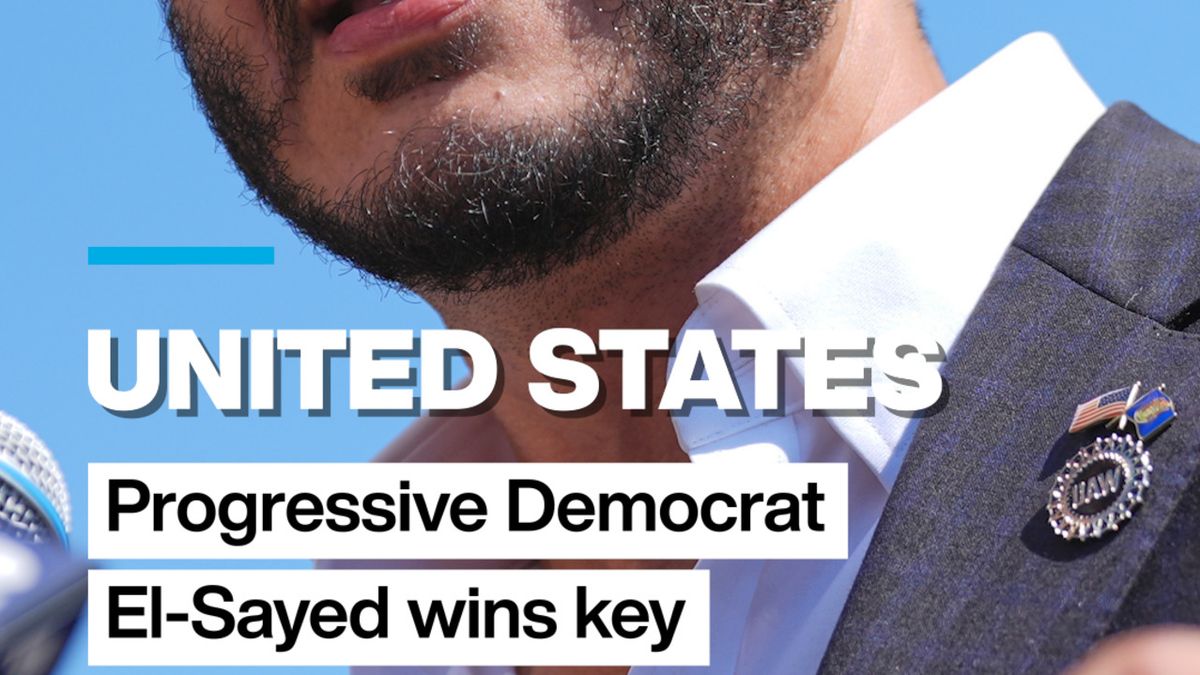
In a closely watched primary, Abdul El-Sayed, a progressive Democrat, has won a key primary race in Michigan, defeating more moderate Congresswoman Haley Stevens. This victory could have significant implications for the Democratic Party's chances in the upcoming midterms, particularly in their bid to swing the US Senate.
El-Sayed's win reflects the ongoing struggle within the Democratic Party between progressive and moderate factions. His campaign, focused on issues like healthcare, education, and economic inequality, resonated with voters looking for a more radical change. This outcome may embolden progressive voices within the party, potentially altering the party's platform and strategy for the midterms. The balance of power in the US Senate hangs in the balance, with Michigan being a crucial state in the Democrats' bid to regain control.
The primary's outcome will have far-reaching consequences for various communities in Michigan and beyond. For instance, El-Sayed's progressive policies, if implemented, could significantly impact low-income families, students, and workers, potentially improving their access to healthcare and education. Conversely, his victory might also face resistance from conservative and moderate voters who fear radical policy changes. The human cost of political decisions is often felt most keenly by those who are not at the negotiating table, making the outcome of such elections crucial for marginalized and underrepresented groups.
While El-Sayed's victory is being hailed as a win for progressive forces, there are underlying factors that are not being widely discussed. The role of money in politics, for example, and how it influences election outcomes, is a critical aspect that remains in the shadows. Additionally, the potential backlash from conservative forces, both within and outside Michigan, could pose significant challenges to El-Sayed's campaign in the general election. The narrative around his win also overlooks the broader structural issues within the Democratic Party, including how it navigates its internal divisions and presents a unified front against Republican opponents.
As the midterms approach, several factors will be crucial to watch. First, how the Democratic Party manages its internal dynamics, balancing the push for progressive policies with the need to appeal to a broad electorate. Second, the response of Republican candidates and the strategies they employ to counter El-Sayed and other progressive Democrats. Lastly, the role of independent voters and how they respond to the progressive agenda will be pivotal in determining the outcome of the elections. These factors will not only influence the immediate political landscape but also have long-term implications for the direction of American politics.
Editor's Note: The analysis is based on current trends and may evolve as more information becomes available.
Source referenced: FRANCE24
This brief was synthesized by our Editorial Engine and reviewed by The Ground Narrative team.


