TRENDING

Monday, 5 October 2026
----------------------
24 Rabi' Al-Thani 1448 AH
The United Nations has issued a stark warning that a new Ebola outbreak in Africa could cost the continent up to $3.6 billion and jeopardize hundreds of thousands of jobs, risking a profound development crisis. The Bundibugyo strain, currently without a tested vaccine or treatment, is primarily affecting the Democratic Republic of Congo and Uganda, with fears of wider regional spread.
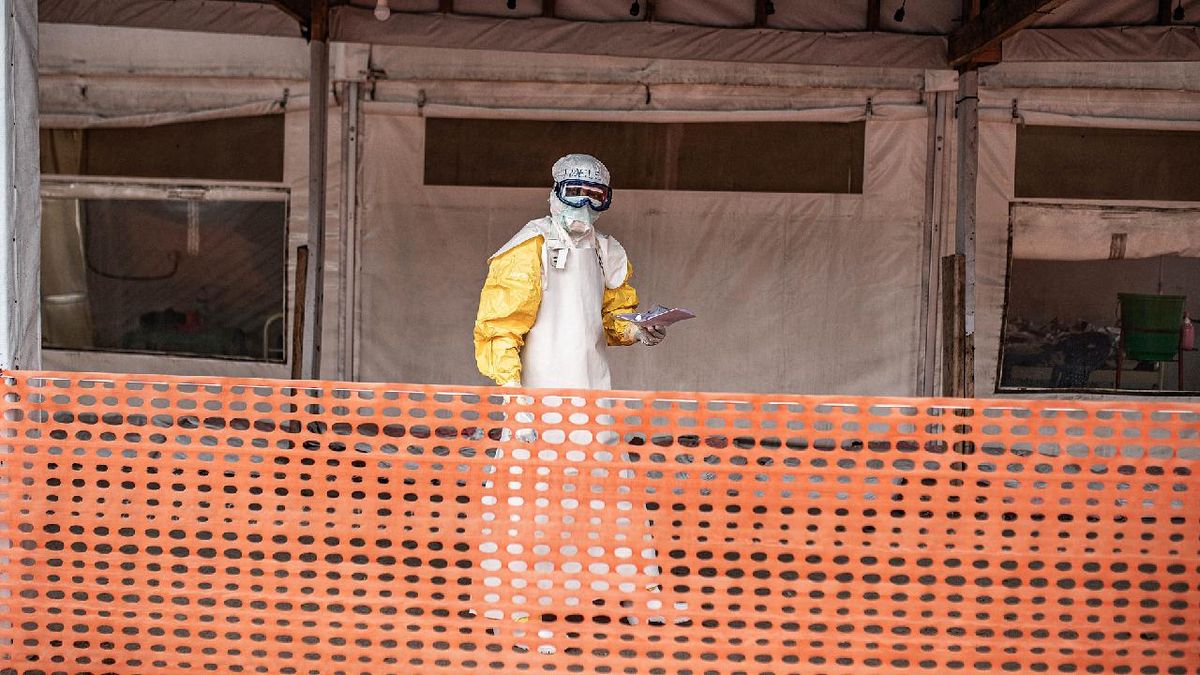
The United Nations has sounded a critical alarm regarding a burgeoning Ebola outbreak in Africa, projecting potential economic losses for the continent reaching $3.6 billion and threatening hundreds of thousands of jobs. This warning, issued by the United Nations Development Programme (UNDP) on June 30, 2026, underscores the severe risk of a health emergency escalating into a prolonged and deeper development crisis across the region and potentially the entire continent.
The current crisis is centered around the Bundibugyo strain of Ebola, which was declared an outbreak on May 15, 2026. The Democratic Republic of Congo (DRC) is the epicenter, reporting 1,307 infections and 377 fatalities to date. A smaller number of cases have also been identified in neighboring Uganda. A critical concern is the absence of a tested vaccine or treatment specifically for this strain, complicating containment efforts and increasing the mortality risk. Experts are particularly worried about the potential for the disease to spread to other vulnerable neighboring countries, including South Sudan, Rwanda, and Angola, which could significantly amplify the humanitarian and economic toll.
The UNDP has outlined three scenarios, each with escalating economic consequences. In the most optimistic scenario, where the epidemic remains contained within the DRC and Uganda, the economic cost to the DRC's GDP alone is estimated at $1 billion. However, the worst-case scenario paints a far grimmer picture: if the disease spreads to additional countries like Rwanda and Angola, and coincides with external economic pressures such as higher fuel costs linked to an Iran crisis, the continental GDP could be slashed by $3.6 billion, leading to an estimated 328,000 job losses. These figures highlight the interconnectedness of global health, economic stability, and geopolitical events.
Such substantial economic setbacks would not only reverse hard-won development gains but also exacerbate existing challenges such as poverty, food insecurity, and social instability. The loss of jobs, particularly in sectors reliant on trade and movement, would disproportionately affect vulnerable populations, potentially fueling internal displacement and migration pressures. The diversion of national resources towards emergency health responses would also strain public services, impacting education, infrastructure, and other critical development initiatives.
An uncontrolled health crisis like Ebola carries significant geopolitical implications, particularly in a region already grappling with complex challenges. The DRC, in particular, has a history of political instability, conflict, and humanitarian crises, making its population highly susceptible to the cascading effects of an epidemic. The potential spread to countries like South Sudan, which is still recovering from years of civil conflict, or Rwanda and Angola, which play crucial roles in regional stability, could trigger widespread destabilization.
Cross-border transmission risks not only strain diplomatic relations but also necessitate stringent border controls, which can disrupt regional trade, supply chains, and the free movement of people, further stifling economic activity. The need for international aid and intervention, while crucial, can also create dependencies and, if not managed transparently, potentially fuel local grievances. The UNDP's resident representative in Congo, Damien Mama, emphasized that without adequate resources and a stepped-up response, this health emergency risks becoming a much deeper and prolonged development crisis across the region and potentially the continent.
The UN's warning serves as a critical call to action for the international community. The experience of past Ebola outbreaks, particularly the devastating West African epidemic of 2014-2016, demonstrated the critical importance of rapid, coordinated, and well-resourced international responses. Early containment, robust public health infrastructure, community engagement, and equitable access to medical countermeasures are paramount.
Preventing the worst-case scenario requires not only immediate financial and logistical support for affected countries but also sustained investment in strengthening health systems, surveillance capabilities, and regional cooperation mechanisms. The interconnectedness of global health security means that an outbreak in one region can quickly become a global concern, underscoring the shared responsibility to address such crises proactively and comprehensively. Failure to do so risks not only immense human suffering but also significant geopolitical and economic fallout that could reverberate far beyond Africa's borders.
Source referenced: CGTN
This brief was synthesized by our Editorial Engine and reviewed by The Ground Narrative team.