TRENDING

Sunday, 25 October 2026
----------------------
14 Jumada Al-Awwal 1448 AH
Cuban President Miguel Diaz-Canel has accused the US of 'political genocide' on the 73rd anniversary of the Cuban Revolution, amid deepening economic crisis and US sanctions.
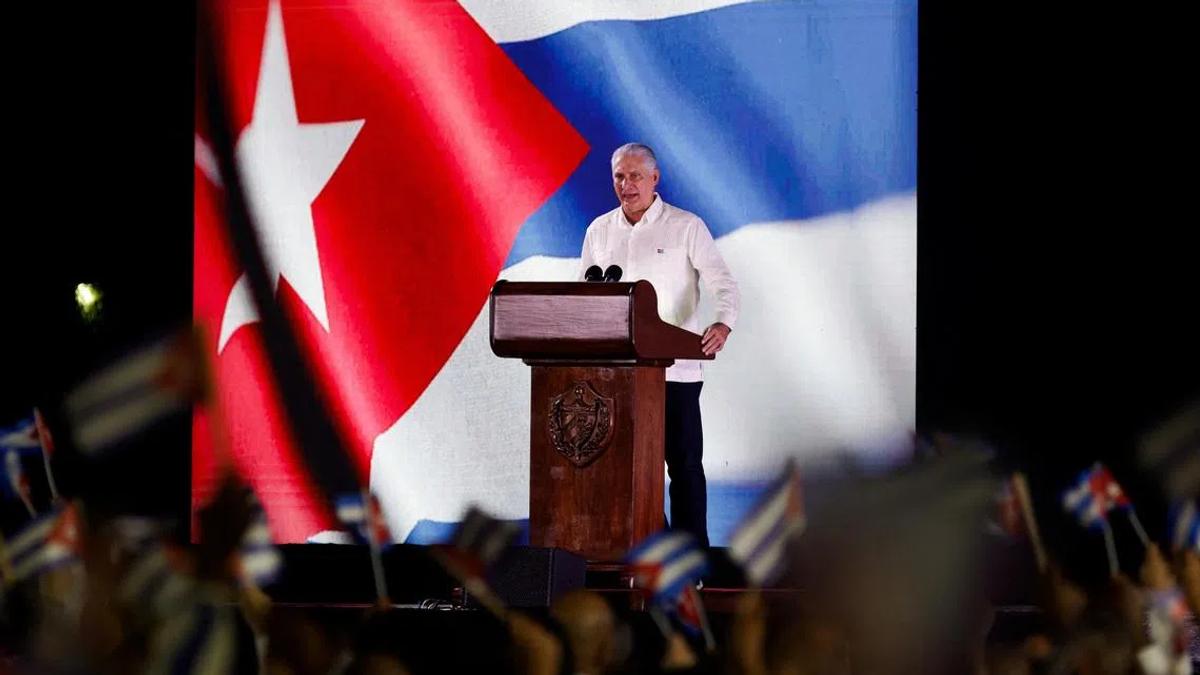
Cuban President Miguel Diaz-Canel's sharp condemnation of Washington's oil embargo and hardened sanctions on July 26 marked a significant escalation in tensions between Havana and Washington. Diaz-Canel's speech, delivered on the 73rd anniversary of the Cuban Revolution, accused the US of 'political genocide' and criticized a recent US State Department report that accused Cuba of infiltrating the US government and backing left-wing terrorism.
The Cuban Revolution, led by Fidel Castro, began in 1953 with an armed uprising against the US-backed government of Fulgencio Batista. The revolution ultimately brought down Batista in 1959, establishing a socialist government in Cuba. The US has maintained a hostile stance towards Cuba since the revolution, imposing a trade embargo and restricting diplomatic relations.
The current economic crisis in Cuba, triggered by the US sanctions and oil embargo, has severe regional implications. The crisis has driven international companies to end operations in Cuba, crippling the country's tourism and financial sectors. The depleted fuel supply has triggered rolling blackouts, grid collapses, and crippled public transportation, forcing the government to cut the school year short.
The US sanctions and oil embargo are a key component of the US strategy to undermine the Cuban government and promote regime change. The US has long sought to isolate Cuba and restrict its access to international markets and resources. The current escalation of tensions suggests that the US is seeking to further weaken the Cuban government and create conditions for a more pliable regime.
The ongoing crisis in Cuba has significant implications for regional stability and global politics. The US actions may embolden other countries to adopt similar strategies against perceived adversaries, potentially destabilizing the global order. The crisis also highlights the ongoing struggle between the US and its adversaries for influence and control in the region.
Editor's Note: The analysis is based on publicly available information and does not contain any speculative elements.
Source referenced: STRAITSTIMES
This brief was synthesized by our Editorial Engine and reviewed by The Ground Narrative team.


