TRENDING

Monday, 5 October 2026
----------------------
24 Rabi' Al-Thani 1448 AH
Bangladesh's celebrated cricket icon, Shakib Al Hasan, seeks a guaranteed safe return from exile to face serious charges, a move that directly challenges the nation's new political order. His case is a high-stakes test of power and justice as the ousted former Prime Minister also plans her return.
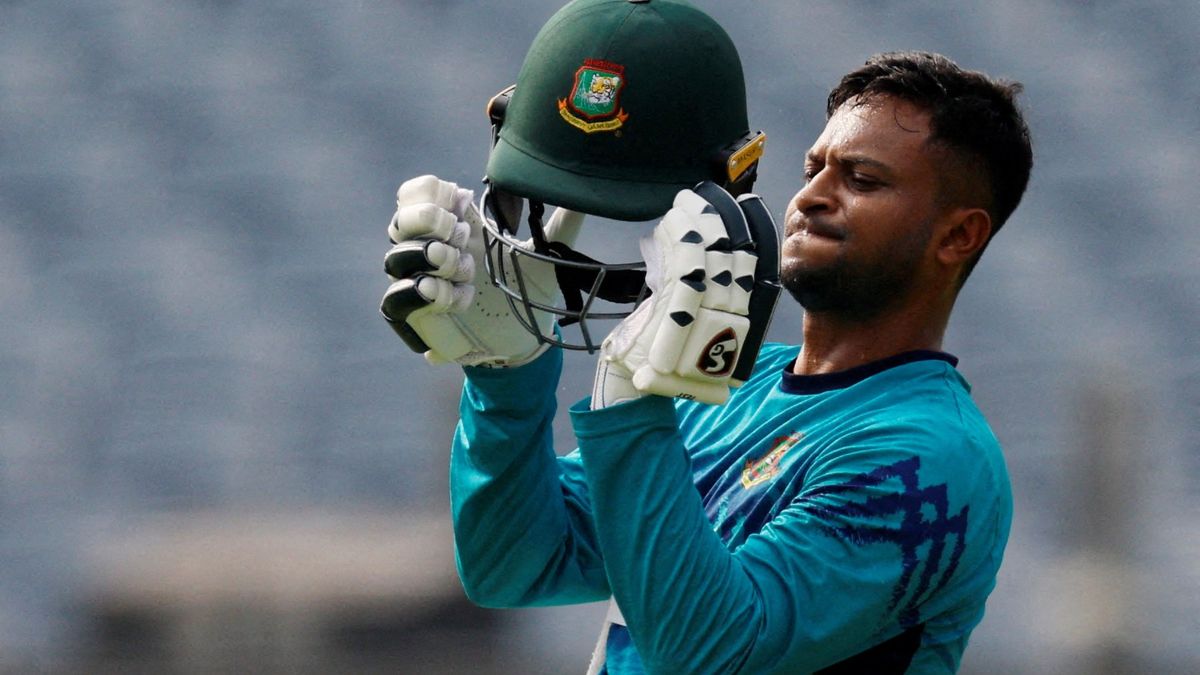
Bangladeshi cricket legend Shakib Al Hasan, a prominent ally of former Prime Minister Sheikh Hasina, has declared his readiness to return from two years of exile in the United States. His condition: the current government must guarantee his safety to face trial on charges, including murder, and allow him a farewell cricket series. This request comes as Hasina, herself sentenced to death in absentia for her role in the deadly 2024 crackdown, plans her own return to Bangladesh in December.
The unfolding drama surrounding Shakib's potential return is less about cricket and more about the raw mechanics of political power in Bangladesh. The current government, led by Prime Minister Tarique Rahman, inherited a nation deeply fractured by the student-led uprising that toppled Hasina's Awami League. For Rahman's administration, Shakib's request presents a delicate balancing act. Allowing a high-profile Awami League figure to return, even to face trial, could be seen as a concession or a test of the new government's confidence. Denying his return, or failing to ensure his safety, risks accusations of political persecution and further eroding the legitimacy of the legal process.
For the Awami League and its exiled leader, Sheikh Hasina, Shakib's move is a strategic maneuver. By demanding a safe return and trial, he implicitly challenges the fairness of the charges against him and other party members. His celebrity status amplifies this challenge, drawing international attention to a domestic political struggle. Hasina's own stated intention to return in December, despite a death sentence, signals a clear intent to contest the new power structure, using figures like Shakib to gauge the political climate and the government's resolve. The judiciary, in this context, becomes a battleground, with legal proceedings often perceived as politically motivated instruments rather than impartial arbiters.
While the headlines focus on political figures and cricket stars, the human cost of this power struggle is borne by many. Shakib Al Hasan himself has spent two years in exile, unable to see his parents who remain in Bangladesh, with his bank accounts frozen and his house attacked. This personal toll extends to countless other Awami League allies who face similar charges and are unable to return home, their lives upended by the shift in power. Beyond these immediate political casualties, the broader Bangladeshi populace pays a price in terms of political instability and a deepening erosion of trust in state institutions. The 2024 uprising, which led to an estimated 1,400 deaths according to the United Nations, stands as a stark reminder of the ultimate human cost when political grievances escalate into violence. The question of justice for these victims remains largely unanswered, overshadowed by the ongoing power plays.
What remains largely unaddressed by official statements and political rhetoric is the deeply politicized nature of the charges against Shakib and other Awami League figures. Shakib himself points out the absurdity of a murder charge filed against him while he was playing a cricket match in another country. Such claims, if substantiated, suggest a legal system being weaponized for political ends, rather than upholding impartial justice. Governments, both past and present, tend to frame such legal actions as standard judicial processes, downplaying the underlying political motivations.
Furthermore, the public anger cited by previous interim government officials regarding Shakib's Awami League ties highlights the profound societal divisions that persist. This isn't just about individual charges; it's about a deep-seated resentment and a struggle for political legitimacy that touches every layer of Bangladeshi society. The current government, while consolidating its power, may be understating the potential for renewed unrest or the difficulty of truly unifying a nation so recently torn apart by political violence and perceived injustices. The narrative of "justice being served" often omits the context of who is serving it, and for what ultimate political purpose.
All eyes will be on how the Rahman government responds to Shakib Al Hasan's request for a safe return. Its decision will likely set a precedent for how it intends to manage the return of other high-profile Awami League figures, including Sheikh Hasina herself. Should Shakib be allowed to return under guaranteed safety, the subsequent court proceedings will be scrutinized for their fairness and impartiality, offering a critical test of Bangladesh's judicial independence.
The most significant event to watch, however, remains Sheikh Hasina's announced return in December. Her arrival, despite a death sentence, will be a direct confrontation with the new political order and could trigger widespread public reactions, both in support and opposition. The stability of the current government will be severely tested by this event, and its handling of Hasina's return will dictate the immediate future trajectory of Bangladeshi politics. Observers should also monitor the reactions of regional and international actors, as Bangladesh's internal stability has broader implications for South Asia.
Source referenced: ALJAZEERA
This brief was synthesized by our Editorial Engine and reviewed by The Ground Narrative team.


