TRENDING

Tuesday, 27 October 2026
----------------------
16 Jumada Al-Awwal 1448 AH
China's top diplomat met Congo's foreign minister to seal the Early Harvest Arrangement, a deal that promises infrastructure and mining projects. The agreement deepens Beijing's foothold in Central Africa while raising questions about debt, sovereignty, and everyday livelihoods.
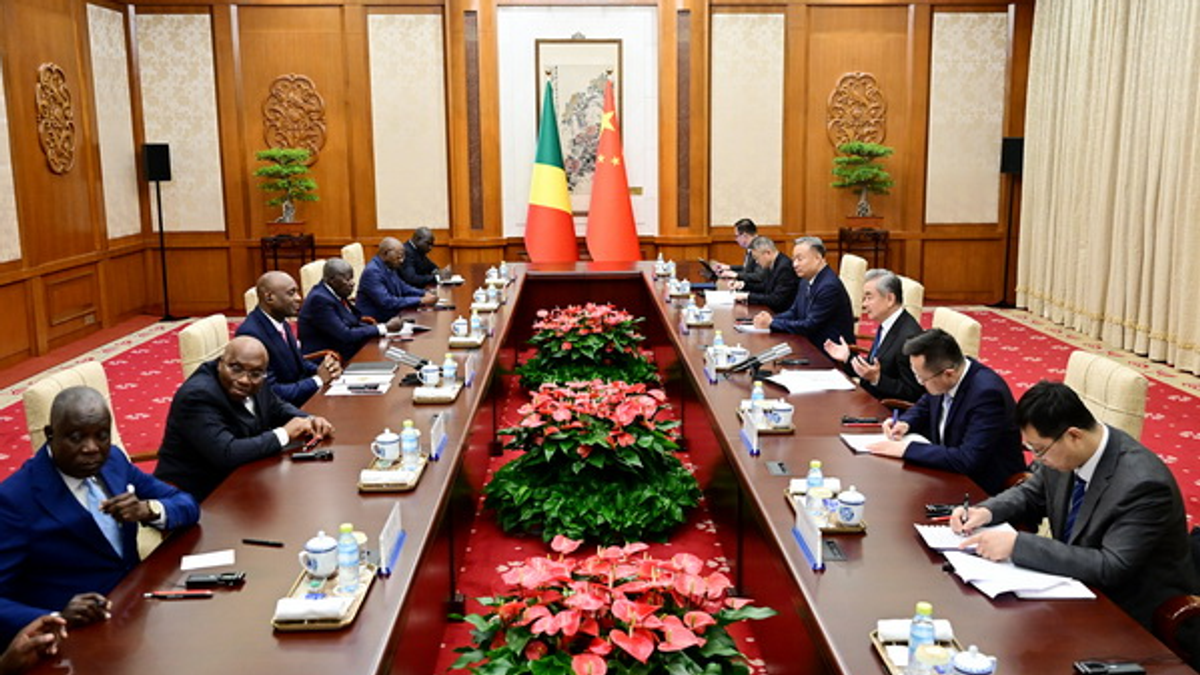
Chinese Foreign Minister Wang Yi, a member of the Communist Party’s Political Bureau, met with Constant-Serge Bounda, Congo’s minister of foreign affairs, in Beijing on October 22, 2026. The two officials announced that the Republic of the Congo became the first African nation to sign the Early Harvest Arrangement under China’s Agreement on Economic Partnership for Shared Development. The statement highlighted plans for high‑level exchanges, strategic alignment, and cooperation ahead of the 2027 Forum on China‑Africa Cooperation in Brazzaville. Both sides pledged to use multilateral platforms such as the International Organization for Mediation and the World Artificial Intelligence Cooperation Organization to advance their agenda.
The Early Harvest Arrangement is a streamlined version of China’s broader Belt‑and‑Road Initiative, offering fast‑track financing for extractive projects, infrastructure, and health assistance. By securing Congo’s early participation, China locks in access to the country’s rich cobalt and copper deposits, essential for its renewable‑energy supply chain. The deal also serves as a showcase for Beijing’s “shared development” narrative, positioning itself as a counterweight to Western aid models.
President Denis Sassou Nguesso faces domestic pressure to deliver visible development while maintaining regime stability. Aligning with China provides a source of hard‑currency loans and construction contracts that can be earmarked for visible projects—roads, hospitals, and power plants—that bolster the government’s legitimacy. The partnership also offers diplomatic cover against criticism from Western human‑rights groups, as Congo reaffirms the one‑China principle and frames external pressure as “bullying.”
The Early Harvest model typically bundles concessional loans with resource‑backed repayment clauses. While the immediate influx of capital can jump‑start projects, it also deepens Congo’s external debt profile. The financing structure often ties repayment to export volumes, meaning that fluctuations in global commodity prices directly affect Congo’s fiscal health. This creates a subtle leverage point for China, which can negotiate preferential terms in future contracts.
The agreement’s emphasis on cobalt and copper extraction will likely expand mining operations in the Niari and Kouilou regions. Residents of these towns already contend with inadequate health services, water contamination, and limited schooling. Increased mining activity can bring short‑term jobs, but it also raises the risk of occupational hazards, displacement, and environmental degradation. Past Chinese‑led mining projects in the Democratic Republic of the Congo have been linked to higher rates of respiratory illness and child labor.
While Beijing promises new roads and hospitals, the allocation of these assets often favors areas near mining sites or political strongholds. Rural villages farther from the extractive zones may see little improvement, perpetuating a development gap between the capital, Brazzaville, and peripheral communities. This uneven distribution fuels resentment and can exacerbate migration to already strained urban centers.
Debt‑linked financing means that a portion of Congo’s future export earnings will be earmarked for loan repayment. Consequently, funds that could otherwise support education, primary health care, or social safety nets are diverted. The long‑term fiscal burden may limit the government’s ability to respond to crises, such as disease outbreaks or food insecurity, affecting the most vulnerable populations.
Official statements from both China and Congo emphasize a partnership of equals, yet the language masks an asymmetry of bargaining power. Beijing controls the bulk of financing and technical expertise, while Congo offers resource concessions. The public discourse downplays how this dynamic can translate into strategic dependency, where policy choices in Brazzaville may be subtly steered to align with Beijing’s global agenda.
Environmental impact assessments are often conducted under expedited timelines to meet project milestones. The official releases omit detailed discussion of mitigation measures for water pollution, deforestation, and biodiversity loss. Local NGOs have warned that past Chinese‑funded projects in neighboring countries have left behind abandoned pits and tailings that leach heavy metals into rivers, affecting downstream farming communities.
By securing the first African Early Harvest signatory, China sends a signal to the United States, European Union, and Japan that it can outpace traditional donors in delivering rapid infrastructure. The statement’s reference to “bullying by external forces” is a thinly veiled critique of Western sanctions regimes and conditional aid, positioning Beijing as the more reliable partner for countries seeking autonomy from Western political conditions.
- Implementation Milestones: Track the timeline for the first infrastructure projects—road construction near the mining belt and the promised health‑care upgrades. Delays or cost overruns will reveal the practical limits of the partnership.
- Debt Servicing Data: Monitor Congo’s export revenues and debt repayment schedules. A sharp rise in debt‑to‑GDP ratios could trigger renegotiations or give Beijing leverage over future policy decisions.
- Local Opposition: Watch for protests or legal challenges from affected communities, especially around mining expansions. Grassroots resistance can force revisions to project scopes or bring international attention to environmental concerns.
- Western Response: Observe whether the United States or EU adjust their aid packages or impose new conditions in reaction to the China‑Congo deal. Shifts in diplomatic tone could influence Congo’s strategic calculations ahead of the 2027 Forum on China‑Africa Cooperation.
- Technology Transfer Claims: The agreement mentions cooperation with the World Artificial Intelligence Cooperation Organization. Scrutinize whether AI and digital infrastructure projects materialize, and who controls the data and technology standards.
By keeping an eye on these indicators, readers can gauge whether the Early Harvest Arrangement remains a catalyst for genuine development or a conduit for deeper external dependence.
It is a fast‑track financing agreement that bundles concessional loans with resource‑backed repayment clauses, aimed at accelerating infrastructure and mining projects under China’s shared development framework.
While it promises new roads and hospitals, the focus on mining can increase environmental risks, create uneven development, and divert future export earnings to debt repayment, limiting funds for health and education.
The agreement showcases China’s ability to outpace Western aid in Africa, signals a shift in influence, and may pressure the US and EU to rethink their engagement strategies on the continent.
Source referenced: CGTN
This brief was synthesized by our Editorial Engine and reviewed by The Ground Narrative team.


