TRENDING

Monday, 5 October 2026
----------------------
24 Rabi' Al-Thani 1448 AH
Colombia's new president has launched aggressive air strikes against the ELN, signaling an end to peace talks and a return to military confrontation. This shift reignites a decades-old conflict, with civilians in the Catatumbo region once again bearing the immediate human cost.
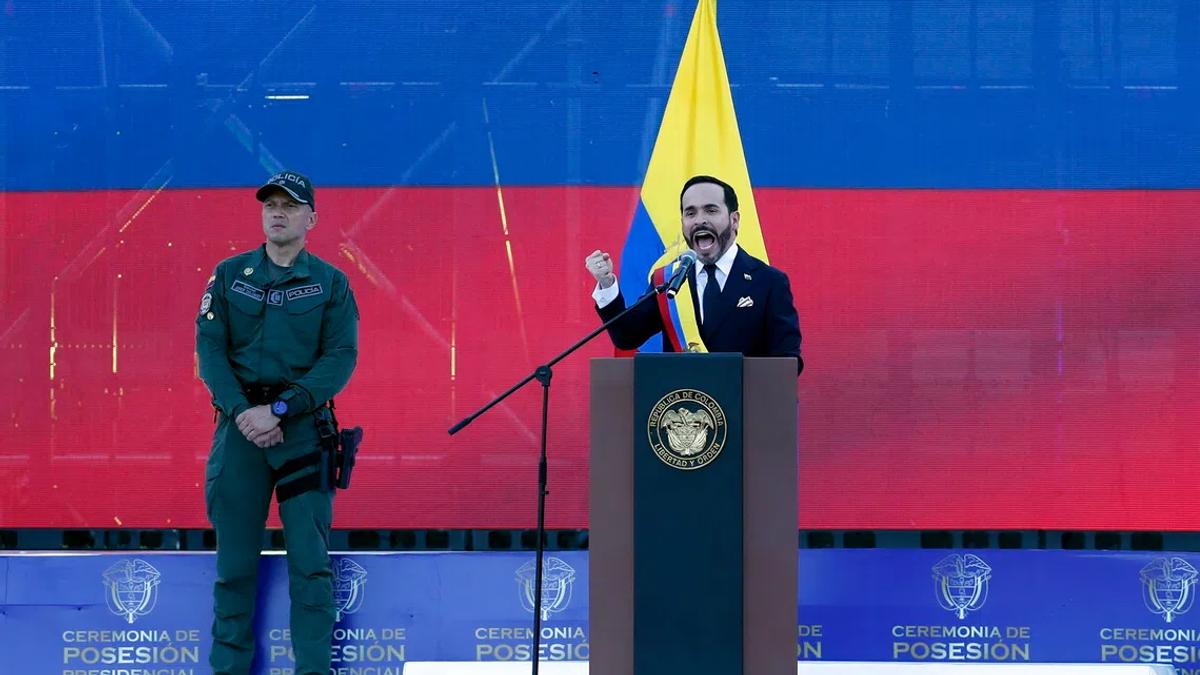
Just days into his term, Colombia's new President Abelardo de la Espriella initiated air strikes against the National Liberation Army (ELN) in the violence-plagued Catatumbo region. The offensive, which reportedly killed two rebels, also wounded civilians and forced families from their homes, marking a decisive pivot from his predecessor's peace-seeking efforts towards a direct military confrontation with armed groups.
President de la Espriella's aggressive stance is a clear fulfillment of his campaign promise to restore order and combat "narco-terrorism without respite," directly contrasting the previous leftist administration's attempts at "total peace" negotiations. This shift reflects a strategic calculation that military strength, rather than dialogue, is the path to state control, particularly in regions where the ELN and other dissident groups have long maintained a strong presence, often intertwined with the lucrative cocaine trade. For the new government, demonstrating immediate decisiveness against armed groups is crucial for establishing political legitimacy and projecting an image of strength to both domestic and international audiences, especially those concerned with drug trafficking. The ELN, as the oldest surviving guerrilla group in the Americas, has proven resilient through decades of conflict, adapting its tactics and relying on local support and illicit economies for survival, making it a formidable challenge to any government seeking to assert control through force alone.
While political leaders in Bogotá debate strategy, it is the rural communities of Catatumbo that endure the immediate and devastating consequences. This region, bordering Venezuela, has been a crucible of violence for decades, with over 100 people killed and tens of thousands displaced since early 2025 alone. The recent air strikes, despite official claims of civilian protection, wounded at least three non-combatants and forced several families to abandon their homes. For these communities, the return to an intensified military offensive means a renewed cycle of displacement, loss of livelihoods, and constant fear. Farmers, indigenous groups, and Afro-Colombian communities are routinely caught between state forces, guerrilla groups, and paramilitary remnants, their lives dictated by shifting front lines and the pervasive threat of violence. Their voices, often unheard in national policy debates, represent the enduring human cost of a conflict driven by power struggles and economic interests far removed from their daily realities.
Governments, including Colombia's Defence Ministry, often frame military operations with an "emphasis on protecting the civilian population," even when evidence on the ground directly contradicts such assurances. What is consistently downplayed, or entirely omitted, is the systemic failure to address the root causes that allow groups like the ELN to persist. Decades of state neglect, lack of economic opportunity, and pervasive inequality in regions like Catatumbo create fertile ground for illicit economies and armed group recruitment. A purely military approach, while politically expedient, often fails to dismantle the underlying socio-economic structures that sustain these groups. Furthermore, the international demand for cocaine fuels the very narco-terrorism the government pledges to fight, creating a complex web where local conflict is inextricably linked to global consumption, a narrative rarely highlighted by powerful actors who benefit from the existing drug control paradigm.
Readers should watch for several key developments. Firstly, monitor the humanitarian impact – specifically, the number of internally displaced persons and civilian casualties as the military offensive intensifies. Secondly, observe the ELN's response; their traditional tactics of ambushes, kidnappings, and attacks on infrastructure could escalate, testing the new government's resolve. Thirdly, assess the sustainability of de la Espriella's hardline strategy. Will it lead to decisive victories, or will it merely push armed groups into new territories, exacerbating regional instability, particularly along the porous Venezuelan border? Finally, pay attention to any international reactions or offers of support, which could signal a broader regional or global interest in the outcome of this renewed conflict. The future of Colombia's peace, or lack thereof, hinges on whether this military pivot can break the cycle of violence without deepening the suffering of its most vulnerable citizens.
Source referenced: STRAITSTIMES
This brief was synthesized by our Editorial Engine and reviewed by The Ground Narrative team.


