TRENDING

Monday, 5 October 2026
----------------------
24 Rabi' Al-Thani 1448 AH
A recent earthquake in western Colombia has left hundreds of families in Cali without safe homes, forcing them to establish informal camps. This event exposes the long-term vulnerabilities of urban infrastructure and the immediate gaps in state disaster response, pushing communities to self-organize for survival.
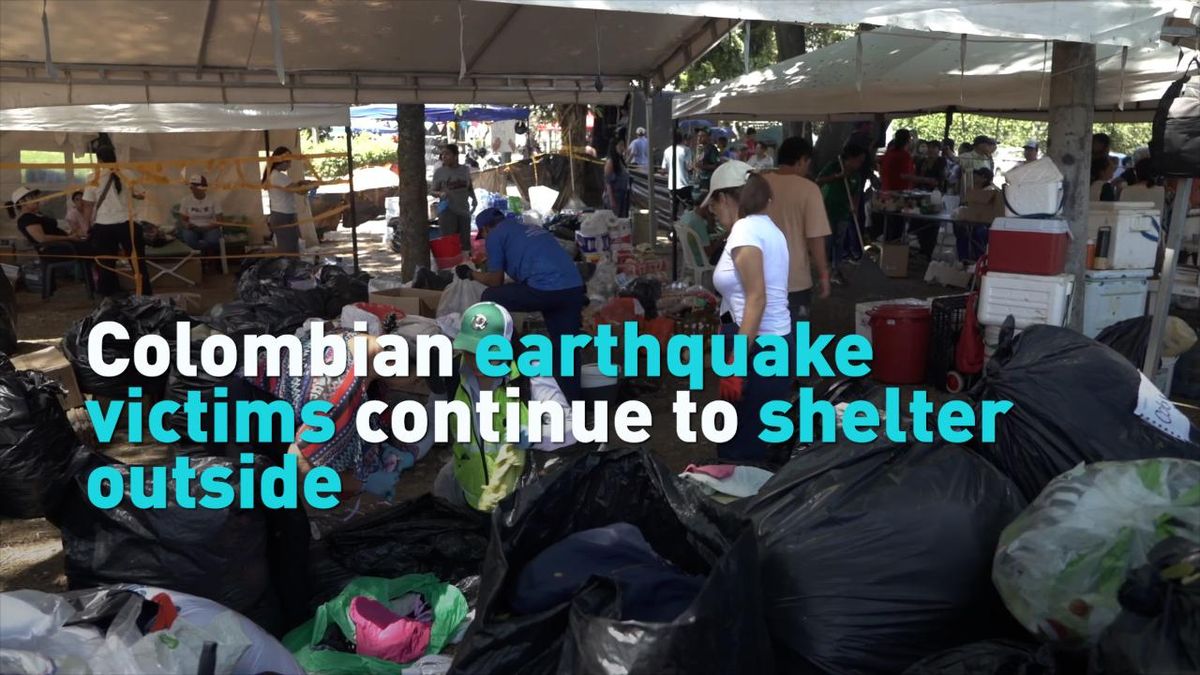
A recent earthquake in western Colombia has left a significant portion of Cali's population in a precarious state. While many homes did not collapse entirely, hundreds of families have been forced to abandon their damaged residences, deemed too dangerous to inhabit. In the immediate aftermath, residents have taken matters into their own hands, organizing informal shelter camps in local parks, a testament to community resilience in the face of systemic vulnerability.
The mechanics of power in a disaster like this reveal a complex interplay between state capacity, economic realities, and political incentives. Colombia, like many nations in earthquake-prone regions, grapples with the legacy of rapid urbanization, often characterized by construction that may not fully adhere to stringent seismic building codes. This is particularly true in informal settlements or rapidly developed urban peripheries, where structural integrity can be compromised. Governments, while quick to deploy immediate emergency relief, often face immense pressure and limited budgets when it comes to the long-term, less visible, and far more costly task of comprehensive structural assessments, repairs, and permanent rehousing. The political capital gained from visible rescue operations often outweighs the sustained, arduous work of rebuilding lives and infrastructure, leading to a focus on crisis management rather than proactive resilience. The reliance on local municipalities for immediate response, while democratic, can also expose resource disparities, leaving communities with insufficient support when the scale of damage is widespread.
The human cost of this earthquake extends far beyond the immediate casualties. Hundreds of families, including children, the elderly, and those with disabilities, are now living in temporary tents, exposed to the elements and lacking basic sanitation and security. This displacement disrupts every aspect of life: children miss school, adults lose their livelihoods, and the psychological toll of constant uncertainty and fear begins to mount. For the urban poor and those reliant on the informal economy, the loss of a home is not just a personal tragedy; it's an economic catastrophe that can push entire families into deeper cycles of poverty. These are the voices often absent from the high-level policy discussions about urban planning, infrastructure investment, and disaster preparedness. Their immediate struggle to find safe shelter and rebuild their lives becomes a stark reminder of who ultimately bears the brunt of structural vulnerabilities and delayed governmental action.
What official statements and initial news reports often omit or downplay is the profound and lingering crisis of "invisible" damage. Homes that are structurally compromised but still standing pose a unique challenge. They don't offer the dramatic visuals of collapsed buildings, yet they render thousands homeless, creating a prolonged humanitarian crisis that is harder to quantify and address than total destruction. Governments may be incentivized to focus on visible recovery efforts while sidestepping the immense financial and logistical burden of assessing, condemning, and rebuilding or retrofitting countless unsafe structures. Furthermore, the narrative often frames such events purely as "natural disasters," obscuring the critical role of human factors: inadequate building regulations, lax enforcement, and the socio-economic conditions that force vulnerable populations into unsafe housing. By emphasizing the "natural" aspect, authorities can subtly deflect scrutiny from governance failures and the long-term underinvestment in resilient infrastructure. The self-organization of affected communities, while admirable, can also inadvertently allow authorities to defer their responsibilities, effectively offloading the burden of recovery onto those who are least equipped to bear it.
As the immediate shock of the earthquake subsides, several critical areas warrant close attention. Firstly, the trajectory of government response: will the initial emergency aid transition into a sustained, well-funded program for structural assessment, repair, and permanent rehousing, or will the focus dissipate as media attention inevitably shifts? Secondly, the resilience and sustainability of the self-organized community camps will be crucial. Can these informal settlements maintain basic services and safety, or will they become sites of prolonged hardship and potential social unrest, eventually forcing a more robust state intervention? Finally, observers should watch for any substantive policy shifts regarding building codes and urban planning in earthquake-prone areas. Will this event serve as a catalyst for stricter enforcement and investment in resilient infrastructure, particularly for vulnerable populations, or will the underlying issues of urban vulnerability remain unaddressed until the next seismic event?
Editor's Note: Analysis assumes the reported event date of 2026-08-15 is a hypothetical scenario for geopolitical analysis.
Source referenced: CGTN
This brief was synthesized by our Editorial Engine and reviewed by The Ground Narrative team.


