TRENDING

Saturday, 24 October 2026
----------------------
13 Jumada Al-Awwal 1448 AH
Chinese Foreign Minister Wang Yi and Pakistani Deputy Prime Minister and Foreign Minister Mohammad Ishaq Dar met on the sidelines of the SCO meeting, reaffirming their 'all-weather' strategic partnership. Discussions focused on deepening bilateral cooperation, Pakistan's critical role in mediating a US-Iran memorandum of understanding, and coordinated efforts within multilateral frameworks to safeguard regional stability and the interests of the Global South.
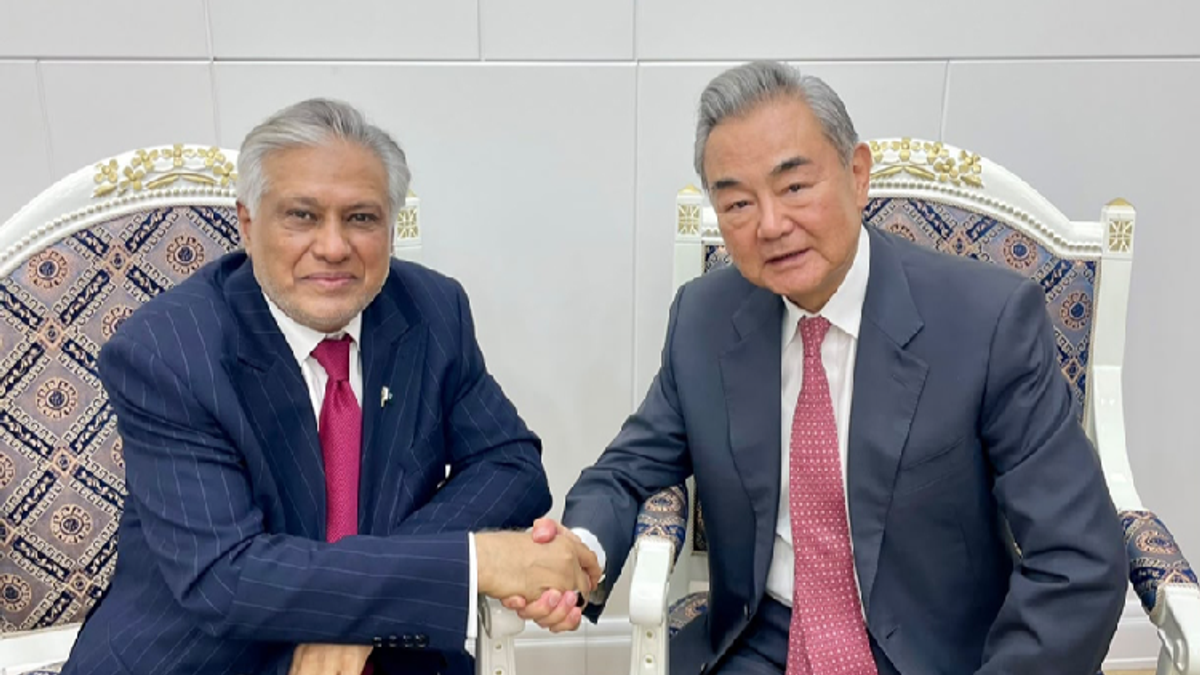
On July 24, 2026, Chinese Foreign Minister Wang Yi met with Pakistani Deputy Prime Minister and Foreign Minister Mohammad Ishaq Dar in Kyrgyzstan, on the sidelines of the Meeting of the Council of the Ministers of Foreign Affairs of the Shanghai Cooperation Organization (SCO) Member States. This high-level diplomatic engagement underscored the enduring strategic alignment between Beijing and Islamabad, emphasizing their commitment to deepening bilateral ties and coordinating on critical regional and global issues.
The meeting served as a platform to reaffirm the 'all-weather' strategic cooperative partnership that has long characterized China-Pakistan relations. Minister Wang Yi highlighted that the relationship has consistently remained at the forefront of the times, signaling its resilience and adaptability in a rapidly evolving geopolitical landscape. Both sides committed to jointly implementing the consensus reached by their respective leaders, fostering exchanges at all levels, and expanding cooperation across various fields. A key objective articulated was the acceleration of efforts to build an even closer China-Pakistan community with a shared future, a concept central to Beijing's foreign policy vision and indicative of a profound, long-term commitment.
A significant aspect of the discussions revolved around Pakistan's diplomatic initiatives in the Middle East. China highly commended Pakistan's crucial role in facilitating a memorandum of understanding (MoU) between the United States and Iran. This development positions Pakistan as a significant regional mediator, capable of bridging divides between major powers and de-escalating tensions in a volatile region. Minister Wang Yi explicitly stated China's firm support for Pakistan's continued mediation efforts, aimed at encouraging all parties to return to dialogue and negotiations, ultimately seeking a lasting ceasefire. This endorsement from Beijing not only bolsters Pakistan's diplomatic standing but also aligns with China's broader interest in regional stability, particularly in areas critical for its energy security and Belt and Road Initiative (BRI) projects.
The sudden escalation of the situation in the Middle East and the Gulf was acknowledged by both foreign ministers as serving no party's interests. This shared concern underscores a mutual desire to prevent further destabilization, which could have far-reaching economic and security implications for both countries and the broader Eurasian continent. Pakistan's willingness to continue its peace mediation efforts, coupled with China's consistent support, highlights a coordinated approach to regional conflict resolution that seeks to promote indigenous solutions and reduce external interference.
The meeting also emphasized the importance of strengthening coordination on multilateral platforms. Both China and Pakistan expressed readiness to enhance their collaboration within frameworks such as the SCO and the United Nations. This strategic alignment aims to safeguard their common interests and, significantly, the legitimate rights and interests of the Global South. This focus on the Global South reflects a broader trend in international relations, where emerging powers are increasingly advocating for a more equitable and multipolar world order, challenging traditional power structures.
Furthermore, Pakistan expressed its readiness to strengthen coordination with China under the China-Pakistan-Bangladesh trilateral cooperation mechanism. This indicates a potential expansion of regional cooperation, extending beyond the traditional bilateral scope and exploring new avenues for economic and strategic collaboration in South Asia. Such mechanisms contribute to regional peace, stability, and development, aligning with China's vision for interconnectedness and shared prosperity across Asia.
The meeting between Wang Yi and Mohammad Ishaq Dar carries significant geopolitical weight. For China, reinforcing its ties with Pakistan is crucial for the success of the China-Pakistan Economic Corridor (CPEC), a flagship project of the BRI, which provides China with strategic access to the Arabian Sea. Pakistan, in turn, benefits from substantial Chinese investment, infrastructure development, and diplomatic backing, enhancing its regional influence and economic resilience.
The coordinated diplomatic efforts regarding the Middle East also signal a growing convergence of foreign policy objectives, where both nations seek to play constructive roles in global governance and conflict resolution. By supporting Pakistan's mediation, China subtly projects its own diplomatic influence without direct intervention, positioning itself as a responsible stakeholder in international peace and security. This strategic partnership, cemented through high-level dialogues and multilateral coordination, is poised to continue shaping regional dynamics and contributing to the evolving global order, particularly in advocating for the collective interests of developing nations.
Source referenced: CGTN
This brief was synthesized by our Editorial Engine and reviewed by The Ground Narrative team.