TRENDING

Monday, 26 October 2026
----------------------
15 Jumada Al-Awwal 1448 AH
Chinese President Xi Jinping's four-point proposal on promoting peace and stability in the Middle East has significant implications for regional dynamics and global security.
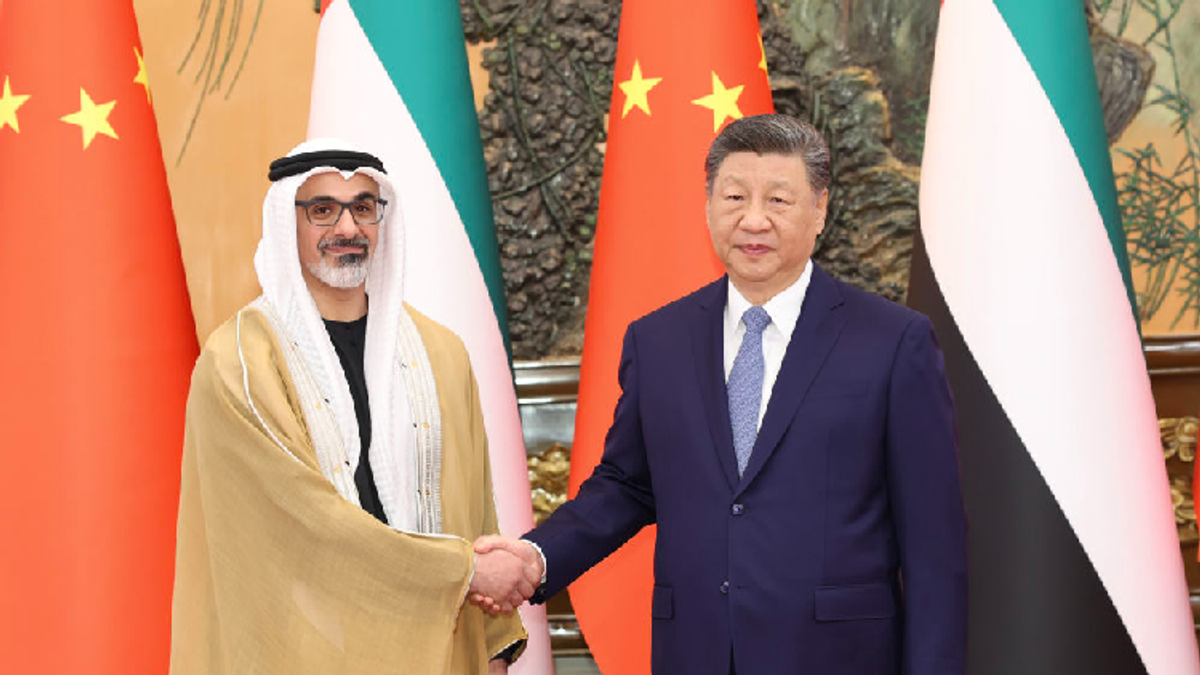
Chinese President Xi Jinping's meeting with Sheikh Khaled bin Mohamed bin Zayed Al Nahyan, crown prince of Abu Dhabi, United Arab Emirates (UAE), on April 14, 2026, marked a significant development in China's Middle East policy. Xi put forward a four-point proposal aimed at promoting peace and stability in the region, which has far-reaching implications for regional dynamics and global security.
Xi's proposal consists of four key points:
1. Adherence to the principle of peaceful coexistence: Xi emphasized the importance of promoting a common, comprehensive, cooperative, and sustainable security architecture for the Middle East and the Gulf region.
2. Adherence to the principle of national sovereignty: Xi stressed the need to respect the sovereignty, security, and territorial integrity of countries in the Middle East and the Gulf region.
3. Adherence to the principle of international rule of law: Xi highlighted the importance of upholding international law to prevent the world from falling back into the law of the jungle.
4. Coordination of development and security: Xi called for all parties to work together to create a favorable environment for the development of countries in the Middle East and the Gulf region.
Xi's proposal is a strategic shift in China's Middle East policy, reflecting Beijing's growing influence in the region. China's interests in the Middle East are driven by its need for energy security, trade, and investment opportunities. By promoting peace and stability in the region, China aims to secure its energy supplies, protect its investments, and expand its trade ties.
Xi's proposal has significant implications for regional dynamics. The Middle East is a critical region for global energy security, and any instability in the region can have far-reaching consequences for the global economy. By promoting peace and stability, China is seeking to create a favorable environment for its investments and trade ties in the region.
The success of Xi's proposal will depend on the willingness of regional actors to cooperate and adhere to the principles outlined in the proposal. If successful, the proposal could lead to a significant reduction in regional tensions, improved energy security, and increased trade and investment opportunities for China.
Xi's four-point proposal on promoting peace and stability in the Middle East is a significant development in China's Middle East policy. The proposal reflects Beijing's growing influence in the region and its strategic interests in promoting peace and stability. The success of the proposal will depend on the willingness of regional actors to cooperate and adhere to the principles outlined in the proposal. If successful, the proposal could lead to a significant reduction in regional tensions, improved energy security, and increased trade and investment opportunities for China.
Editor's Note: The success of Xi's proposal will depend on the willingness of regional actors to cooperate and adhere to the principles outlined in the proposal.
Source referenced: CGTN
This brief was synthesized by our Editorial Engine and reviewed by The Ground Narrative team.


