TRENDING

Thursday, 15 October 2026
----------------------
4 Jumada Al-Awwal 1448 AH
China and the Democratic People's Republic of Korea (DPRK) have reaffirmed their commitment to their 65-year-old treaty of friendship, cooperation, and mutual assistance, as senior officials from both nations met in Beijing to commemorate the anniversary.
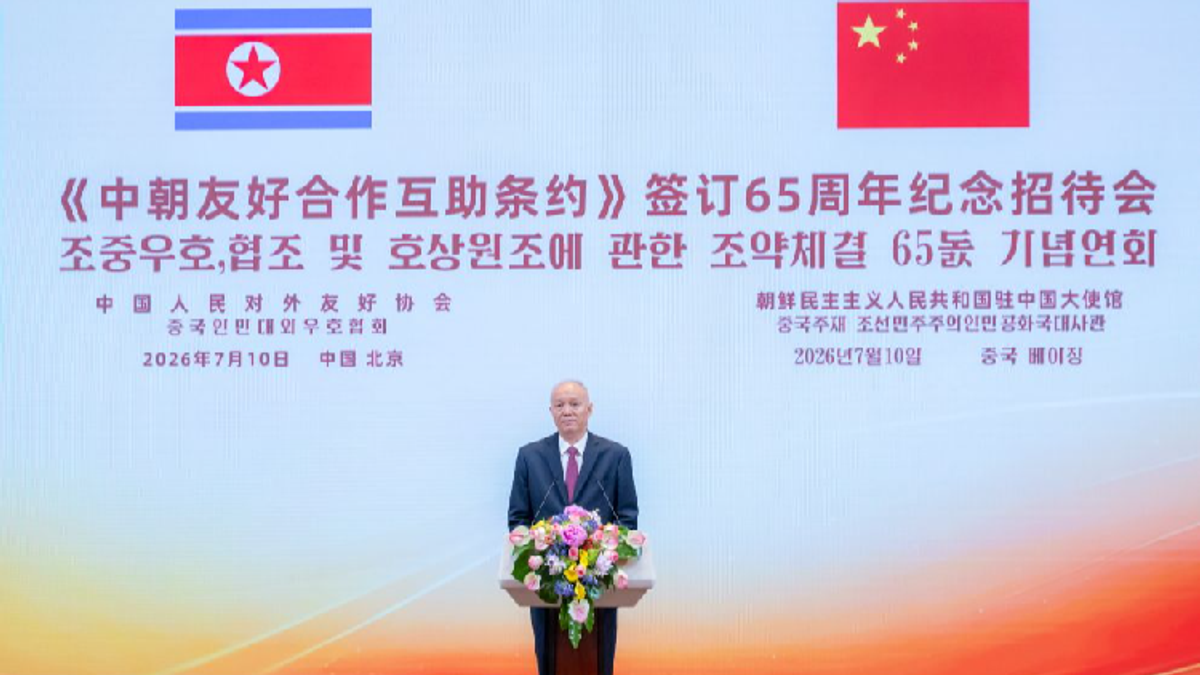
The recent 65th anniversary reception of the China-DPRK Treaty of Friendship, Cooperation, and Mutual Assistance has highlighted the enduring nature of the bilateral relationship between China and the Democratic People's Republic of Korea (DPRK). The event, attended by senior officials from both nations, including Cai Qi, a member of the Standing Committee of the Political Bureau of the Communist Party of China (CPC) Central Committee, and Pak Thae Song, premier of the Cabinet of the DPRK, underscores the significance of the treaty in the context of shifting global landscapes.
The China-DPRK Treaty, signed in 1961, was a key milestone in the establishment of diplomatic relations between the two countries. The treaty has stood the test of time, despite the complexities of the international environment. Over the past 65 years, China and the DPRK have navigated various challenges, including the Cold War, the Korean War, and the rise of the United States as a global superpower.
The recent reception marks a significant moment in the evolution of China-DPRK relations. Cai Qi's speech emphasized the importance of carrying forward the traditional friendship and striving to elevate the socialist causes and traditional friendly cooperative relations of the two countries to new heights. This sentiment reflects China's desire to strengthen its ties with the DPRK, particularly in the context of the ongoing Ukraine-Russia conflict and the growing tensions between the United States and China.
The China-DPRK relationship has significant implications for regional stability in East Asia. The treaty has provided a framework for cooperation between the two nations, including in areas such as trade, energy, and security. The strengthening of ties between China and the DPRK is likely to have a positive impact on regional stability, as it reduces the risk of conflict and promotes cooperation on key issues.
The future of China-DPRK relations will be shaped by a range of factors, including the ongoing dynamics of the international environment. The recent reception has highlighted the commitment of both nations to their bilateral relationship, but the path ahead will be challenging. The United States, in particular, is likely to view the strengthening of ties between China and the DPRK with concern, as it may be seen as a challenge to its influence in the region.
The 65th anniversary reception of the China-DPRK Treaty of Friendship, Cooperation, and Mutual Assistance has marked a significant moment in the evolution of bilateral relations between China and the DPRK. The strengthening of ties between the two nations has significant implications for regional stability in East Asia and reflects the enduring nature of the China-DPRK relationship. As the international environment continues to shift, the future of China-DPRK relations will be shaped by a range of factors, including the ongoing dynamics of the global landscape.
Editor's Note: The analysis is based on publicly available information and reflects the current understanding of the China-DPRK relationship.
Source referenced: CGTN
This brief was synthesized by our Editorial Engine and reviewed by The Ground Narrative team.