TRENDING

Monday, 5 October 2026
----------------------
24 Rabi' Al-Thani 1448 AH
Chad's President Mahamat Idriss Déby has pardoned his main rival, Success Masra, a move that appears to ease political tensions but leaves significant questions about the path to genuine democracy and the enduring power of the ruling elite.
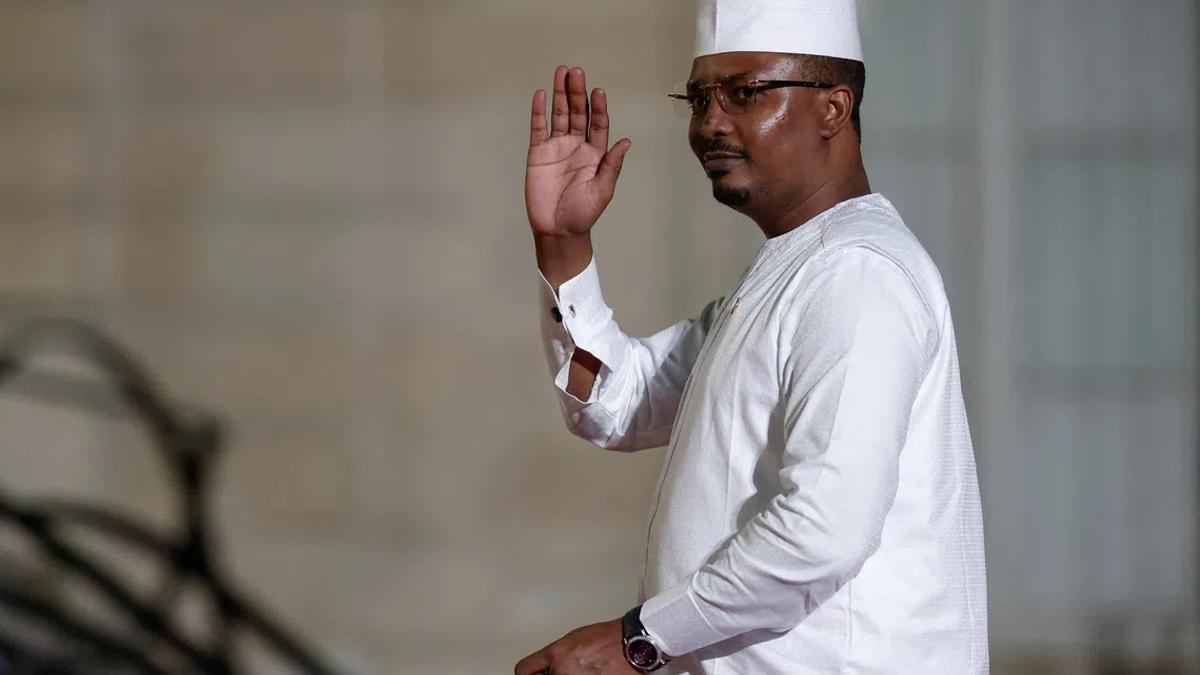
Chad's President Mahamat Idriss Déby has issued a pardon for his principal political adversary, Success Masra, and eight other political figures. Masra, a former prime minister and the most prominent opposition voice, had been imprisoned for over a year on charges of inciting violence and complicity to murder, receiving a 20-year sentence and a substantial fine. The pardon, granted following a request from Masra's legal team, will lead to his release in the coming days, though the civil penalties associated with his conviction remain enforceable.
This pardon is less an act of magnanimity and more a calculated maneuver by President Déby to consolidate his regime's position, both domestically and internationally. Déby inherited power in 2021 after the death of his father, Idriss Déby Itno, who ruled Chad for three decades. His military junta initially promised a swift transition to civilian rule, a timeline that has since been repeatedly extended. Masra's arrest and conviction were widely seen as politically motivated, designed to neutralize a popular figure who could galvanize opposition against the military-led government. By pardoning Masra now, Déby aims to project an image of reconciliation and flexibility, potentially to appease international partners who have been pressing for a return to constitutional order and free elections. It also serves to defuse internal dissent, which has simmered since the violent suppression of protests in 2022. The crucial detail is that the civil penalties remain: this keeps a financial sword hanging over Masra, potentially limiting his future political activities or forcing him into a precarious financial position, thereby maintaining a degree of control over his influence.
The immediate human cost falls on Masra and the other eight political prisoners, who endured over a year of incarceration, and now face ongoing financial burdens from the civil penalties. Beyond them, the ordinary citizens of Chad bear the broader human cost of a political system where dissent is criminalized, and justice is a tool of the powerful. The cycle of arrests, politically motivated trials, and conditional pardons erodes public trust in institutions, stifles genuine political participation, and perpetuates a climate of fear. It means that the voices advocating for change, for better governance, and for a truly democratic future are systematically silenced or co-opted, leaving the majority of Chadians without effective representation or a clear path to influence their own destiny. The promise of democracy remains elusive, replaced by a carefully managed political spectacle.
What is conspicuously absent from official statements is the underlying pressure that likely precipitated this pardon. Chad is a strategically vital country for Western powers, particularly France, due to its role in counter-terrorism efforts in the volatile Sahel region. With a wave of military coups destabilizing neighboring countries like Niger, Mali, and Burkina Faso, Chad's relative stability, however fragile, is paramount. International bodies and key allies have undoubtedly exerted pressure on Déby to demonstrate a commitment to a credible political transition, including the release of political prisoners. The pardon is a concession, not a fundamental shift. It allows Déby to claim progress towards national dialogue while retaining ultimate control, particularly by keeping the civil penalties in force. This allows him to present a more palatable image to the international community, potentially unlocking further aid or diplomatic support, without genuinely ceding power or dismantling the apparatus of control that keeps his regime in place.
All eyes will now be on Masra's actions post-release. Will he attempt to re-engage in active politics, and if so, how will the lingering civil penalties affect his capacity to do so? The true test of Déby's intentions will come with the upcoming electoral process. Will the elections be genuinely free and fair, allowing all opposition figures, including Masra, to participate without hindrance? Or will this pardon prove to be merely a tactical move to legitimize Déby's eventual candidacy and secure his hold on power through a veneer of democratic process? The international community's response to these next steps will be critical. Their willingness to scrutinize the fairness of future elections and demand full political freedoms will determine whether this pardon marks a genuine, albeit small, step towards democracy or merely another chapter in Chad's long history of strongman rule. The stability of the broader Sahel region, already under immense pressure, also hinges on Chad's internal political trajectory.
Source referenced: STRAITSTIMES
This brief was synthesized by our Editorial Engine and reviewed by The Ground Narrative team.


