TRENDING

Sunday, 25 October 2026
----------------------
14 Jumada Al-Awwal 1448 AH
Brazil has recalled its ambassador to Argentina following Argentine President Javier Milei's public insults against Brazilian President Luiz Inácio Lula da Silva and a Supreme Court justice. This diplomatic rupture underscores deep ideological divisions and threatens bilateral relations between South America's two largest economies.
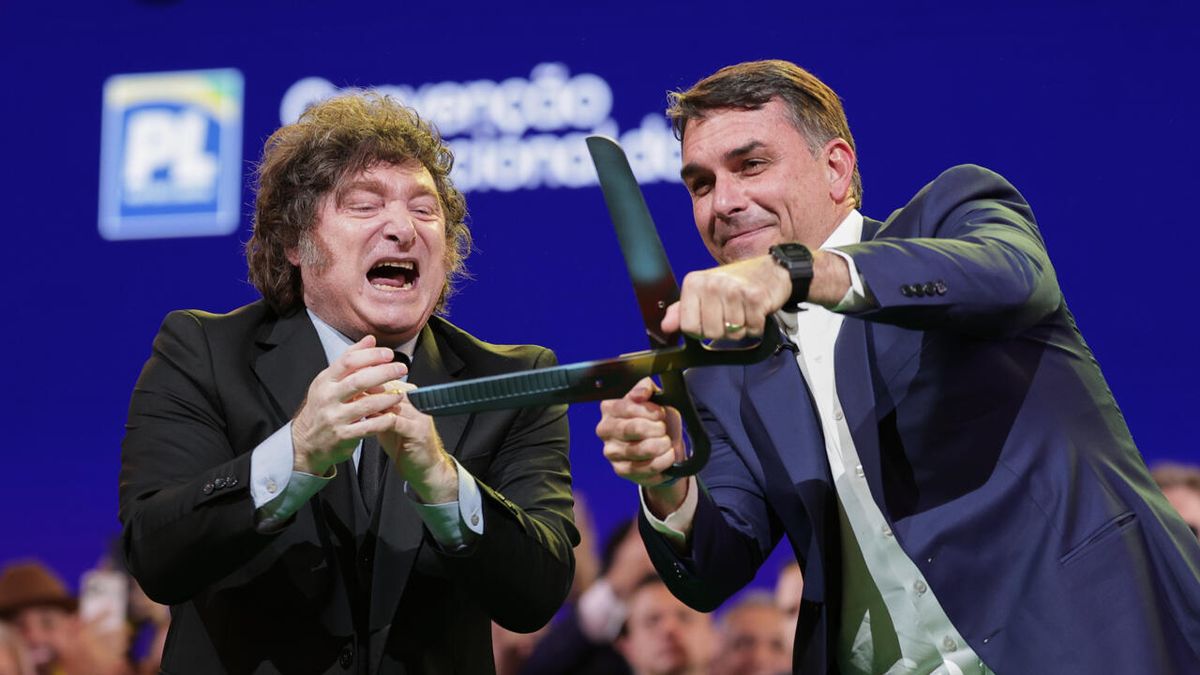
Brazil has taken the significant diplomatic step of recalling its ambassador to Argentina, Julio Bitelli, for consultations, following a series of inflammatory remarks made by Argentine President Javier Milei. The incident, which unfolded over the weekend of July 26-27, 2026, saw President Milei publicly insult Brazilian President Luiz Inácio Lula da Silva and Supreme Court Justice Alexandre de Moraes during a political event in Sao Paulo. This move signals a severe deterioration in relations between South America's two most influential nations, highlighting the growing ideological chasm in the region.
The immediate catalyst for Brazil's action was Milei's appearance at a campaign launch for right-wing Brazilian presidential candidate Flavio Bolsonaro, son of former President Jair Bolsonaro. During his speech, Milei referred to President Lula, without explicitly naming him, as a "convict" and a "thief." He also targeted Supreme Court Justice Alexandre de Moraes, calling him "bald trash." A Brazilian diplomatic source confirmed to AFP that Milei "insulted two branches of government, the Brazilian people and Brazilian democracy," prompting the recall of Ambassador Bitelli and the summoning of Argentina's ambassador in Brasilia for an official discussion regarding the "insults."
President Milei's presence at the Bolsonaro event and his subsequent remarks are deeply rooted in his libertarian-conservative ideology and his alignment with the global right-wing movement. His speech warned against a supposed "Lula risk" hanging over Brazil, urging the country to break free from "subjugation to the left." This rhetoric is consistent with his broader political agenda, which often frames international relations through an ideological lens, pitting "ideas of freedom" against "progressive leaders."
Milei's motivations appear multi-faceted. His participation in the event served to bolster a like-minded political ally in Brazil, Flavio Bolsonaro, and to project his anti-left stance onto the regional stage. Furthermore, Milei explicitly stated that Justice de Moraes had prevented him from visiting his "unjustly imprisoned friend," Jair Bolsonaro, who was convicted of plotting a coup in 2022. This personal dimension adds another layer to the diplomatic spat, intertwining Argentina's foreign policy with Brazil's internal political and judicial processes.
Adding to the controversy, Milei later claimed on Argentina's Radio Mitre that his country was the target of a negative "campaign" financed by Brazil, Mexico, and the Democratic Party in the United States. He asserted that these were "progressive leaders who don't want the ideas of freedom to work," though he provided no concrete evidence to support these allegations. This accusation further underscores his perception of an ongoing ideological battle, extending beyond bilateral relations to encompass broader regional and international political dynamics.
Brazil's response, characterized by the recall of its ambassador and the summoning of Argentina's envoy, is a strong diplomatic signal. Recalling an ambassador is typically reserved for severe breaches of diplomatic protocol or significant political disagreements, indicating that Brazil views Milei's comments as a direct affront to its sovereignty and democratic institutions. President Lula da Silva, speaking at a union event, indirectly addressed the situation, stating that he would continue to lead "without anyone's interference," because "in Brazil, we do not accept anyone sticking their nose where it doesn't belong." This statement reinforces Brazil's commitment to defending its internal affairs from external interference.
The incident highlights the fragility of diplomatic norms in a region increasingly marked by ideological polarization. Brazil, under Lula's leadership, has sought to re-establish its role as a key player in regional integration and multilateralism. Milei's confrontational approach, however, poses a significant challenge to this vision, potentially undermining efforts at regional cooperation, particularly within blocs like Mercosur, where both nations are foundational members. The long-term implications for trade, economic cooperation, and political stability in South America remain a pressing concern, as the diplomatic rift between these two giants deepens.
This episode serves as a stark reminder of how personal animosities and ideological clashes between leaders can quickly escalate into serious diplomatic crises, impacting not only bilateral relations but also the broader geopolitical landscape of a continent striving for cohesion amidst diverse political currents.
Source referenced: FRANCE24
This brief was synthesized by our Editorial Engine and reviewed by The Ground Narrative team.