TRENDING

Monday, 5 October 2026
----------------------
24 Rabi' Al-Thani 1448 AH
Brazil's presidential race heats up with Flavio Bolsonaro's running mate choice, sparking a debate over corruption and national sovereignty. The election pits a son against an incumbent, with the public's trust and vital social systems hanging in the balance.
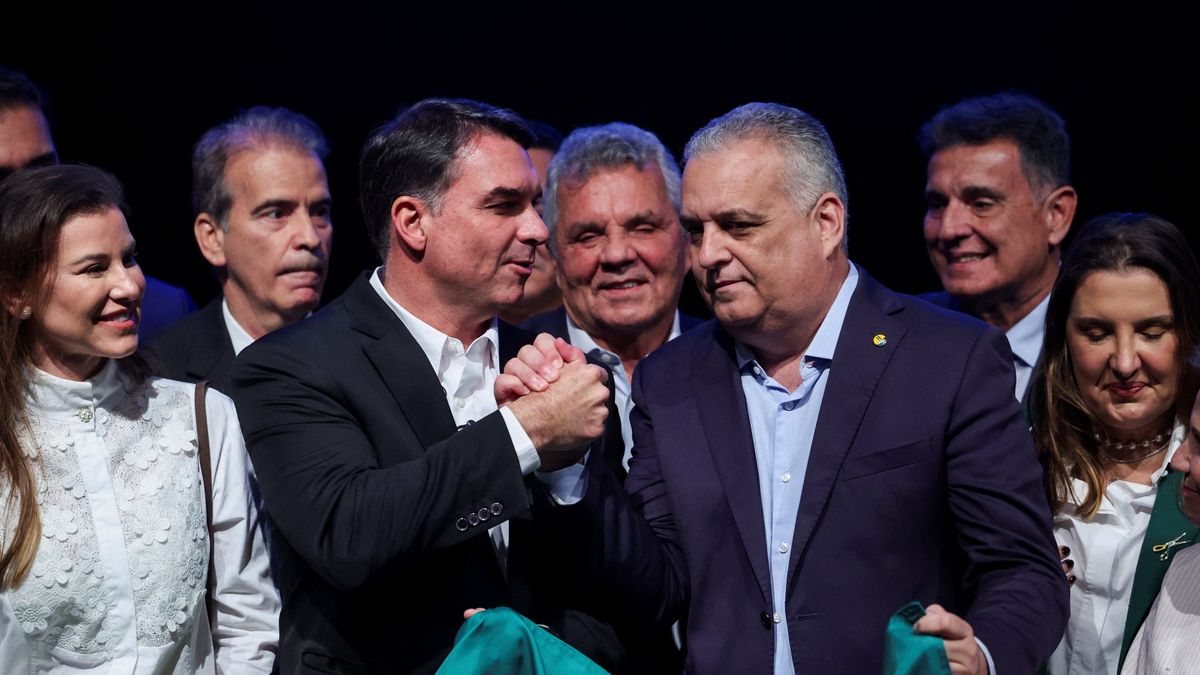
Senator Flavio Bolsonaro, son of former President Jair Bolsonaro, has officially named conservative Congressman Alfredo Gaspar as his vice-presidential running mate for Brazil's upcoming October elections. This announcement ends weeks of speculation and signals a strategic pivot for Bolsonaro's campaign, which has struggled to broaden its coalition beyond its Liberal Party base. Gaspar, a congressman from the northeastern state of Alagoas, brings a background in public security and, notably, led a congressional investigation into Brazil's National Social Security Institute (INSS) – an agency now at the center of alleged pension fraud investigations involving President Luiz Inacio Lula da Silva's son. Meanwhile, incumbent Lula da Silva has framed the election as a critical battle to defend Brazil's national sovereignty against perceived foreign interference, citing recent diplomatic spats with the United States and external support for his opponent.
Flavio Bolsonaro's selection of Alfredo Gaspar reveals a tactical shift aimed at consolidating his conservative base while simultaneously targeting President Lula's vulnerabilities. Gaspar's history with the INSS investigation provides a direct avenue to attack Lula on corruption, a potent political weapon in Brazil, especially given the allegations against the president's son. This move suggests Bolsonaro's campaign, having failed to attract higher-profile, broader-appeal figures, is now doubling down on an anti-corruption and law-and-order platform. It also represents an attempt to penetrate Lula's traditional stronghold in the Northeast by choosing a regional figure.
On the other side, Lula da Silva is leveraging a powerful nationalist narrative. By framing US diplomatic actions—such as visa revocations and tariffs, alongside former President Trump's endorsement of Flavio Bolsonaro—as "meddling," Lula aims to rally public support and deflect domestic criticism. This strategy positions him as the defender of Brazil's autonomy against external pressures, a classic populist play that resonates deeply in a nation sensitive to its sovereignty. The ongoing diplomatic friction with the US, regardless of its true intent, provides tangible evidence for Lula's narrative, allowing him to portray his opponent as a recipient of foreign support, implicitly undermining his legitimacy. The broader political landscape sees centre-right parties cautiously navigating this polarized environment, often choosing neutrality or aligning with Lula to secure their own congressional representation, highlighting the deep fragmentation and strategic calculations at play beyond the presidential race.
The intense political jockeying and the focus on alleged pension fraud carry significant human costs. At the most basic level, Brazil's deep political polarization, fueled by dynastic rivalries and corruption accusations, makes it challenging for any government to pursue consistent, long-term policies essential for national development. Citizens are increasingly forced into binary choices, often along ideological lines, which can stifle constructive dialogue and compromise.
More directly, the political weaponization of the National Social Security Institute (INSS) erodes public trust in a critical institution that millions of Brazilians rely on for their retirement and social welfare. When allegations of fraud and political manipulation dominate the discourse, it undermines confidence in the system's integrity and its ability to provide essential services. For the elderly and vulnerable populations who depend on their pensions, this political maneuvering can create anxiety and uncertainty about their financial future. Beyond the headlines, the real human cost lies in the potential for delayed reforms, mismanagement, or a loss of faith in the very mechanisms designed to protect society's most vulnerable. Furthermore, the diplomatic friction with a major trading partner like the United States could have ripple effects on trade, investment, and international cooperation, potentially impacting economic opportunities and stability for ordinary Brazilians.
While the immediate narrative often centers on a "Bolsonaro versus Lula" dynastic struggle, the deeper, unspoken story is the ongoing battle for Brazil's fundamental direction. Both candidates represent starkly different visions for the country's economic model, social policies, and international alignment. The focus on personal accusations and foreign interference often downplays the underlying structural issues that Brazil continues to grapple with: pervasive inequality, the urgent need for sustainable environmental policies, and comprehensive economic reforms that extend beyond short-term political cycles. The long-term solvency of the pension system, for instance, is a complex challenge that transcends individual corruption allegations but often gets reduced to a political talking point.
Moreover, Lula's powerful "sovereignty" narrative, while politically effective, often simplifies the complex reality of international relations. The United States, regardless of who occupies the White House, has enduring strategic interests in Latin America related to trade, resource security, regional stability, and democratic governance. Framing every US action as "meddling" obscures these broader geopolitical dynamics and the intricate web of influence that exists between nations, regardless of their stated intentions. The powerful actors on both sides are adept at crafting narratives that serve their immediate political survival, often omitting the systemic challenges or the nuanced motivations of international players.
As the election draws nearer, several key dynamics will shape Brazil's political trajectory. First, watch for Flavio Bolsonaro's ability to expand his coalition and appeal beyond his core base. His campaign's success will depend on whether Gaspar's presence can effectively tap into anti-Lula sentiment without alienating potential centrist voters. Second, the potency of Lula's "sovereignty" narrative will be crucial. How will he sustain this message, especially if US diplomatic tensions either escalate or de-escalate? Will it resonate strongly enough to secure a decisive victory, particularly in a potential runoff?
Finally, the ongoing investigations into pension fraud and other corruption allegations will continue to influence public perception. Will these investigations gain traction, or will they be perceived as politically motivated attacks? The interplay of economic performance—particularly inflation and employment figures—with these political narratives will ultimately sway undecided voters. The next few months will not only determine Brazil's next president but also set the tone for its democratic institutions and its place on the global stage.
Source referenced: ALJAZEERA
This brief was synthesized by our Editorial Engine and reviewed by The Ground Narrative team.


