TRENDING

Saturday, 24 October 2026
----------------------
13 Jumada Al-Awwal 1448 AH
A terror attack near Berlin's Christopher Street Day celebration, resulting in one death and multiple injuries, has ignited critical discussions on domestic radicalization, public security, and the resilience of Germany's open society. The incident, attributed to an individual with a history of Islamist sympathies, underscores persistent challenges in counter-terrorism and social cohesion.
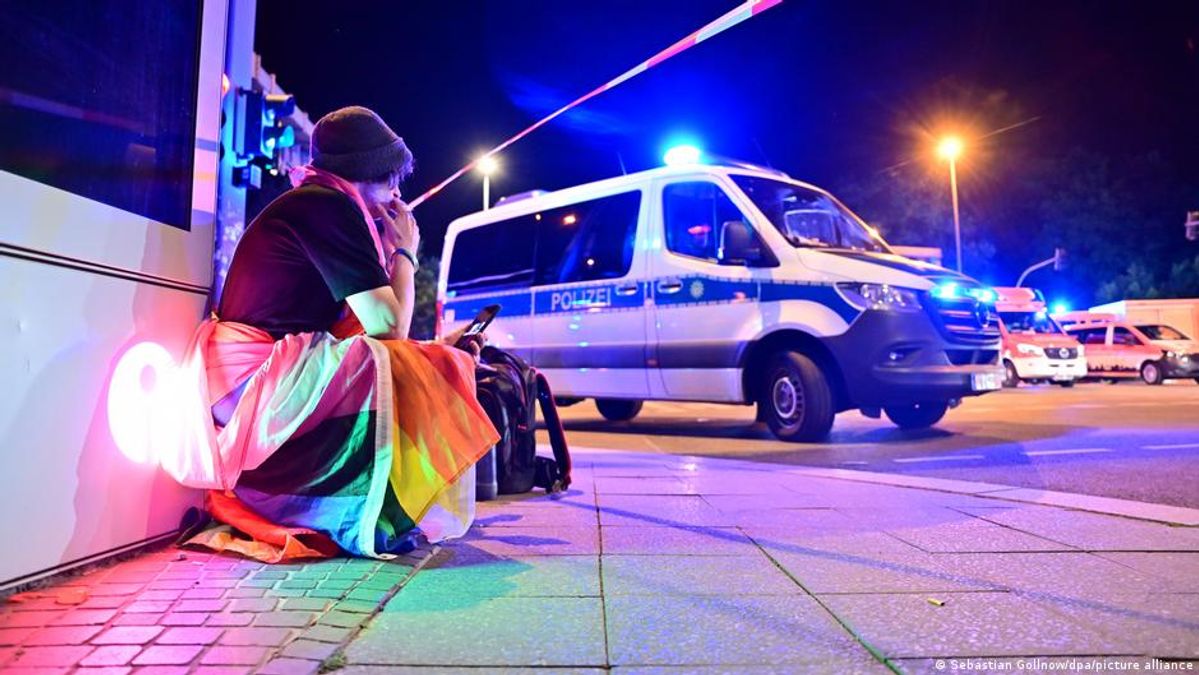
On Saturday night, a celebratory atmosphere near Berlin's iconic Brandenburg Gate turned into a scene of terror when a white van plowed into a crowd attending a Christopher Street Day (CSD) closing party. The incident, which occurred around 10 p.m., left one woman dead and 29 others injured, several severely, before the driver abandoned the vehicle and fled. This attack, swiftly condemned by German leaders as an assault on society and democracy, has reignited critical debates surrounding internal security, radicalization, and the resilience of Germany's open society.
The initial chaos saw police searching for multiple perpetrators, but investigations quickly narrowed down to a single chief suspect, Abdul B., a 21-year-old German citizen of Lebanese origin. Authorities revealed that Abdul B. was known to them for a "high number" of previous attacks and for being radicalized. Crucially, prosecutors stated he had shared propaganda for the so-called Islamic State (IS) militant group online and had previously attempted, unsuccessfully, to join the group in Syria, though he later reportedly distanced himself from IS. The suspect's flight ended tragically on Sunday evening when he was shot dead during a police operation in Spandau, Berlin.
The method of attack—a vehicle ramming followed by a blade assault—bears a chilling resemblance to a series of terror incidents witnessed across Europe in recent years. This pattern underscores the persistent threat posed by individuals radicalized by extremist ideologies, even those who may not be directly commanded by established terror organizations but are inspired by their propaganda.
While the precise motive behind targeting a CSD event specifically has not been fully established, German Interior Minister Alexander Dobrindt unequivocally stated that "Everything we see here indicates that this was an Islamist terror attack." Consequently, the Federal Public Prosecutor General, typically responsible for grave crimes affecting Germany's internal or external security, has taken over the investigation. This official designation highlights the severity of the incident and its perceived ideological underpinnings. The targeting of a Pride event, a symbol of LGBTQ+ rights and an open, diverse society, suggests a potential intersection of extremist ideology with anti-LGBTQ+ sentiment, aiming to sow fear and division within a community celebrating its identity.
The Berlin Pride attack carries significant implications for Germany, both socially and politically.
The fact that the suspect, Abdul B., was known to authorities for radicalization and previous offenses raises serious questions about the effectiveness of surveillance and prevention mechanisms. Germany, like many Western European nations, grapples with the challenge of monitoring and de-radicalizing individuals who pose a potential threat. The incident will undoubtedly intensify scrutiny on intelligence agencies and law enforcement regarding their preparedness for large public gatherings and their ability to neutralize threats from known extremists. It also highlights the complex nature of radicalization, where individuals may oscillate between active engagement with extremist groups and periods of apparent disengagement, making threat assessment particularly challenging.
German President Frank-Walter Steinmeier characterized the attack as an "attack on our open society, our way of life and our ability to live together." This sentiment was echoed by Chancellor Friedrich Merz, who called it "heinous." The CSD parade is a vibrant celebration of LGBTQ+ rights and diversity, embodying the values of an inclusive society. An attack on such an event is, therefore, perceived as an assault on these fundamental values, aiming to undermine social cohesion and instill fear within marginalized communities. The immediate outpouring of solidarity and the gathering of mourners at Brandenburg Gate, even amidst an ongoing manhunt, demonstrated a collective resolve not to be defeated by such acts.
The timing of the attack is particularly sensitive, occurring ahead of several key state elections in Germany. These elections have seen the far-right Alternative for Germany (AfD) party gaining significant traction in polls, often campaigning on nationalist, anti-immigrant, and law-and-order platforms. The Berlin attack is highly likely to intensify public debate around migration, security, and the perceived failures of integration—issues that the AfD frequently leverages to its political advantage. While it is crucial to avoid linking the actions of an individual extremist to broader communities, such incidents can be exploited by political factions to fuel xenophobia and anti-immigrant sentiment, potentially shifting the political discourse further to the right and challenging the centrist consensus.
The Berlin Pride attack serves as a somber reminder of the persistent and evolving nature of extremist threats. It underscores the need for continuous adaptation in counter-terrorism strategies, including enhanced intelligence sharing, community engagement, and robust security measures for public events. Beyond security, the incident highlights the importance of reinforcing societal resilience, promoting inclusivity, and actively countering narratives of division and hatred. As Germany navigates these complex challenges, the collective response—from law enforcement's swift action to the public's defiant solidarity—will be crucial in upholding the values of its open and democratic society.
Source referenced: DW
This brief was synthesized by our Editorial Engine and reviewed by The Ground Narrative team.