TRENDING

Sunday, 4 October 2026
----------------------
23 Rabi' Al-Thani 1448 AH
A looming 'super El Niño' threatens Australia's sugarcane heartland, pushing farmers to the brink amidst falling global prices and rising production costs. This crisis highlights the precarious balance between climate volatility and the unforgiving mechanics of global commodity markets.
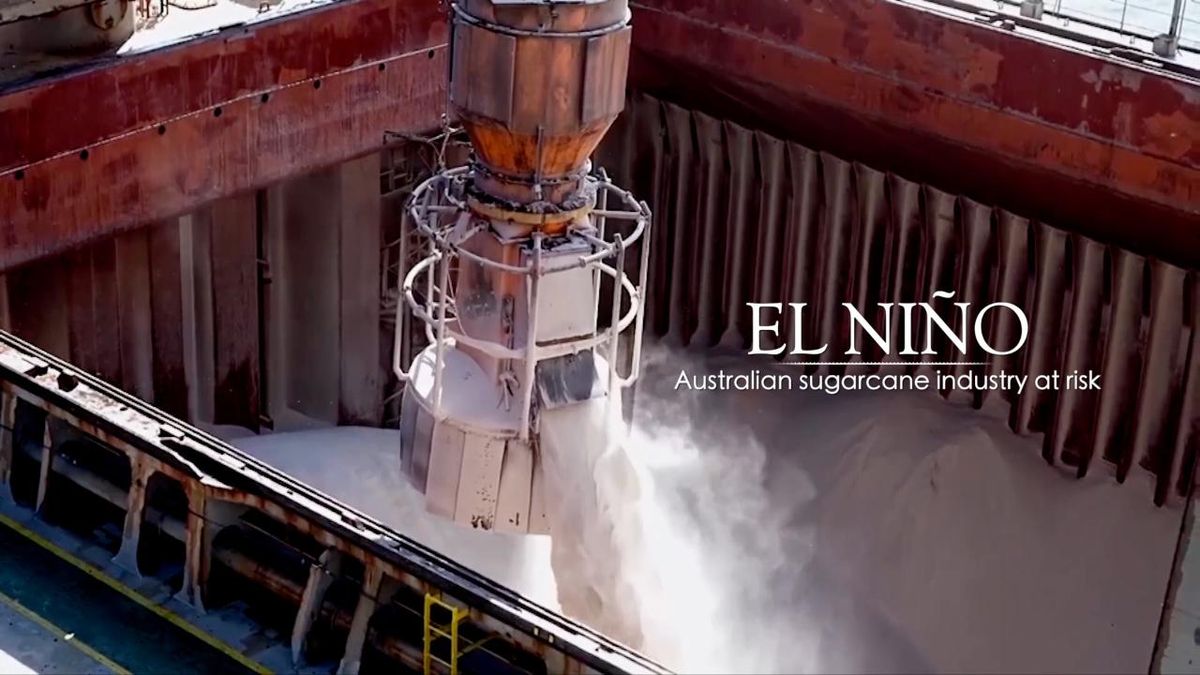
Australia's Far North Queensland, the country's primary sugarcane region, is bracing for a potentially severe El Niño event. Forecasts predict significantly hotter temperatures and prolonged dry conditions across the continent, directly threatening the sugarcane industry. Farmers in key areas like Burdekin, already struggling with costly irrigation and rising input expenses, now face the prospect of sharply reduced yields and increased operational costs, jeopardizing an industry that forms the economic bedrock of many regional communities.
This unfolding situation is a stark illustration of how environmental forces intersect with complex global economic power structures. On one front, the power of nature, embodied by El Niño, dictates agricultural output. While El Niño is a natural climate phenomenon, the descriptor 'super El Niño' and the expectation of 'much hotter temperatures' hint at an amplification by broader climate change trends, increasing the severity of its impact. On another front, the power of global commodity markets is exerting immense pressure. Australia exports approximately 80% of its sugar, making its farmers highly vulnerable to international price fluctuations. A roughly 30% drop in global sugar prices, attributed to oversupply, means farmers are receiving less for their product even as their costs for essential inputs like diesel and fertilizer continue to rise. This creates a severe profit squeeze, where individual producers have little leverage against vast, impersonal market forces and unpredictable weather patterns. Governments, while able to offer some relief, are largely powerless against these dual, overwhelming pressures.
The immediate and most profound human cost will be borne by the sugarcane farmers and their families in Far North Queensland. These are not corporate giants but often multi-generational family enterprises, whose livelihoods are directly tied to the success of their harvest. Rising expenses for water, fuel, and fertilizer, coupled with drastically reduced returns, threaten to push many into insolvency. This financial strain ripples through regional communities, impacting local businesses, employment, and social stability. Beyond Australia, the long-term viability of a major sugar exporter has implications for global food and fuel security, potentially leading to price volatility for consumers in importing nations, particularly those in the Global South who are most sensitive to price shocks. The decisions made in distant commodity trading floors and the shifting global climate directly translate into the daily struggles of these communities.
What is often downplayed or omitted in official statements and market reports is the systemic vulnerability of such critical agricultural sectors to both climate change and volatile global markets. While the immediate focus is on El Niño, the 'super' aspect and the 'much hotter temperatures' are subtle indicators of a broader climate crisis that is making extreme weather events more frequent and intense. Governments and industry bodies tend to frame these as isolated 'natural disasters' rather than symptoms of a deeper, long-term environmental shift requiring fundamental adaptation strategies. Furthermore, the fragility of the global food supply chain is exposed when a major exporter faces such a squeeze. The oversupply driving down prices today could quickly turn into scarcity and price spikes if multiple major producers face similar climate challenges, highlighting a lack of resilient planning in a globally interconnected food system. The narrative often focuses on supply and demand numbers, but rarely on the human cost of market inefficiencies or the long-term ecological debt.
Readers should closely monitor the intensity and duration of the El Niño event itself, as this will directly determine the severity of crop losses and water scarcity. Watch for government responses in Australia, including potential relief packages, water management policies, or long-term agricultural support programs designed to enhance resilience. Beyond Australia, observe the global sugar market dynamics – how other major producers respond to the oversupply, and whether the current low prices persist or begin to rebound. Finally, pay attention to the social and economic indicators in affected regional communities, as the long-term viability of these farming communities will be a critical measure of how well the world adapts to the converging pressures of climate change and global economic volatility. The fate of these farmers offers a window into the future of global food production.
Source referenced: CGTN
This brief was synthesized by our Editorial Engine and reviewed by The Ground Narrative team.