TRENDING

Monday, 19 October 2026
----------------------
8 Jumada Al-Awwal 1448 AH
The Africa Shield 2026 workshop highlights a critical shift in African security priorities, moving beyond traditional threats to focus on safeguarding CBRN materials vital for economic development. This initiative aims to prevent the diversion of sensitive materials, bolster regional stability, and enhance global counter-proliferation efforts through capacity building and international cooperation.
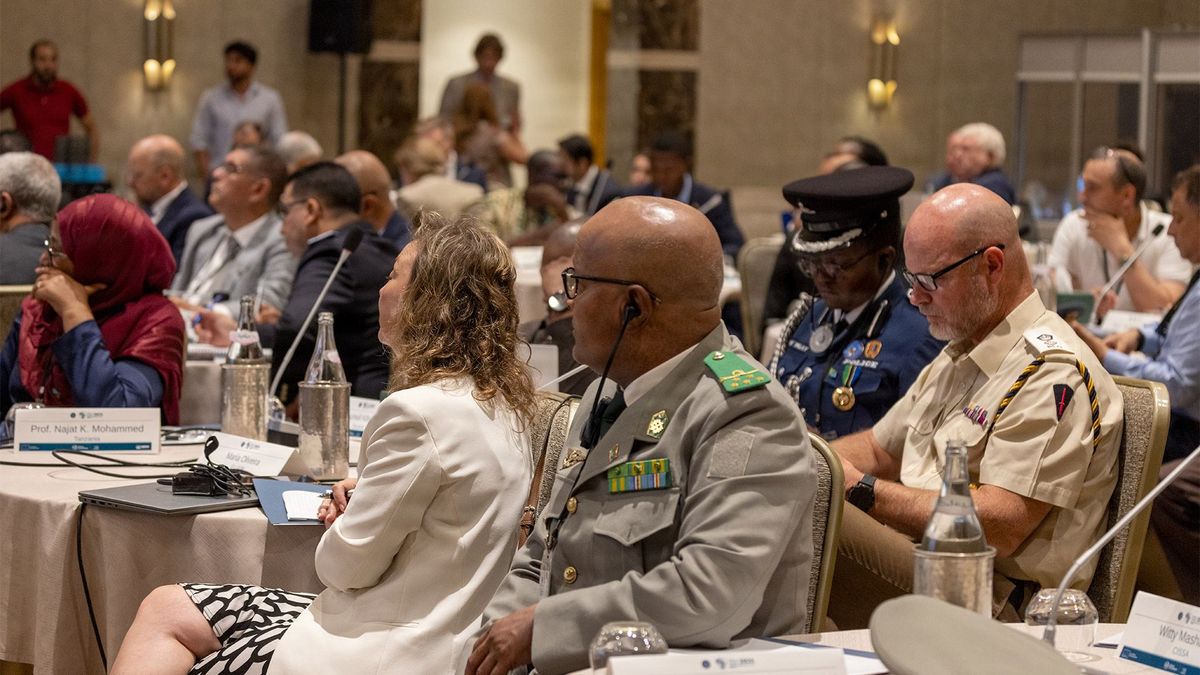
TheRecent Africa Shield 2026 Regional Counterproliferation Workshop, held from July 14-16 in Tunis, Tunisia, marks a significant evolution in Africa's security priorities. Historically, security discourse on the continent has predominantly centered on traditional threats such as armed groups, terrorism, and interstate conflicts. However, as African economies experience rapid expansion and technological advancement, a new and complex security challenge has emerged: safeguarding the chemical, biological, radiological, and nuclear (CBRN) materials integral to modern healthcare, industry, research, and mining sectors. This shift underscores a growing recognition that economic development, while vital for progress, simultaneously introduces new vulnerabilities that demand robust, proactive security frameworks.
Africa's burgeoning economies are increasingly reliant on sensitive CBRN materials. From radioactive sources used in cancer treatment to chemicals essential for manufacturing and mining, and biological agents handled in advanced laboratories, these materials are fundamental to the continent's developmental trajectory. While their daily use is overwhelmingly safe, the increasing quantities in circulation, coupled with expanding cross-border trade and deepening regional integration, present heightened risks. Weak regulatory oversight, inadequate handling practices, or outright theft could lead to the diversion of these materials for criminal or malicious purposes, including their potential acquisition by non-state actors for weapons of mass destruction (WMD). As Mubarak Aliyu, a Nigeria-based political and security risk analyst, noted, the challenge lies not in restricting development but in ensuring that innovation is matched by effective oversight and robust regulatory systems.
The Africa Shield initiative, now in its sixth edition, directly addresses this evolving threat landscape. Organized by the International Counterproliferation Program of the US Defence Threat Reduction Agency (DTRA), in partnership with the European Union CBRN Centres of Excellence Risk Mitigation Initiative and the United Nations Interregional Crime and Justice Research Institute, the workshop brought together over 100 participants. These included law enforcement officials, military representatives, policymakers, and national coordinators from across Africa, all tasked with implementing United Nations Security Council (UNSC) Resolution 1540. This resolution mandates states to prevent non-state actors from acquiring WMDs and related materials, highlighting the global implications of Africa's CBRN security posture.
A core tenet of Africa Shield is its emphasis on a preventive approach to CBRN security. Rather than merely reacting to incidents after they occur, the program focuses on proactively mitigating vulnerabilities. This involves strengthening border controls, enhancing export monitoring, improving emergency preparedness, and fostering closer coordination among diverse national agencies. Major Brittany Brown, coordinator of DTRA’s Global Threat Reduction Africa Region Counter Weapons of Mass Destruction Program, emphasized that Africa Shield provides a crucial platform for participating countries to "exchange expertise and lessons learned" and deepen partnerships. This collaborative model reflects a broader trend in international security cooperation, where external partners increasingly prioritize strengthening national institutions and capabilities, fostering self-reliance rather than long-term dependency.
Tunisia's role as host for the workshop further underscores the transnational nature of the CBRN security challenge. Situated at the crossroads of North Africa, the Mediterranean, and the Sahel, Tunisia lies along major trade and transport routes. These same interconnected networks, while facilitating legitimate commerce, can also be exploited by illicit trafficking networks to move controlled materials across borders. The expansion of the African Continental Free Trade Area (AfCFTA) adds another layer of complexity, requiring governments to bolster security measures without impeding the very trade and investment the agreement is designed to promote.
Despite existing legal frameworks in many African nations for regulating chemicals, radioactive materials, and strategic trade, implementation remains uneven. A significant "enforcement gap" persists, often due to shortages of funding, specialized personnel, and modern equipment necessary for effective inspections, facility monitoring, and violation investigations. The continent's vast borders and extensive trade routes are already challenging to monitor, as evidenced by established trafficking networks for weapons and narcotics. These same vulnerabilities could be exploited for the diversion and unauthorized movement of CBRN materials.
Addressing these challenges requires sustained investment in intelligence gathering, forensic capabilities, and robust regional networks. As Phil Efe Benard, country director of the African Chamber of Content Producers (ACCP) Nigeria, highlighted, relying solely on foreign partners is insufficient; building indigenous capacity is paramount. The ultimate success of initiatives like Africa Shield hinges on the ability of African governments to translate training and cooperation into stronger institutions and more effective, consistent enforcement mechanisms.
The Africa Shield initiative represents more than just a technical security program; it signifies a profound geopolitical shift. By integrating CBRN security into the broader framework of economic development, African nations are proactively addressing a critical dimension of modern statecraft. This approach not only safeguards public health and safety but also contributes significantly to global counter-proliferation efforts, preventing dangerous materials from falling into the wrong hands. The emphasis on African ownership and capacity building fosters greater regional stability and reduces reliance on external actors for core security functions.
Ultimately, the initiative reflects a growing understanding that economic transformation brings with it new security responsibilities. Ensuring that security and development advance in tandem is crucial for creating an environment where innovation can thrive safely and sustainably. The ongoing challenge will be to close the enforcement gaps, secure sensitive materials, enforce regulations consistently, and foster greater trust and information sharing among national authorities across the continent. This sustained commitment is vital for Africa to realize its developmental aspirations while mitigating the inherent risks of a technologically advanced and interconnected world.
Source referenced: ALJAZEERA
This brief was synthesized by our Editorial Engine and reviewed by The Ground Narrative team.