TRENDING

Monday, 5 October 2026
----------------------
24 Rabi' Al-Thani 1448 AH
The Africa Centers for Disease Control and Prevention (Africa CDC), the World Health Organization (WHO), and the Ugandan government have launched a unified platform to support Africa's Ebola response, strengthening the continent's capacity to prepare for, coordinate, and respond to public health emergencies.
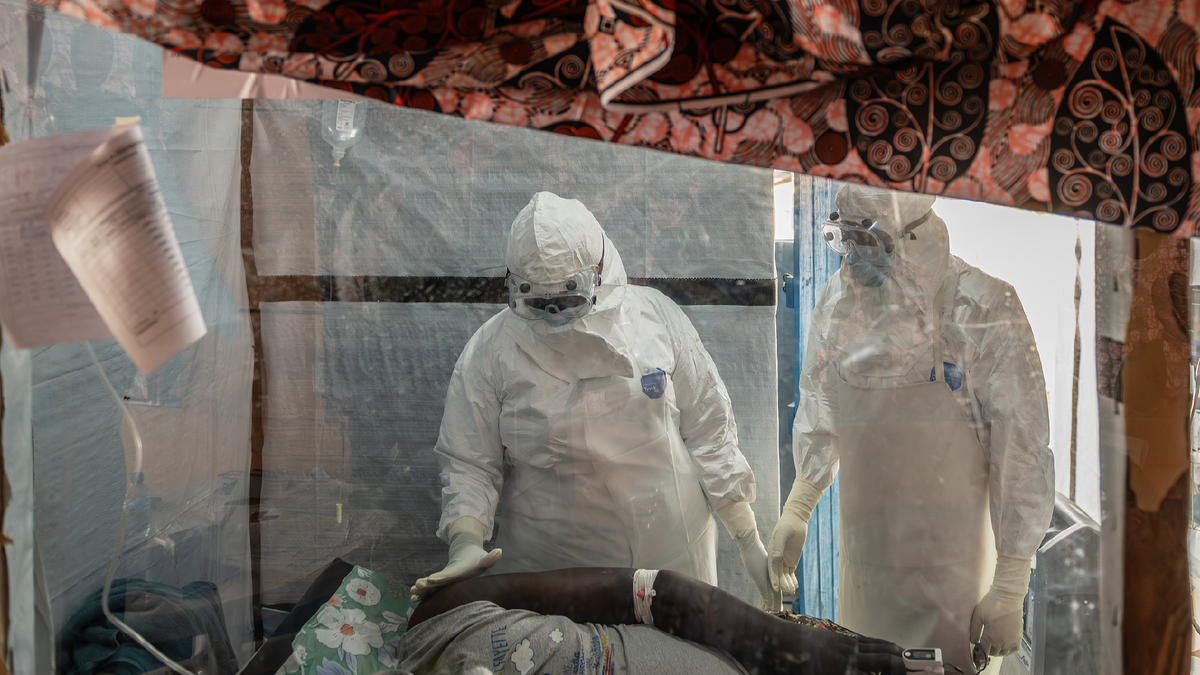
The recent launch of the Joint Continental Incident Management Support Team (IMST) by the Africa Centers for Disease Control and Prevention (Africa CDC), the World Health Organization (WHO), and the Ugandan government marks a significant milestone in Africa's fight against the Ebola virus. This unified platform aims to strengthen the continent's capacity to prepare for, coordinate, and respond to public health emergencies, while supporting the ongoing Bundibugyo Ebola virus disease response.
The IMST's establishment is a direct response to the ongoing Ebola outbreak in the Democratic Republic of the Congo and neighboring countries. The platform brings together specialists in surveillance, laboratory systems, case management, infection prevention and control, emergency logistics and operations, risk communication, information management, and partner coordination to strengthen outbreak response across the region. This integrated approach is essential in addressing the complex nature of public health threats, which often require a coordinated regional response.
The launch of the IMST reflects a shared commitment by Africa CDC, WHO, and African Union (AU) member states to build faster, more coordinated, and country-led responses to increasingly complex public health threats. This commitment is rooted in the principles of one team, one plan, and one budget, which guide the IMST's operations. By working together, these organizations can leverage their collective expertise and resources to enhance Africa's health security and protect its citizens from the Ebola virus and other public health threats.
The IMST's focus on regional preparedness and cross-border collaboration is critical in addressing the transnational nature of public health threats. By sharing information, coordinating responses, and providing technical assistance, the IMST can help to prevent the spread of the Ebola virus and other diseases across borders. This approach also reinforces the importance of regional preparedness and cross-border collaboration as essential pillars of Africa's health security.
The launch of the IMST has significant implications for Africa's health security and its ability to respond to public health threats. By strengthening the continent's capacity to prepare for, coordinate, and respond to emergencies, the IMST can help to reduce the risk of Ebola outbreaks and other public health crises. This, in turn, can have a positive impact on regional stability, economic development, and human security. However, the IMST's success will depend on the sustained commitment of its partners and the effective implementation of its strategies.
The launch of the IMST marks a significant step forward in Africa's fight against the Ebola virus and other public health threats. By uniting Africa CDC, WHO, and the Ugandan government behind a shared commitment to health security, the IMST can help to strengthen the continent's capacity to prepare for, coordinate, and respond to emergencies. As the IMST continues to operate, it is essential that its partners remain committed to its principles and strategies, working together to build a safer, healthier, and more resilient Africa.
Editor's Note: The analysis is based on publicly available information and does not reflect any confidential or sensitive information.
Source referenced: CGTN
This brief was synthesized by our Editorial Engine and reviewed by The Ground Narrative team.


