TRENDING

Tuesday, 20 October 2026
----------------------
9 Jumada Al-Awwal 1448 AH
The World Artificial Intelligence Conference (WAIC) in Shanghai concluded, highlighting China's strategic focus on AI development and governance. President Xi Jinping's address underscored the nation's commitment to leading the global AI landscape, with significant implications for international technological competition and future economic power.
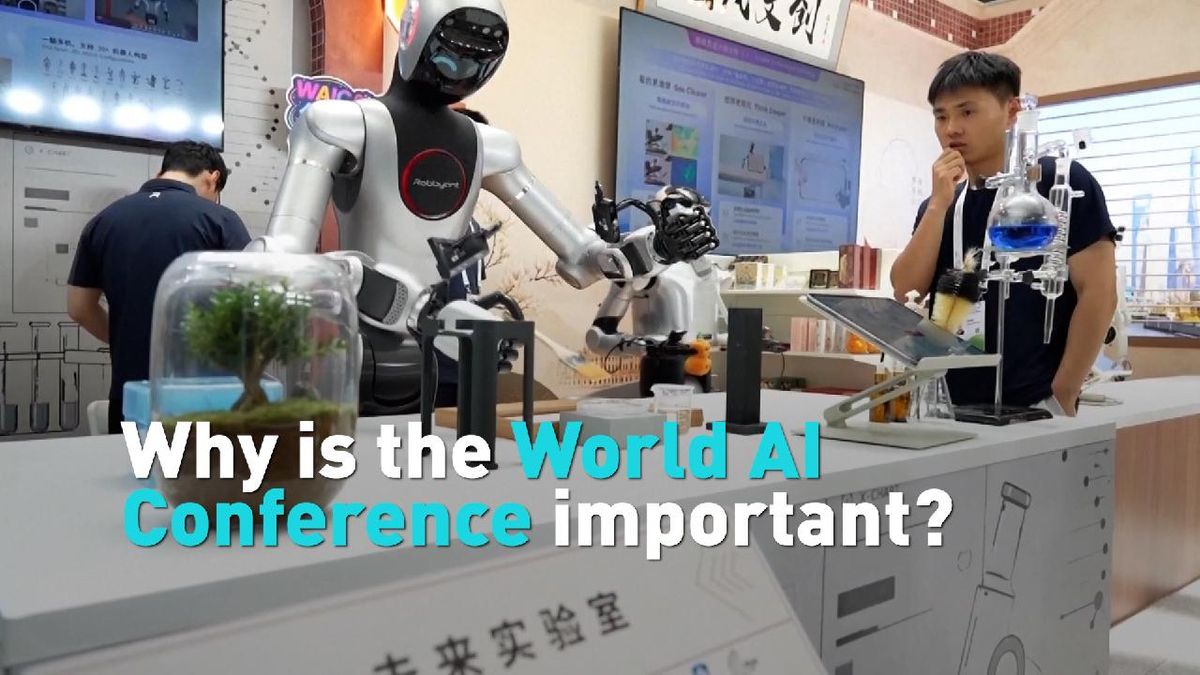
TheThe World Artificial Intelligence Conference (WAIC), which concluded on Monday, July 20, 2026, in Shanghai, China, served as a critical platform for showcasing advancements in artificial intelligence and, more significantly, for articulating China's strategic vision for this transformative technology. The event, featuring a prominent speech by Chinese President Xi Jinping, underscores the profound geopolitical and economic importance that Beijing places on AI, positioning it as a cornerstone of its national development and international influence.
The significance of the WAIC extends far beyond a mere exhibition of technological innovation. It represents a deliberate effort by China to assert its leadership in a domain widely recognized as the next frontier of global power. The conference brings together leading minds, corporations, and policymakers, facilitating discussions on AI's rapid evolution, its ethical implications, and its potential to reshape industries, economies, and societies worldwide. For China, hosting such a high-profile event is a strategic move to foster international collaboration, attract talent and investment, and, crucially, to influence the global narrative and standards surrounding AI development.
President Xi Jinping's address at the conference is particularly noteworthy. Such high-level engagement signals the Chinese government's unwavering commitment to AI as a national priority. This commitment is rooted in a comprehensive strategy to achieve technological self-sufficiency and global leadership, particularly amidst increasing geopolitical competition and technological decoupling efforts by some Western nations. Xi's speech likely emphasized China's progress in AI research and application, its vision for ethical AI governance, and its call for international cooperation, all while subtly reinforcing its position as a major player in shaping the future of AI.
The WAIC takes place against a backdrop of an intensifying global AI race, primarily between the United States and China. Both nations view AI as a critical component of future economic prosperity, national security, and geopolitical leverage. The development of advanced AI capabilities has profound implications for military applications, surveillance technologies, economic competitiveness, and the ability to set international norms and standards. China's aggressive investment in AI research, development, and deployment, as evidenced by events like WAIC, is a clear manifestation of its ambition to surpass rivals and establish technological supremacy.
This competition is not solely about technological prowess; it also encompasses the battle for talent, data, and market share. Countries are vying to attract top AI researchers, develop robust data infrastructure, and create ecosystems conducive to AI innovation. The WAIC serves as a powerful magnet in this global competition, drawing attention to China's vibrant AI landscape and its potential as a hub for future AI development. Furthermore, the conference provides a platform for China to project its preferred models of AI governance and ethical frameworks, potentially influencing how AI is regulated and deployed globally, particularly within countries participating in its Belt and Road Initiative.
Economically, AI is poised to drive unprecedented transformation across virtually all sectors, from manufacturing and healthcare to finance and logistics. Nations that lead in AI development stand to gain significant economic advantages, including increased productivity, new industries, and enhanced global competitiveness. The discussions at WAIC on AI applications, investment opportunities, and policy frameworks directly contribute to shaping China's economic future and its role in the global economy.
Looking ahead, the continued prominence of events like the WAIC suggests a future where AI will be central to international relations. The conference's outcomes, including potential collaborations, announced breakthroughs, and policy pronouncements, will have lasting consequences for the global technological landscape. They will influence investment flows, research priorities, and the ongoing debate about the responsible development and deployment of AI. As nations grapple with the dual-use nature of AI—its potential for both immense benefit and significant risk—platforms like the WAIC become crucial arenas for dialogue, competition, and the shaping of a technologically advanced, yet potentially fragmented, global order.
Ultimately, the World Artificial Intelligence Conference in Shanghai is more than an annual tech gathering; it is a strategic declaration of intent. It underscores China's determination to be at the forefront of the AI revolution, influencing not only the technology itself but also the geopolitical and economic structures of the 21st century.
Source referenced: CGTN
This brief was synthesized by our Editorial Engine and reviewed by The Ground Narrative team.


