TRENDING

Thursday, 15 October 2026
----------------------
4 Jumada Al-Awwal 1448 AH
A fatal shooting near the White House, involving Secret Service agents and a lone gunman, has underscored persistent security challenges at the heart of U.S. power. The incident, which left the suspect dead and a bystander wounded, prompts renewed scrutiny of presidential protection and the broader domestic security landscape.
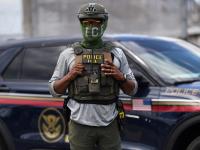
On Saturday, May 23, 2026, a significant security incident unfolded near the White House in Washington, D.C., when a lone individual opened fire on a Secret Service checkpoint. The event, which resulted in the death of the assailant and the wounding of a bystander, has immediately triggered a comprehensive review of presidential security protocols and raised broader questions about domestic stability in the United States.
The incident occurred shortly after 6:00 PM local time, when the suspect approached a security checkpoint situated at the intersection of 17th Street and Pennsylvania Avenue. According to an official statement from the Secret Service, the federal agency tasked with protecting the President, the individual retrieved a weapon from a bag and began shooting at the officers stationed there. Secret Service agents promptly returned fire, neutralizing the threat. The suspect was subsequently transported to a nearby hospital, where he was pronounced dead. A bystander also sustained injuries during the exchange, though authorities have yet to confirm whether the wound was inflicted by the assailant or during the agents' response. Crucially, no Secret Service personnel were harmed during the confrontation.
At the time of the shooting, President Trump was inside the White House and was confirmed to be unharmed. The executive mansion was immediately placed under lockdown as a precautionary measure. The swift response from the Secret Service ensured the President's safety, a primary objective for the agency. White House communications director Steven Cheung and House Republican Majority Leader Steve Scalise quickly took to social media to confirm the President's well-being, with Scalise noting, "We live in dangerous times." This public reassurance aimed to project calm and stability amidst a potentially alarming situation at the nation's capital.
Journalists present on the White House North Lawn reported hearing more than 30 shots and were instructed to seek shelter. The area surrounding the White House was swiftly cordoned off by police, with National Guard troops deployed to manage access and maintain security. FBI Director Kash Patel confirmed his agency's involvement, providing support to the Secret Service in the ongoing investigation.
This incident is particularly noteworthy given its proximity to a previous security breach. Less than a month prior, on April 25, law enforcement authorities described an attempted assassination of President Trump at a Washington hotel during the annual White House Correspondents' Association Dinner. The recurrence of such events, as highlighted by Al Jazeera's Kimberly Halkett reporting from the scene, suggests a concerning trend of increasing frequency in security threats targeting the U.S. presidency and its immediate vicinity. The suspect in Saturday's shooting had reportedly been issued a stay-away order, which he ignored, further complicating the security landscape.
The identity of the deceased suspect and his motivations have not yet been publicly disclosed, with the Secret Service confirming that the investigation remains active and ongoing. Understanding the perpetrator's background, intentions, and any potential affiliations will be critical for assessing the nature of the threat and informing future security strategies.
While primarily a domestic security incident, an attack so close to the seat of U.S. power carries significant geopolitical implications. The stability and security of the U.S. presidency are paramount not only for domestic governance but also for global confidence in American leadership. Incidents that challenge the security of the White House can be perceived internationally as indicators of internal fragility or heightened political tensions within the United States. Such perceptions, even if localized to an individual act, can subtly influence international relations, investor confidence, and the overall global image of the U.S. as a stable and secure global actor.
The increasing frequency of security incidents targeting the President or the White House, as noted by observers, points to a potentially evolving and more volatile domestic environment. This necessitates a continuous re-evaluation of security protocols, intelligence gathering, and threat assessment mechanisms to safeguard the nation's leadership and maintain public trust. The ongoing investigation will be crucial in determining whether this incident represents an isolated act or part of a broader, more organized threat, thereby shaping future security policies and the perception of U.S. internal stability on the global stage.
Source referenced: ALJAZEERA
This brief was synthesized by our Editorial Engine and reviewed by The Ground Narrative team.