TRENDING

Sunday, 25 October 2026
----------------------
14 Jumada Al-Awwal 1448 AH
A deadly shootout in the occupied West Bank, involving Israeli settlers, Palestinians, and Israeli troops, has led to a significant Israeli military response, including mass arrests and vows to accelerate settlement construction. The incident underscores escalating tensions and the fragile security situation in the region.
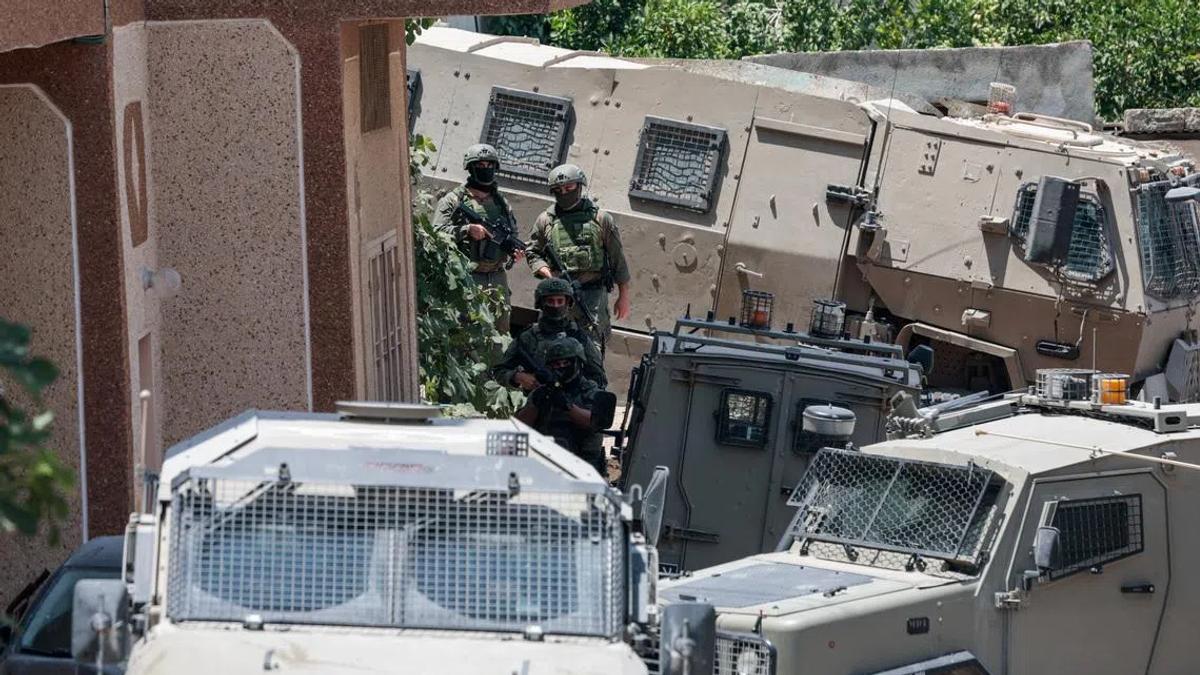
A violent confrontation erupted on Friday, July 25, 2026, in the Palestinian village of Tal, southwest of Nablus, in the occupied West Bank, resulting in the deaths of at least four Palestinians and two Israeli soldiers. The incident, which began as a shootout involving armed Israeli settlers and Palestinian villagers, quickly escalated, drawing in Israeli military forces and triggering a widespread security operation. This event marks a significant escalation in the already volatile Israeli-Palestinian conflict, highlighting the deep-seated grievances and the precarious security landscape.
The immediate aftermath saw Israeli forces launch a large-scale operation in Tal, detaining dozens of Palestinians. Walid Zidan, the mayor of Tal, reported that approximately 70 villagers were rounded up and subjected to interrogation at a makeshift field center. House raids and military patrols continued throughout the village, effectively imposing a lockdown on residents. This punitive response by Israeli authorities, including threats to demolish the home of a Palestinian family involved in the incident, signals a firm stance aimed at deterrence and control.
The precise sequence of events leading to the shootout remains contested. Palestinian authorities assert that the incident was provoked by armed Israeli settlers who deliberately approached Tal village with hostile intent, aiming to attack residents. Conversely, the Israeli military initially described the Israeli civilians as hikers but later acknowledged that some were armed and that both sides had exchanged fire before troops intervened. Social media footage, though unverified, appeared to show a chaotic standoff, with armed Israelis confronting villagers, further fueling the conflicting narratives.
This incident is particularly notable as it occurred in "Area A" of the West Bank, a zone where, under the Oslo Accords, the Palestinian Authority maintains administrative and security control, and Israeli civilians are officially barred from entering. The presence of armed settlers in this area, regardless of their stated intentions, represents a direct challenge to the existing, albeit fragile, agreements and underscores the erosion of Palestinian sovereignty in these designated zones. The increasing frequency of settler attacks on Palestinian villages in recent months, widely condemned by international bodies and European nations, has consistently exacerbated tensions and contributed to a climate of instability.
Israeli Prime Minister Benjamin Netanyahu's response to the incident was swift and decisive, vowing "powerful action." Beyond the immediate security crackdown, Netanyahu's office announced plans to accelerate the approval of construction for more Israeli settlements in the area. This move carries significant geopolitical weight. The expansion of settlements is a long-standing point of contention, considered illegal under international law by nearly all countries and UN bodies, though Israel disputes this, citing historical and biblical ties to the land. Accelerating settlement construction in the wake of a security incident serves multiple strategic purposes: it reinforces Israel's territorial claims, caters to a right-wing domestic political base, and further entrenches the Israeli presence in the West Bank, making a future two-state solution increasingly difficult to achieve.
The Israeli military's stated objective for its security operation – "to thwart terrorism, ensure the security of Israeli civilians and prevent further escalation" – reflects a broader strategy of maintaining control and responding forcefully to perceived threats. However, from the Palestinian perspective, such operations, particularly those involving mass arrests and collective punishment measures like home demolitions, are seen as acts of occupation and oppression, further fueling resentment and resistance.
The events in Tal village are not isolated but are symptomatic of a broader pattern of escalating violence and deepening conflict in the West Bank. The presence of hundreds of thousands of Israeli settlers living among millions of Palestinians creates a constant flashpoint, where even minor incidents can rapidly spiral into deadly confrontations. The international community's repeated condemnations of settlement expansion and settler violence have, thus far, done little to alter the trajectory of these trends.
This latest escalation poses significant challenges to regional stability. It undermines any prospects for a resumption of meaningful peace negotiations, further marginalizes the Palestinian Authority, and risks drawing in other regional actors. The cycle of violence, characterized by settler provocations, Palestinian resistance, and robust Israeli military responses, continues to perpetuate a state of chronic instability, with profound humanitarian and geopolitical consequences for the entire Middle East. The incident serves as a stark reminder of the unresolved core issues of the Israeli-Palestinian conflict and the urgent need for a political resolution that addresses the legitimate aspirations and security concerns of both peoples.
Source referenced: STRAITSTIMES
This brief was synthesized by our Editorial Engine and reviewed by The Ground Narrative team.